

BCIwiki (bciwiki.com) — A proof-of-concept study shows that a non-invasive brain-computer interface using electroencephalography (EEG) can distinguish hypoglycemia from non-hypoglycemia in individuals with type 1 diabetes, with a Quadratic Discriminant Analysis classifier achieving 96.2% accuracy under data-limited conditions. The research, conducted by scientists at the University of Žilina in Slovakia and Molde University College in Norway, was published in Frontiers in Human Neuroscience on August 28, 2026.
The team synchronized EEG recordings from participants with type 1 diabetes with continuous glucose monitoring (CGM) data, applied a 0.5–50 Hz band-pass filter, and compared spectral features with those from five healthy controls. Hypoglycemia was associated with characteristic delta and beta band alterations, while changes outside hypoglycemia were inconsistent and did not support reliable separation within the non-hypoglycemic class.
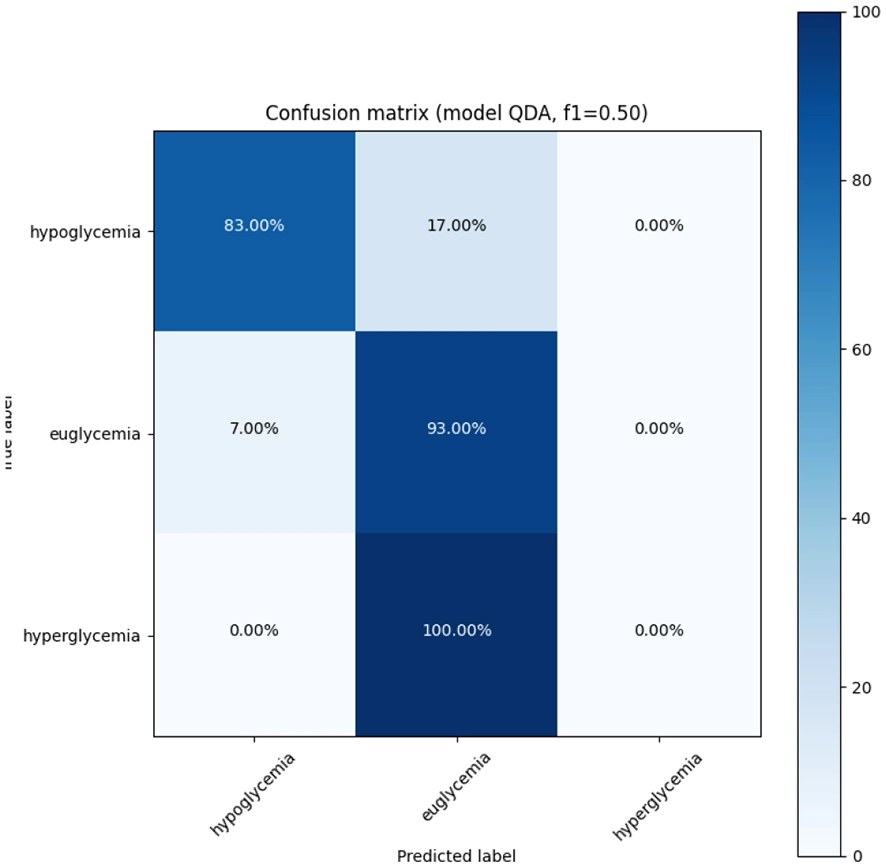
Under limited data conditions, the study evaluated multiple segmentation strategies and lightweight machine learning models. Classical classifiers demonstrated promising within-subject performance, with Quadratic Discriminant Analysis (QDA) achieving the best results (accuracy 0.96212, macro-F1 0.96201) for binary classification focused on hypoglycemia detection. Confusion matrix analysis indicated a low rate of clinically relevant misclassifications.
The researchers noted that while continuous glucose monitoring systems provide continuous glucose measurements, they are invasive and do not capture early neurophysiological alterations associated with hypoglycemia-related metabolic changes. The findings support the feasibility of lightweight, real-time, non-invasive EEG-based systems for early hypoglycemia detection.