
/ EN

Funding

6 entries
September 2026

Apple to Acquire Certain Sonera Assets and Hire Staff, EU Filing Shows

On May 8, 2026, Apple notified the European Commission under Article 14 of the Digital Markets Act that it would, through a subsidiary, acquire certain assets of Sonera and offer jobs to and hire certain Sonera employees. The deal value was not disclosed and neither party has announced it; May 8 is the filing date, and no closing date has been made public. The Commission describes Sonera as a company developing chip-scale magnetic sensors. Founded in 2018 in Berkeley, California, as a University of California, Berkeley spinout, Sonera builds acoustically driven ferromagnetic resonance magnetic sensors that operate at room temperature and has raised about $20 million.
August 2026

China bet $1B on BCI in 6 months. Who got the money?

China's brain-computer interface sector recorded 47 funding rounds in the first half of 2026, 38 of them disclosing terms for a combined RMB 5.38 billion (approx. $750 million). A broader tally used by Chinese financial media puts the total at 64 deals and roughly RMB 7.25 billion (approx. $1 billion). Either figure is more than double the whole of 2025 (49 deals, RMB 2.72 billion) at a comparable deal count. The record lists every deal by month — company, technical approach, round, amount, investors — and identifies three structural patterns: ultrasound and non-invasive approaches moving quickly into a field long defined by implants, Big Tech and municipal state funds entering at the same time, and nearly half of all transactions still sitting at angel or seed stage.

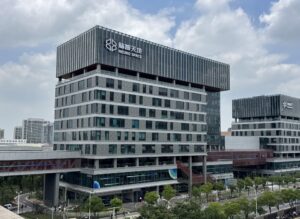
Shanghai's Neuro Space Hits One-Year Mark: 52 Firms, World's First Invasive BCI Approved

One year after its June 2025 launch, Neuro Space (脑智天地) — Shanghai's BCI industry cluster at the Hongqiao International Medical Center and China's first dedicated BCI industrial zone — has entered full operation across its 25,000 m² pilot area. As of July 2026, the cluster hosts 52 registered BCI companies and 22 startup incubators spanning flexible electrodes, BCI chips, ultrasound-based interfaces, and vision restoration. On the commercialization front, the world's first approved invasive BCI medical device, developed in Shanghai, received regulatory clearance in 2026, with its first clinical prescription issued in July. Five additional Class III devices are currently in clinical trials or under regulatory review. Shanghai accounts for nearly 60% of China's BCI financing events, totaling approximately RMB 2.117 billion. Products showcased at a recent open-day event include a non-invasive brain-controlled consumer device driven by EEG-based attention metrics, an integrated transcranial magnetic stimulation navigation system for depression treatment, and LingXi Cloud, a clinical data platform housing over 2.1 million cases of multimodal brain-disorder data at petabyte scale.
June 2026

China's Neuracle Files for Shanghai IPO, Seeking RMB 2.5 Billion

The Shanghai Stock Exchange accepted an IPO application from Neuracle, which is seeking RMB 2.5 billion for BCI product development, industrialization and working capital. The filing shows an established non-invasive neurophysiology equipment business alongside invasive products that still require clinical, regulatory and commercialization spending. Acceptance starts the review process and is not approval to list.
April 2026
November 2025

Synchron Raises $200 Million Series D, Bringing Total Funding to $345 Million

Synchron raised a $200 million Series D led by Double Point Ventures, taking its total funding to $345 million. The company plans to use the capital to commercialize its Stentrode endovascular BCI, prepare pivotal trials and expand its AI and engineering teams. Synchron said 10 people with paralysis had received the implant in U.S. and Australian trials at the time of the announcement.

© 2026 BCIwiki.com Digest Topics Tips Subscribe Revisions About