

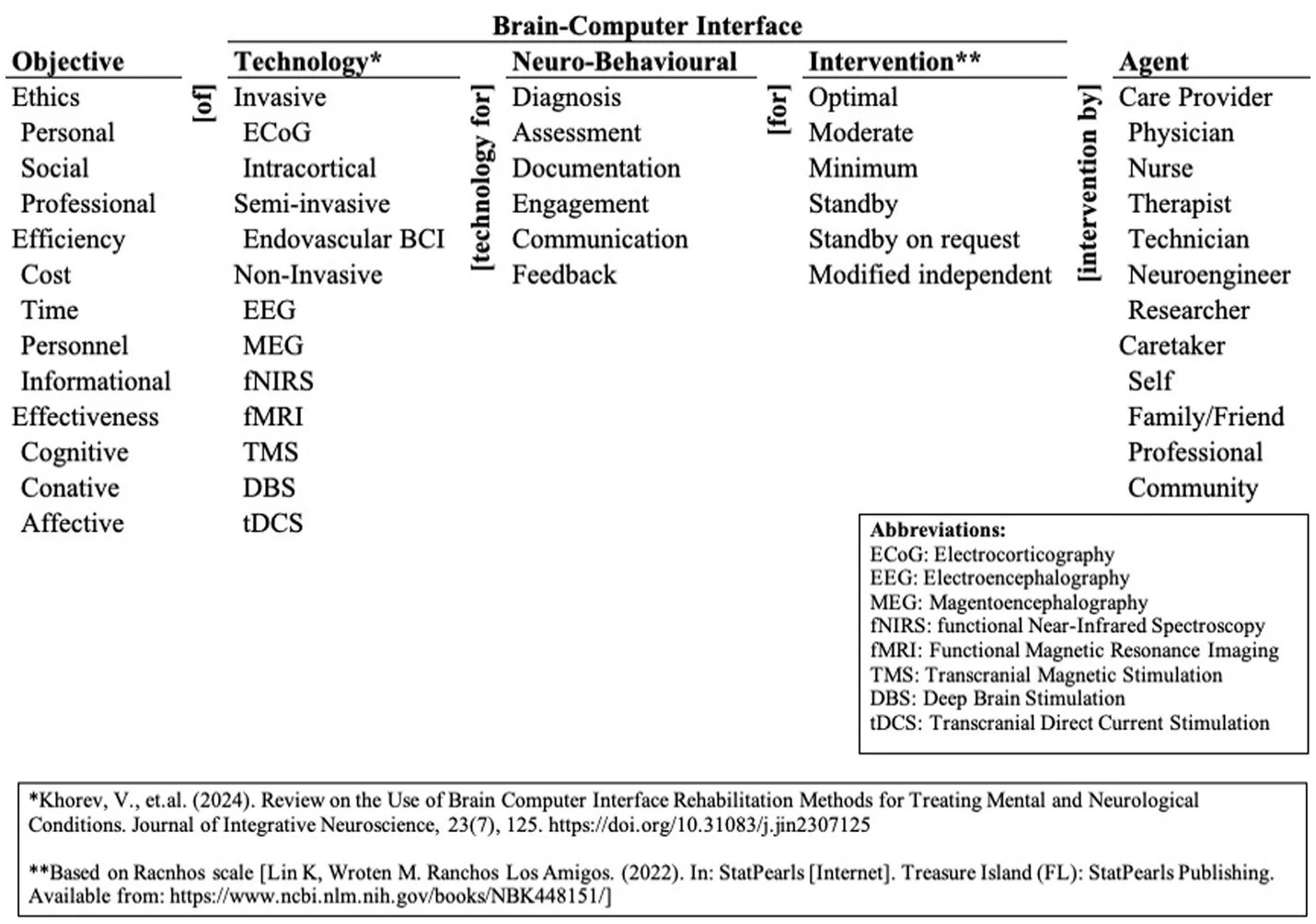
BCIwiki (bciwiki.com) — The study was published in Frontiers in Human Neuroscience on August 11, 2026. Invasive, semi-invasive, and non-invasive brain-computer interfaces (BCIs) are playing an increasingly important role in mental healthcare, serving central functions across all stages of neuro-behavioural interventions delivered by both care providers and caretakers.
The technology's novelty and rapid development create complex ethical challenges that must be balanced against potential gains in efficiency and effectiveness. Researchers Ajay Chandra, Arkalgud Ramaprasad, and Madhavi Rangaswamy present an Ontology of Ethics of Brain-Computer Interface in Mental Healthcare, designed as a roadmap for balancing these three dimensions.
The ontology maps all pathways by which ethics, effectiveness, and efficiency affect neuro-behavioural interventions using BCI technologies. Using this framework, stakeholders can identify and reinforce desired ethical pathways, redirect undesired or unethical ones, and discover novel ethical pathways for exploration. The work aims to provide a structured decision-support tool for the growing use of BCIs in mental health applications.