/ EN

Neuroethics

15 entries

The rapid advance of brain-computer interfaces raises ethical issues around privacy, informed consent, equitable access, and the boundaries of cognitive enhancement. This topic collects national regulatory frameworks, academic ethics discussions, and international neuro-rights initiatives.

September 2026

Generative AI Lowers the Bar for BCI Attacks, Putting Cognitive Autonomy at Risk

Researchers have mapped the brain-computer interface (BCI) attack surface along five dimensions (forged neural signals, desynchronization-based evasion, replay hijacking, "Vein Tapping" eavesdropping and embedded backdoors), which they group as "NERVE Attacks" and describe as orthogonal and together spanning the full BCI stack. Their EEGle framework, which the team is releasing to the community for building and verifying device security, surfaced 17 new neuro-specific attack instances and a stealth-versus-effectiveness trade-off in backdoor design. The authors warn that generative AI is lowering the barrier for non-expert attackers, with risks to cognitive autonomy, mental privacy and physical safety, from neural data exfiltration to malicious control of BCI-connected devices. The preprint, by Zahra Tarkhani, Georgios Akkogiounoglou, Lorena Qendro, Isabel Tscherniak and Anil Madhavapeddy, has not been peer reviewed.
August 2026

BCIs in Elderly Care: Review of 177 Studies Maps Six Ethical Themes

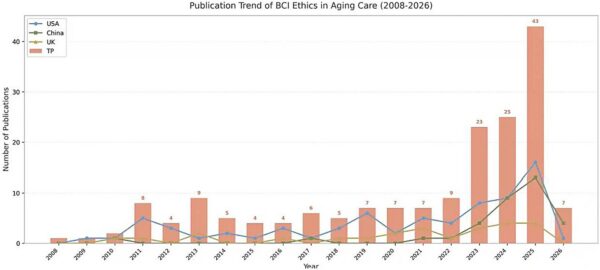
A systematic review in Frontiers in Digital Health screened 12,423 records and analyzed 177 studies of brain-computer interfaces in elderly care, identifying six recurring ethical themes: privacy and data security, informed consent and autonomy, personhood and identity, technical risk and safety, equity and access, and risk-benefit trade-offs. The authors argue those risks are built into the technology's interaction logic rather than sitting at its margins: decoding uncertainty can turn into care misjudgment, the inferability of neural data extends privacy exposure into psychological territory and power asymmetry, and technology-mediated communication strains trust and accountability. Responsible deployment, they conclude, requires embedding ethical principles systematically into care processes.

Teacher Support Was the Strongest Predictor of Student BCI Adoption

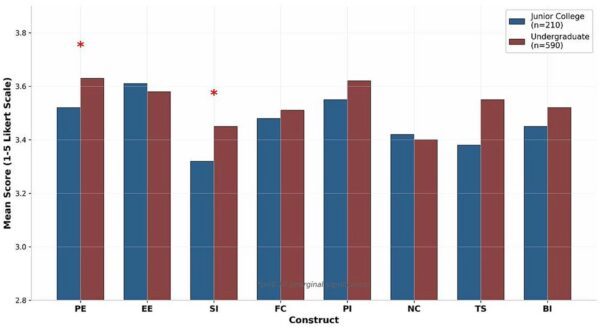
A survey of 800 students at 10 Chinese universities found teacher support was the strongest predictor of willingness to use BCI technology (beta=0.337), while performance expectancy was not significant (beta=0.059). Neuroethical concern was also non-significant in the structural model, yet 28 of 40 interviewees named privacy as their leading worry, suggesting concern may reflect engagement rather than rejection before adoption.

Study reviews invasive and non-invasive BCI use

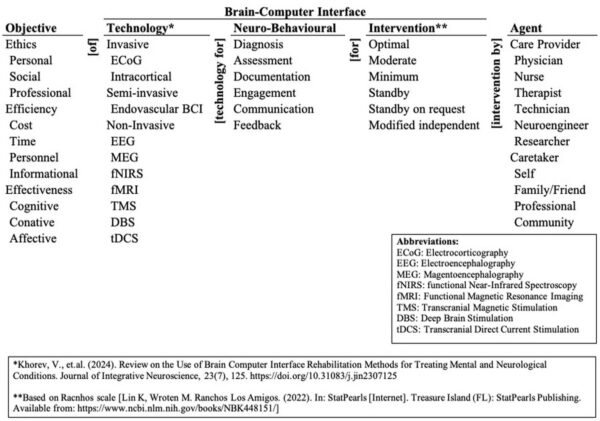
A systematic review of BCI medical applications published on August 17, 2026 in Theoretical and Natural Science covers literature review, comparative case analysis of invasive vs non-invasive techniques, and interdisciplinary assessment. It reports that invasive BCIs reach 80% to 100% task success rates in robotic arm control but are limited by surgical hazards, progressive signal deterioration and costs above $250,000, while non-invasive BCIs are safer and more widely deployed in community neurorehabilitation with about 70% effectiveness for post-stroke upper-limb recovery, yet suffer poor signal-to-noise ratios, a BCI illiteracy rate near 30% and low information transfer speeds. The review also addresses neural data privacy, autonomy paradoxes and inequitable access.
July 2026

Center for Neurotechnology Highlights Nine New Papers

The Center for Neurotechnology listed nine new papers spanning experimental and computational neuroscience, neural interfaces and neuroethics. The selection includes Smart Dura for multimodal neural recording and modulation, work on transcutaneous spinal-stimulation trials, primate optogenetics, co-adaptive interfaces, motor-cortex activity and participatory neuroethics research.
May 2026

Jiangxi Sets 10-Day Clock on BCI Ethics Review

The Jiangxi Provincial Health Commission in eastern China issued Guidelines for Ethics Review of Brain-Computer Interface Clinical Research Projects on May 26, 2026, document number Gan Wei Ke Jiao Fa [2026] No. 8, providing implementing detail for the mutual recognition mechanism proposed in the province's November 2025 BCI measures. For multicentre projects the lead institution's ethics committee conducts the first full review; participating institutions should finish within 10 working days of receiving complete materials and examine only local research conditions, staff qualifications and the informed-consent process; and the lead institution must file with the provincial medical ethics expert committee within 10 working days. Invasive projects treating neurological or psychiatric disease need provincial committee review within 20 working days, with an opinion issued within a further seven.
November 2025

Jiangxi Floats Mutual Ethics Review for BCI

The General Office of China's Jiangxi Provincial People's Government issued Several Measures for Accelerating the Development of Brain-Computer Interface Technology and Industry in Jiangxi on November 26, 2025, document number Gan Fu Ting Fa [2025] No. 29, setting out 11 measures across four areas. It was the first provincial document to follow the seven-ministry national guidance and is the only one that sets no quantitative industry targets at all. Its eleventh measure calls for implementing BCI research ethics guidelines and establishing mutual recognition of clinical research ethics review, a first among provincial documents. Other measures deploy a provincial major science and technology programme, back Ganjiang New Area in building a rehabilitation centre and a high-quality EEG dataset, and offer early regulatory engagement plus rewards for Class II and Class III innovative device approvals.
September 2024
April 2024
October 2021
December 2019
© 2026 BCIwiki.com Digest Topics Tips Subscribe Revisions About