

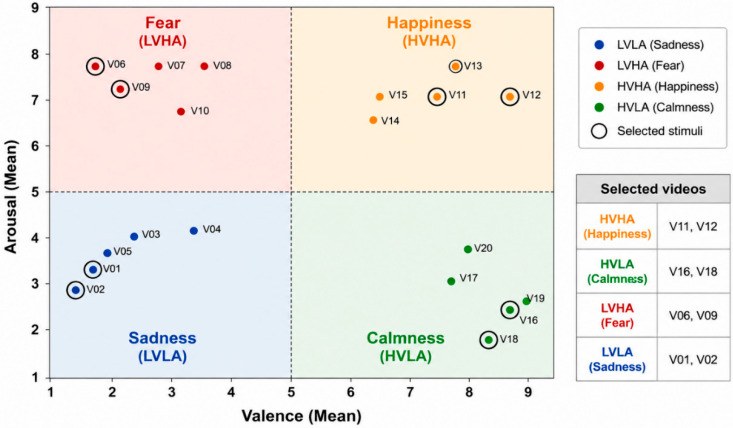
BCIwiki (bciwiki.com) — An EEG-based emotion recognition framework achieved up to 0.88 accuracy in subject-dependent evaluation but near-chance performance in subject-independent tests, researchers at Walailak University in Thailand reported in Sensors on August 13, 2026. The study aimed to explore the feasibility of affective brain-computer interfaces (BCIs).The framework recognized emotions within a valence-arousal model using auditory stimulation. Predefined emotional states were established with validated affective video clips and evaluated through EEG responses to instrumental melodies. The team systematically assessed three EEG features—discrete wavelet transform (DWT), functional connectivity (FC), and effective connectivity (EC)—and their combinations, using five machine learning classifiers. DWT achieved the highest subject-dependent accuracy (0.88), followed by the combined feature set (0.84). However, leave-one-subject-out (LOSO) evaluation yielded near-chance performance across all feature domains (0.23-0.30), highlighting substantial inter-subject variability.
Few-shot subject adaptation using 25%-75% of subject-specific calibration data substantially improved subject-independent performance, with FC reaching the highest accuracy of 0.77 at 75% calibration. The findings demonstrate the feasibility of EEG-based emotion recognition using auditory stimulation under predefined affective conditions and provide a foundation for developing personalized affective BCI systems.