/ EN

Non-invasive BCI

94 entries

Non-invasive BCIs collect brain signals via scalp EEG, functional near-infrared spectroscopy, and other techniques without surgery. This topic covers EEG headsets, SSVEP spellers, motor imagery paradigms, and product and research developments in the field.

September 2026

Low-Channel EEG Network Decodes Emotions at 87% Accuracy by Modeling Frontotemporal Asymmetry

Portable EEG headsets capture far fewer channels than lab-grade systems, limiting emotion decoding accuracy. Researchers at Xiamen University of Technology developed the Spatiotemporal Spectral Asymmetric Fusion Network (STSANet), which explicitly models nonlinear hemispheric lateralization between homologous frontotemporal electrodes. On the SEED benchmark and a self-collected dataset, STSANet achieved 86.80% and 87.43% accuracy, respectively. The team also confirmed consistent spectral energy distributions between the portable Xmuse and the professional-grade Enobio, suggesting the approach could work on consumer-grade hardware.
Two Occipital EEG Channels Decode Blinks and Saccades at 72.37% Accuracy

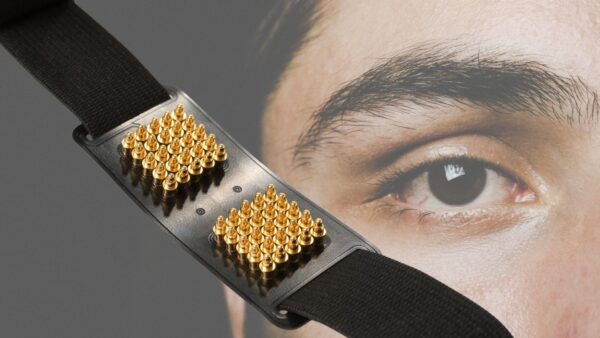
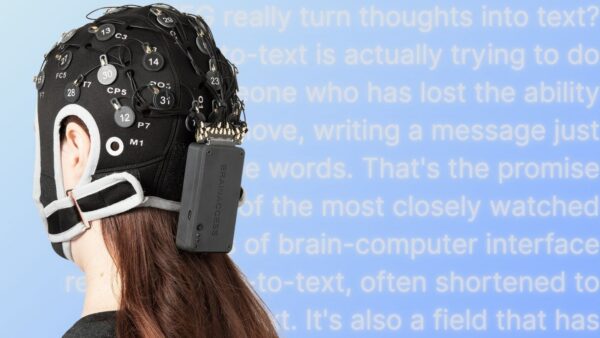
A research team in Poland used just two occipital electrodes (O1 and O2) on an EEG headband to distinguish four classes of eye events (blinks, left saccades, right saccades and a neutral state) with 72.37% test accuracy. Instead of training a single stronger model, they split four one-dimensional convolutional neural networks into binary experts and used stacked generalization, letting a meta-classifier resolve conflicts between them. Notably, the experts that performed worst on their own produced the best results when combined. The work was published by Neurotechnology, an EEG hardware maker whose BrainAccess brand makes consumer EEG headbands; HALO is its four-channel portable headband, and the accompanying software is free. Eye tracking usually requires dedicated equipment, and this study shows that two occipital channels on a consumer EEG headband can also pick up blinks and saccades. But the data come from only 4 healthy participants and 1,284 samples, so the approach is still a long way from replacing an eye tracker.

SPAR-EEG Single-Channel Denoiser Lifts P300 Speller Accuracy by 7.8 Points

Wearable neurotechnology and BCI applications, from assistive interfaces to clinical monitoring, favor single-channel EEG because it needs few electrodes and is light to wear. But muscle, eye and motion artifacts are hard to remove from a single channel, especially without auxiliary channels, artifact labels or hand-picked clean baseline segments. SPAR-EEG needs none of these: it applies three artifact-specific attenuation passes to each EEG segment, one based on variational mode decomposition for high-frequency muscle bursts and two based on singular spectrum analysis for blink-like ocular transients and slow motion drift. It achieved the best artifact-region SNR improvement at all 26 SNR levels tested and raised final accuracy by 7.8 percentage points in a P300 speller task using only the FP1 and FP2 leads.

CoME Framework Scores How Mobile an EEG Study Really Is

A participant walking on a treadmill and one walking freely outdoors with a recorder on their back can both be described as doing mobile EEG, yet their freedom of movement differs enormously. The CoME framework, proposed in 2017, scores a study on four dimensions (device mobility, participant mobility, system specification and channel count) in a format such as (2D, 4P, 17S, 32C). Device and participant mobility have to be scored separately: a head-mounted system used for resting-state recording earns a high device score but still rates 0P for participant mobility. The framework is not a product ranking, and a higher score does not mean a better system.

EEG-to-Text Results Overstated as Random Noise Fools Some Decoders

Translating scalp EEG directly into free-form text has long been seen as one of the most ambitious goals for non-invasive brain-computer interfaces. But when researchers fed random noise instead of real EEG into several published decoders, some models still produced fluent sentences and scored about as well as they did on real brain data, suggesting the language model was doing most of the work. The field has since made noise-baseline tests and decoding without teacher forcing standard validation practice, and has used magnetoencephalography (MEG) as a comparison to quantify how far EEG trails cleaner signals.

AI Should Read Intent in BCI Exoskeletons While Controllers Enforce Limits, Review Says

A brain-computer interface can read neural activity tied to movement, while a powered exoskeleton supplies the force needed to carry it out. But EEG is noisy, muscle signals shift with fatigue and recovery, and the right level of assistance depends heavily on the user and the task, so AI's main value lies in handling several changing signals at once rather than relying on a single fixed input. The review surveys how EEG, EMG and mechanical sensing are combined for exoskeleton control and contrasts two applications with very different goals: stroke rehabilitation and healthy users. The author argues that higher classification accuracy alone is not enough, since latency, calibration, fatigue, uncertainty and physical safety also determine whether a system is truly usable.

Low-Cost 8-Channel EEG and VR Headset Reach Up to 90% Accuracy in Single-Subject Test

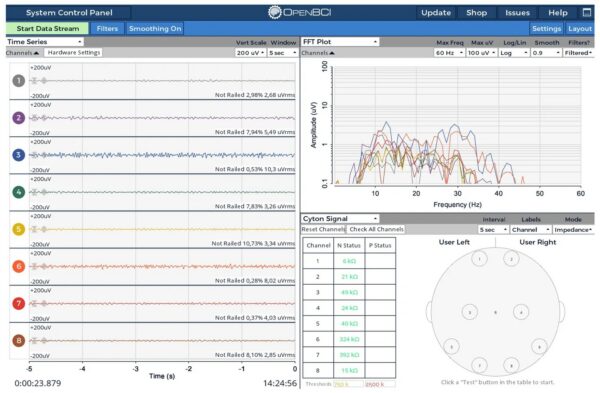
Researchers paired an 8-channel OpenBCI Cyton board and an EEG cap laid out on the international 10-20 system with a Meta Quest 2 headset to capture motor imagery and attention signals, reaching up to 90% subject-specific online classification accuracy with the EEGNet model when the signal was stable. The work targets cognitive control training for attention-deficit/hyperactivity disorder (ADHD), building EEG sensing into a virtual reality (VR) serious game so users can regulate their mental state in real time; earlier approaches mostly relied on hardware-heavy multichannel systems and did not combine motor imagery with attention levels. The team also documented artifacts from high impedance, channel saturation and mechanical tension from the headset strap, showing that a low-cost setup is usable only once skin-electrode impedance and mechanical interference are under control. This is a single-subject feasibility study with no clinical evaluation.

LLMs Cut P300 Speller Keystrokes by More Than 62%, Review Finds

This review traces the evolution of P300 brain-computer interfaces from classic spellers to AI agents. The P300 is a positive brain potential that appears about 300 milliseconds after a rare stimulus, and systems use it to determine which character a user wants to select. According to the review, recent systems such as ChatBCI and MindChat, which pair P300 spellers with large language models, cut keystrokes by more than 62% and nearly triple communication speed. The author also proposes an end-to-end architecture: an EEG headset and a real-time CNN detector, topped by an AI-agent layer made up of an LLM planner and IoT control interfaces.

fMRI-Guided Training Lifts EEG Individual-Finger Decoding Accuracy to 74.53%

Because the fingers' representations sit close together in the motor cortex, telling individual finger movements apart from scalp EEG has long been difficult. Researchers first learned a set of spectral projections from simultaneously recorded EEG and functional MRI (fMRI), then used the class geometry derived from fMRI to correct EEG predictions. In tests on 12 healthy participants, group average accuracy for two-class movement execution rose from 66.93% to 74.53%, and for three-class execution from 44.83% to 56.58%; for two-class motor imagery it rose from 80.78% to 85.63%. At inference the system uses EEG alone, with no paired fMRI data required.

Anisotropic Hydrogel Electrode Records P300 and SSVEP Signals

Electrodes for non-invasive brain-computer interfaces have long traded off conductivity, conformity to the skin and durability. A conductive hydrogel made by in situ directional freezing copolymerization forms vertically aligned ion channels and an interconnected nanoporous network, giving it higher conductivity than conventional hydrogel electrodes. In preliminary P300 and steady-state visual evoked potential (SSVEP) experiments, it recorded signals comparable in quality to conventional wet- and dry-electrode benchmarks, while also offering a tissue-matched compressive modulus, high stretchability, skin adhesion and rapid self-healing. The paper presents these experiments as a feasibility demonstration and reports no data on long-term wear stability, scaled-up fabrication or human clinical trials.

Random Forest Tells Real From Imagined Movements, Even on Consumer-Grade EEG

Can a machine tell from EEG alone whether a person is actually moving or only imagining the movement? A preprint study tested a Random Forest classifier on consumer-grade and research-grade EEG systems and found it could separate the two kinds of activity and identify which body part was involved. EEG is a basic tool for studying the brain's electrical activity during movement, and BCIs use that activity to build assistive technologies, particularly for people with physical disabilities; because extracting features and patterns from the signal remains complex, the task is often handed to machine learning. The study also found that differences in EEG between individuals drag down classification accuracy, meaning a model that works for one person may perform worse on another. The work is a preprint and has not been peer reviewed.

OPM-MEG Beats EEG by 3.6 Points in Non-Invasive Speech Decoding

Ten native Mandarin speakers read aloud six single-vowel rhymes while optically pumped magnetometer magnetoencephalography (OPM-MEG) and EEG recorded the same task. In the 150-500 ms window after stimulus onset, OPM-MEG decoded significantly more accurately than EEG with all five classifiers tested. The best-performing combination, common spatial pattern features with a linear support vector machine, reached a mean accuracy of 60.3% for OPM-MEG versus 56.7% for EEG. That suggests speech BCIs that need no implanted electrodes and do not restrict head movement may have a clearer signal path than EEG.

EEG Motor-Imagery BCI Steers Wheelchair Prototype, With SVM Decoding at 90.7%

A research team built an EEG motor-imagery brain-computer interface and connected its decoder to a physical differential-drive wheelchair prototype, offering people with severe motor impairments a non-invasive means of control, though the uncertainty of EEG decoding has long hindered such systems from driving physical actuators. Using Filter Bank Common Spatial Pattern features on a public dataset, the team compared support vector machine (SVM), k-nearest neighbors and linear discriminant analysis classifiers; SVM reached 90.7% mean accuracy, and 85.9% when replayed on an independent dataset through a hardware-in-the-loop setup. Confidence-based command validation raised accuracy among accepted commands to 97.6%, at the cost of accepting only 60.7% of them. Layered safeguards (confidence gating, self-terminating steering, transition braking, communication timeout supervision and a hardware emergency cutoff) limit the consequences of decoding errors.

Preprint: Federated NEXUS-MI Cuts Motor-Imagery BCI Backbone Traffic by About 42%

Motor-imagery brain-computer interfaces vary widely between users and have little calibration data, and federated learning lets them share a model without uploading raw EEG. NEXUS-MI treats gateway synchronization as a joint learning-and-communication control problem: raw EEG and classifier heads stay local, while an edge coordinator maintains the shared backbone network. On the BCICIV-2a and OpenBMI datasets, communication-aware coordination cut server-to-client backbone traffic by about 42%, with small, implementation-dependent differences in cohort-average accuracy. Those averages masked individual vulnerability: on BCICIV-2a, losses relative to an ideal-link reference reached about 12 percentage points.

Imagining Jogging Strengthens Sense of Owning a BCI-Controlled Avatar, Keio Team Finds

Participants steering a virtual avatar with a brain-computer interface reported a stronger sense that the avatar's body was their own when they imagined jogging than when they imagined opening their right hand, even though jogging imagery produced weaker EEG signals. Forward movement was driven by motor imagery-related sensorimotor rhythm event-related desynchronization from scalp EEG and direction by eye gaze, as participants guided a jogging avatar along a curved course before rating their embodiment in questionnaires. The researchers say neural signal strength and embodied experience can diverge, so the congruence between imagery and action should be weighed alongside standard decoding metrics.

Peking Union Medical College Team's 480-Target Hybrid BCI Hits 260 Bits per Minute

A team at the Institute of Biomedical Engineering, Chinese Academy of Medical Sciences and Peking Union Medical College, has built a hybrid brain-computer interface (BCI) that combines surface electromyography (sEMG) with steady-state visual evoked potentials (SSVEP), encoding 480 targets with 120 flicker frequencies and four hand gestures. In online experiments it achieved a mean classification accuracy of 84.55 ± 7.23% and a mean information transfer rate (ITR), a key measure of practical BCI performance, of 260.07 ± 30.41 bits/min. Its command set matches the largest target counts in existing systems, and the authors place its performance among the top, offering a technical reference for large-command-set BCIs. The work appeared in Cognitive Neurodynamics on September 7, 2026.

PNPL 2026 Challenges Teams to Adapt Speech Decoders on 10 Minutes of Data

A preprint posted to arXiv on September 3, 2026, sets out the 2026 PNPL competition, built on an extended LibriBrain100 dataset that adds 32 subjects at about 40 minutes each and roughly 80 more hours of within-subject data. The competition runs two tracks: a Deep track for within-subject word classification at scale, and a Broad track for cross-subject generalization that steps subject-specific fine-tuning data down from about 40 minutes to 20 and then 10, a clinically feasible range. Winning 2025 submissions reached F1-macro scores of 95.6% on speech detection and 73.6% on phoneme classification.

NETBCI Dataset Pairs MEG and EEG from 19 Users across Four BCI Training Sessions

A team in France and the United States has released NETBCI, a longitudinal multimodal dataset pairing magnetoencephalography (MEG) and electroencephalography (EEG) from 19 healthy subjects across 4 sessions performed on 4 different days, built to study how brain networks reorganize during brain-computer interface training. Controlling a BCI remains a learned skill that a non-negligible proportion of users never acquire even after several sessions, the authors write, and the causes of that inter-individual variability remain an open question. Each session comprises 2 eyes-open resting-state recordings of 3 minutes each plus 6 runs in which participants either sustained right-hand motor imagery or stayed at rest to control the position of a virtual cursor, and the release also includes anonymized MRI scans and behavioral scores; the authors say they hope the sample size and range of modalities will support analyses beyond brain network reorganization.

Hybrid BCI Replaces Exoskeleton Crutch Controls at 95.06% SSVEP Accuracy

A hybrid brain-computer interface replaced crutch control for 10 participants walking with a custom lower-limb exoskeleton, classifying steady-state visual evoked potentials with 95.06% accuracy and reaching F1 scores of 99.80% and 99.22% for its wink- and clench-triggered asynchronous switches, researchers reported in IEEE TNSRE. Measured against crutch control, the system scored 78.25 versus 53.50 on the System Usability Scale and 3.15 versus 7.85 on NASA-TLX physical demand.

ANT Neuro, optohive to Build Hybrid EEG-fNIRS Cap

ANT Neuro, the Dutch EEG equipment maker headquartered in Hengelo, announced a strategic collaboration on September 1, 2026 with optohive AG, the Swiss developer of the HiveOne functional near-infrared spectroscopy system. Under the agreement, HiveOne will be sold and supported through ANT Neuro's regional sales and technical teams, reaching the research customers the company says it has served for nearly 30 years. The two will also co-develop a hybrid cap that holds ANT Neuro's eego EEG technology and HiveOne together and synchronizes both data streams through Lab Streaming Layer; optohive was founded in 2025 as an ETH Zurich spin-off, the announcement said.

SEDAT: Hybrid Tokenizer Lifts EEG Foundation Model Accuracy by up to 15.3%

Researchers at Northwestern Polytechnical University propose SEDAT, a hybrid tokenizer for large EEG foundation models that folds squeeze-and-excitation spatial aggregation, data-adaptive Gaussian average filtering, instantaneous-frequency-guided segmentation and Fourier-domain resampling into a single efficient pipeline. Evaluated on 10 heterogeneous EEG datasets with four foundation models, LaBraM, EEGFormer, EEGPT and NeuroGPT, SEDAT improved classification by up to 15.3% over fixed-length windowing and by 1.2-4.6% over the next-best tokenizer, the authors report. The study was published in the Journal of Neural Engineering on September 1, 2026.

48-Subject Study Shows 3-Channel P300 Matches 8-Channel Performance

Researchers at Guangzhou Maritime University, Guangdong University of Technology and Guangzhou University in southern China combined a genetic algorithm with Bayesian linear discriminant analysis to pick a fixed, strongly generalizable three-channel subset from a conventional eight-channel P300 BCI, avoiding per-user recalibration. In offline and online virtual reality experiments with 48 healthy subjects, the three-channel system matched the eight-channel system on accuracy and information transfer rate, while equipment preparation fell from 30 minutes to 3, a 90% cut. NASA-TLX scores showed significantly lower mental and physical workload. The study was published in Biomimetics on September 1, 2026.
August 2026

72-Trial Meta-Analysis Ranks Noninvasive BCI Options for Post-Stroke Arm Recovery

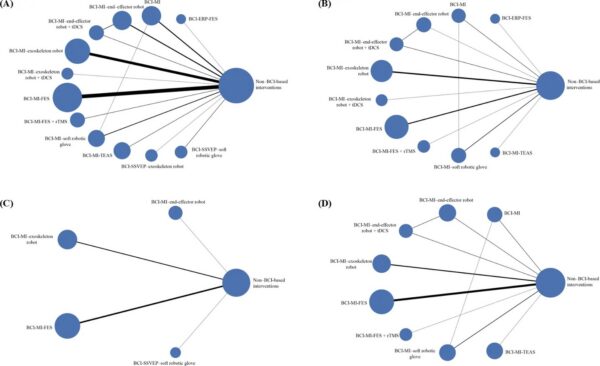
A network meta-analysis of 72 randomized controlled trials covering 2,906 stroke patients found that noninvasive brain-computer interface (BCI) interventions significantly improve upper limb motor function and activities of daily living, with BCI combined with motor imagery and transcutaneous electrical acupoint stimulation ranking highest for motor recovery. The review, published in the Journal of Medical Internet Research on August 28, 2026, sorted 12 intervention types by paradigm, feedback device and adjunctive stimulation to produce relative rankings for clinical use. Evidence certainty was low to moderate, so the authors describe the findings as exploratory and call for higher-quality trials.

SSVEP-TFFNet Beats FBCCA in XR Headsets, Even at Four Electrodes

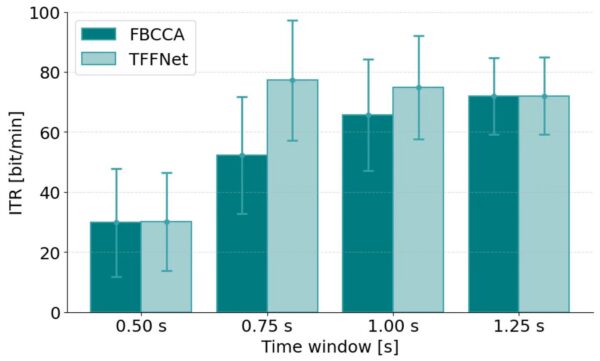
Researchers at the University of Naples Federico II in Italy report that the SSVEP-TFFNet deep-learning model outperforms filter bank canonical correlation analysis (FBCCA) at classifying steady-state visual evoked potentials (SSVEP) recorded in extended reality (XR), where headset visuals degrade EEG quality. They used an open XR benchmark dataset of 30 subjects and 1200 trials acquired with Microsoft HoloLens 2. Cutting the montage from 8 channels to 6 or 4 left performance close to the full set, supporting lightweight, wearable XR-BCI designs.

Singapore's NUH Tests Lifescapes BCI for Hand Recovery After Stroke

National University Hospital in Singapore has registered a clinical trial (NCT07784920) evaluating Lifescapes, an EEG-based brain-computer interface, for hand motor recovery after stroke. The 32-participant study, not yet recruiting, will compare Lifescapes therapy delivered with reduced therapist supervision against conventional rehabilitation and assess whether it is operationally feasible in the local clinical setting. Lifescapes combines motor imagery practice, biofeedback, neuromuscular electrical stimulation and robotic assistance for stroke patients with severe hand paralysis; an earlier trial in 40 patients showed improvement in motor function.

Gaze-Plus-Motor-Imagery BCI Reaches 100% Accuracy With 16-Channel EEG

Motor imagery BCIs have long faced two problems: wide variation between users and only a small number of distinguishable commands. In this study, users first select a target by looking at it, then confirm the choice with imagined movement, merging the two steps into one. In tests with 15 healthy participants using 16-channel EEG, the hybrid paradigm outperformed motor imagery alone in every channel configuration, reaching up to 100% accuracy. The researchers also found that fixating on the target made EEG responses more stable, which supports using fewer electrodes and lowering the hardware barrier.

Phase-sliding oscillation lifts async BCI to 94.2%

Phase mismatch between live EEG and fixed templates has long been the weak point of asynchronous steady-state visual evoked potential (SSVEP) brain-computer interfaces, which are seen as a promising route to real-world control. A new method, PSO-AC, exploits a phase-sliding oscillation phenomenon the authors observed and validated. Offline, 22 participants produced a mean control/non-control accuracy of 94.2% from just two seconds of EEG data, a result the authors say outperforms a state-of-the-art baseline; 9-class decoding also kept its edge across different time delays. Online, in robotic-arm experiments, the method delivered more stable command triggering and higher control efficiency, with the command cost per successful trial falling from 4.30 to 1.14. The paper was published in the International Journal of Neural Systems on August 21, 2026.

Teacher Support Was the Strongest Predictor of Student BCI Adoption

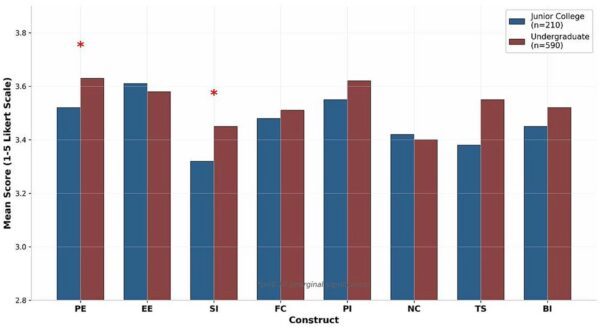
A survey of 800 students at 10 Chinese universities found teacher support was the strongest predictor of willingness to use BCI technology (beta=0.337), while performance expectancy was not significant (beta=0.059). Neuroethical concern was also non-significant in the structural model, yet 28 of 40 interviewees named privacy as their leading worry, suggesting concern may reflect engagement rather than rejection before adoption.

Cochrane Review Finds Small, Low-Certainty Gains for BCI Stroke Rehabilitation

A Cochrane review of 43 randomized trials involving 1,628 participants found that BCI training may produce a small improvement in post-stroke upper-limb motor function compared with conventional rehabilitation, while effects on lower-limb function and activities of daily living were limited or uncertain. No clear advantage emerged over sham BCI, and certainty was low to very low because of bias risk, small samples, heterogeneity and possible publication bias.
© 2026 BCIwiki.com Digest Topics Tips Subscribe Revisions About