/ EN

Decoding Algorithms

133 entries

Neural signal decoding is the technical core of brain-computer interfaces, translating brain electrical activity into executable commands or intelligible language. This topic covers algorithm advances in motor imagery classification, speech decoding, and attention detection, along with engineering challenges such as transfer learning and online adaptation.

September 2026

Low-Channel EEG Network Decodes Emotions at 87% Accuracy by Modeling Frontotemporal Asymmetry

Portable EEG headsets capture far fewer channels than lab-grade systems, limiting emotion decoding accuracy. Researchers at Xiamen University of Technology developed the Spatiotemporal Spectral Asymmetric Fusion Network (STSANet), which explicitly models nonlinear hemispheric lateralization between homologous frontotemporal electrodes. On the SEED benchmark and a self-collected dataset, STSANet achieved 86.80% and 87.43% accuracy, respectively. The team also confirmed consistent spectral energy distributions between the portable Xmuse and the professional-grade Enobio, suggesting the approach could work on consumer-grade hardware.
Two Occipital EEG Channels Decode Blinks and Saccades at 72.37% Accuracy

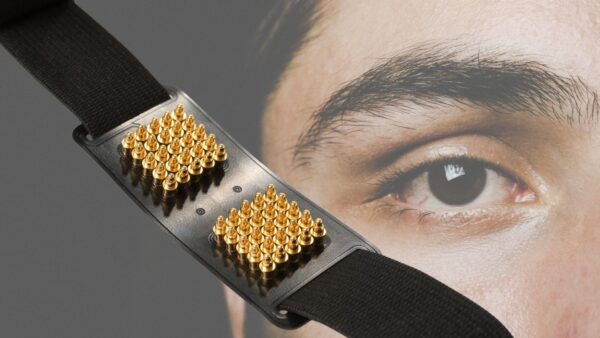
A research team in Poland used just two occipital electrodes (O1 and O2) on an EEG headband to distinguish four classes of eye events (blinks, left saccades, right saccades and a neutral state) with 72.37% test accuracy. Instead of training a single stronger model, they split four one-dimensional convolutional neural networks into binary experts and used stacked generalization, letting a meta-classifier resolve conflicts between them. Notably, the experts that performed worst on their own produced the best results when combined. The work was published by Neurotechnology, an EEG hardware maker whose BrainAccess brand makes consumer EEG headbands; HALO is its four-channel portable headband, and the accompanying software is free. Eye tracking usually requires dedicated equipment, and this study shows that two occipital channels on a consumer EEG headband can also pick up blinks and saccades. But the data come from only 4 healthy participants and 1,284 samples, so the approach is still a long way from replacing an eye tracker.

BCI-Adaptive Learning Platform Lifts Retention in 90-Learner Study

Researchers divided 90 learners into two groups: one used a BCI platform that read attention, cognitive load and mental fatigue in real time and adjusted content and pacing accordingly; the other followed a conventional online course. The BCI group showed stronger sustained engagement and better knowledge retention. The mixed-methods design combined quantitative data (pre- and post-test scores, task completion rates and neural activity indicators) with surveys and semi-structured interviews on perceived engagement, usability and the overall learning experience. The participants came from English House Language Center, the European University of Armenia and Mesrop Mashtots University. The authors also flag unresolved privacy, ethical and accessibility questions around collecting and using neural data in education.

iMINDBench Sets a Shared Cross-Institution Test for Intracranial EEG Decoding

Intracranial EEG (iEEG), recorded by electrodes implanted inside the brain, is widely regarded as an ideal signal for decoding intent, but differing datasets and preprocessing pipelines make it hard to tell whether models are actually improving. A research team built iMINDBench, a benchmark that brings together naturalistic movie-watching data from three institutions, 15 decoding tasks, standardized preprocessing and fixed evaluation splits. Pretrained systems generally beat baselines within their own preprocessing pipeline, but classic spectral baselines remained competitive on other institutions' data. Scaling up supervised data from other subjects or institutions to 25 times the volume yielded only limited, task-dependent gains over training on data from the same session.

SPAR-EEG Single-Channel Denoiser Lifts P300 Speller Accuracy by 7.8 Points

Wearable neurotechnology and BCI applications, from assistive interfaces to clinical monitoring, favor single-channel EEG because it needs few electrodes and is light to wear. But muscle, eye and motion artifacts are hard to remove from a single channel, especially without auxiliary channels, artifact labels or hand-picked clean baseline segments. SPAR-EEG needs none of these: it applies three artifact-specific attenuation passes to each EEG segment, one based on variational mode decomposition for high-frequency muscle bursts and two based on singular spectrum analysis for blink-like ocular transients and slow motion drift. It achieved the best artifact-region SNR improvement at all 26 SNR levels tested and raised final accuracy by 7.8 percentage points in a P300 speller task using only the FP1 and FP2 leads.

EEG-to-Text Results Overstated as Random Noise Fools Some Decoders

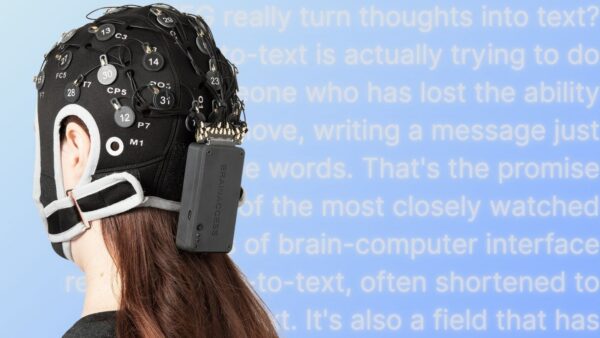
Translating scalp EEG directly into free-form text has long been seen as one of the most ambitious goals for non-invasive brain-computer interfaces. But when researchers fed random noise instead of real EEG into several published decoders, some models still produced fluent sentences and scored about as well as they did on real brain data, suggesting the language model was doing most of the work. The field has since made noise-baseline tests and decoding without teacher forcing standard validation practice, and has used magnetoencephalography (MEG) as a comparison to quantify how far EEG trails cleaner signals.

4,096-Channel μECoG Array Maps Brain Function During Surgery With 91.3% Channel Yield

During removal of a right parafalcine meningioma, surgeons placed four Layer 7 μECoG arrays, 4,096 electrodes in total, on either side of the central sulcus and recorded somatosensory evoked potentials under 5 contralateral stimulation conditions. Using a 2 MΩ impedance cutoff, 3,739 channels were usable, a 91.3% yield; phase-reversal latencies were 19, 21, 25, 26 and 25 ms, consistent with the standard intraoperative mapping performed in the same operation. The researchers caution that the setup provides dense spatial sampling rather than submillimeter physiological resolution: measured responses were correlated across roughly 3–4 mm of cortex.

Pretraining Cuts Labeled Data Needed for BCI Decoding by Over 90%

Training a decoder to read brain signals usually means collecting a large labeled dataset from every new subject, which is slow and a burden on patients. The proposed method, MAPA, first runs self-supervised pretraining on unlabeled intracranial EEG recordings pooled across subjects, then transfers to new ones. The difficulty is that electrode contact placement and neuroanatomy vary from person to person, so MAPA adds two spatial encodings, an anatomical region embedding and a relative positional encoding, to a standard masked autoencoder. In cross-subject tests, about 164 labeled trials were enough to reach the accuracy that otherwise takes 3,500. The team reports that MAPA set new best results on the Neuroprobe benchmark in all three settings, within-session, cross-session and cross-subject, without fine-tuning, suggesting that calibration for implanted BCIs could become much shorter.

fMRI-Guided Training Lifts EEG Individual-Finger Decoding Accuracy to 74.53%

Because the fingers' representations sit close together in the motor cortex, telling individual finger movements apart from scalp EEG has long been difficult. Researchers first learned a set of spectral projections from simultaneously recorded EEG and functional MRI (fMRI), then used the class geometry derived from fMRI to correct EEG predictions. In tests on 12 healthy participants, group average accuracy for two-class movement execution rose from 66.93% to 74.53%, and for three-class execution from 44.83% to 56.58%; for two-class motor imagery it rose from 80.78% to 85.63%. At inference the system uses EEG alone, with no paired fMRI data required.

More Components Can Hurt P300 Spellers, Full-Factorial Study Finds

P300 BCI spellers are often built by switching on every component that works on its own, on the assumption that more is better. A preprint study tested that assumption with a four-component full-factorial experiment and found that a component's value is conditional, not additive. Subject calibration was the strongest single contributor; Euclidean Alignment made up for the lack of calibration in zero-calibration settings; and stacking components that are each useful on their own could lower performance, an effect the authors call component anti-synergy. Language model support was not universally beneficial either: its effect depended strongly on how strong the underlying EEG pipeline was.

OPM-MEG Beats EEG by 3.6 Points in Non-Invasive Speech Decoding

Ten native Mandarin speakers read aloud six single-vowel rhymes while optically pumped magnetometer magnetoencephalography (OPM-MEG) and EEG recorded the same task. In the 150-500 ms window after stimulus onset, OPM-MEG decoded significantly more accurately than EEG with all five classifiers tested. The best-performing combination, common spatial pattern features with a linear support vector machine, reached a mean accuracy of 60.3% for OPM-MEG versus 56.7% for EEG. That suggests speech BCIs that need no implanted electrodes and do not restrict head movement may have a clearer signal path than EEG.

Passenger EEG Helps Self-Driving AI Spot Road Risks Early With 95.3% Balanced Accuracy

Researchers recorded passengers' EEG as they watched driving scenes in a highly automated vehicle, then trained models to judge whether a risk lay ahead and where the hazard appeared. A 3D-CRNN reached 95.3% ± 2.7% balanced accuracy in risk prediction and raised hazard identification from 80.9% to 85.0%. In cross-subject tests on passengers the model had not seen, balanced accuracy fell to 64.9% ± 8.5%, showing the approach is still some way from deployment.

Imagining Jogging Strengthens Sense of Owning a BCI-Controlled Avatar, Keio Team Finds

Participants steering a virtual avatar with a brain-computer interface reported a stronger sense that the avatar's body was their own when they imagined jogging than when they imagined opening their right hand, even though jogging imagery produced weaker EEG signals. Forward movement was driven by motor imagery-related sensorimotor rhythm event-related desynchronization from scalp EEG and direction by eye gaze, as participants guided a jogging avatar along a curved course before rating their embodiment in questionnaires. The researchers say neural signal strength and embodied experience can diverge, so the congruence between imagery and action should be weighed alongside standard decoding metrics.

Generative AI Lowers the Bar for BCI Attacks, Putting Cognitive Autonomy at Risk

Researchers have mapped the brain-computer interface (BCI) attack surface along five dimensions (forged neural signals, desynchronization-based evasion, replay hijacking, "Vein Tapping" eavesdropping and embedded backdoors), which they group as "NERVE Attacks" and describe as orthogonal and together spanning the full BCI stack. Their EEGle framework, which the team is releasing to the community for building and verifying device security, surfaced 17 new neuro-specific attack instances and a stealth-versus-effectiveness trade-off in backdoor design. The authors warn that generative AI is lowering the barrier for non-expert attackers, with risks to cognitive autonomy, mental privacy and physical safety, from neural data exfiltration to malicious control of BCI-connected devices. The preprint, by Zahra Tarkhani, Georgios Akkogiounoglou, Lorena Qendro, Isabel Tscherniak and Anil Madhavapeddy, has not been peer reviewed.

KU Leuven Team Finds EEG Tracking of Moving Objects Weakens Farther From the Gaze Point

Even when the eyes stay fixed on one point, the brain tracks moving objects in a video, and that tracking grows stronger with attention. But researchers at KU Leuven found that EEG tracking of an object's motion weakens the farther the object sits from the fixation point, meaning decoding methods that read attention from tracking strength may mistake where an object is for where attention is.

Peking Union Medical College Team's 480-Target Hybrid BCI Hits 260 Bits per Minute

A team at the Institute of Biomedical Engineering, Chinese Academy of Medical Sciences and Peking Union Medical College, has built a hybrid brain-computer interface (BCI) that combines surface electromyography (sEMG) with steady-state visual evoked potentials (SSVEP), encoding 480 targets with 120 flicker frequencies and four hand gestures. In online experiments it achieved a mean classification accuracy of 84.55 ± 7.23% and a mean information transfer rate (ITR), a key measure of practical BCI performance, of 260.07 ± 30.41 bits/min. Its command set matches the largest target counts in existing systems, and the authors place its performance among the top, offering a technical reference for large-command-set BCIs. The work appeared in Cognitive Neurodynamics on September 7, 2026.

Compact Hybrid Deep Learning Model Reaches 83.89% on Four-Class Motor Imagery EEG

Researchers have proposed a compact hybrid deep learning model for classifying four-class motor imagery EEG signals. Combining spatial convolutional filtering, bidirectional temporal modeling and an attention mechanism, the end-to-end model reached a mean accuracy of 83.89% on the public BCI Competition IV Dataset 2a, outperforming conventional baselines. The authors say bidirectional temporal modeling and attention weighting make motor imagery classification more robust, which could help BCIs assist patients with motor disabilities, and that the model offers an efficient option for decoding in resource-constrained settings.

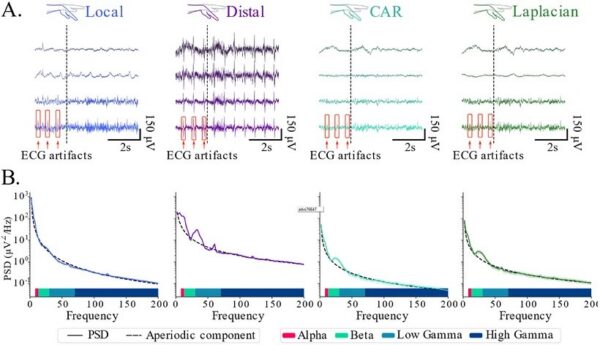
Carnegie Mellon Team Strips ECG Noise From Stentrode, Keeps Motor Signals

Stentrode, an endovascular brain-computer interface, often picks up electrocardiogram (ECG) artifacts. Researchers at Carnegie Mellon University and colleagues found that conventional re-referencing schemes reduce ECG artifacts but also diminish beta-band activity linked to movement. They applied band-limited independent component analysis (BL-ICA) as a spatial filter to remove ECG artifacts while preserving motor features. The study appeared in Advanced Science.

Speech Imagery BCIs May Be Overrated as Only 36% of Participants Reach Significance

Speech imagery (SI) brain-computer interface results may be hard to reproduce, a University of Essex team reports. When the researchers re-ran published decoding pipelines, classification accuracy averaged 11.25 percentage points below the original reports, with gaps ranging from 2% to 39%; in a replication analysis, only 36% of SI participants cleared the threshold for statistical significance, against 91% in motor imagery (MI) datasets. Published in the Journal of Neural Engineering on September 4, 2026, the study is the first to assess both the reproducibility and the replicability of SI decoding. Every SI study evaluated was missing methodological details, and the authors conclude that SI's feasibility as a practical BCI paradigm may have been overestimated, a warning for clinical applications and follow-up research that rely on it.

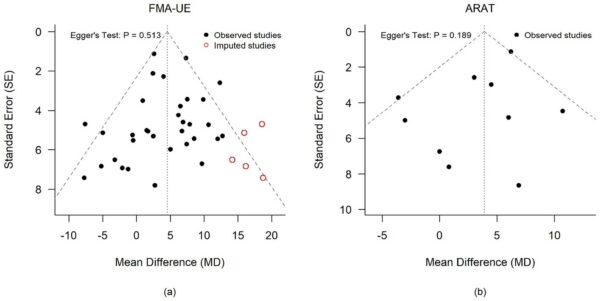
BCI Training Improves Post-Stroke Arm Function Across 35 Trials, 1,188 Patients

Brain-computer interface training significantly improves upper-limb motor function after stroke, according to a systematic review and meta-analysis of 35 randomized controlled trials involving 1,188 participants, published in Frontiers in Neurology on September 3, 2026. Pooled data showed mean improvements of 4.55 points on the Fugl-Meyer Assessment-Upper Extremity (FMA-UE), 3.90 points on the Action Research Arm Test (ARAT) and 8.53 points on the Wolf Motor Function Test (WMFT), but the effect depended heavily on the comparator: a mean difference of 6.70 against usual care versus only 1.97 against sham-contingent controls. Twenty-two trials reported multi-level neuroplastic changes, though the evidence was insufficient to explain the mechanisms of recovery.

PNPL 2026 Challenges Teams to Adapt Speech Decoders on 10 Minutes of Data

A preprint posted to arXiv on September 3, 2026, sets out the 2026 PNPL competition, built on an extended LibriBrain100 dataset that adds 32 subjects at about 40 minutes each and roughly 80 more hours of within-subject data. The competition runs two tracks: a Deep track for within-subject word classification at scale, and a Broad track for cross-subject generalization that steps subject-specific fine-tuning data down from about 40 minutes to 20 and then 10, a clinically feasible range. Winning 2025 submissions reached F1-macro scores of 95.6% on speech detection and 73.6% on phoneme classification.

Implant-Grade BCI Preserves Epilepsy HFO Biomarkers, Maps Onset Zone at 84% Sensitivity

A wireless implantable neural interface, the Brain Interchange (BIC), paired with artifact-removal algorithms captured about 82% of the high-frequency oscillations (HFOs) that a clinical-grade amplifier detected across 24-hour intracranial EEG recordings in 10 patients with drug-resistant epilepsy, according to a preprint. Using those HFOs, the system localized the seizure onset zone with 84% sensitivity and 90% specificity, comparable to clinical equipment. The authors present the work as a translational framework for chronic tracking of epileptogenic networks and for future biomarker-guided adaptive neuromodulation.

EEG Signal Lifts Team Decision Accuracy to 88%, but Only Under High Workload

Spatial-covariance EEG features can flag whether an operator's decision will be correct before the response is committed, and weighting group votes by that signal raised accuracy on contested trials from 57% to 88% as team size grew from 2 to 16, according to a preprint. Twenty-three participants ran a virtual reality target-detection task under high and low cognitive workload, and the gain appeared only in the high-workload condition; under low workload the weighting hurt performance. EEG-based decision-reliability signals are therefore workload-conditional rather than a general-purpose team augmentation tool, the authors write; the preprint has not been peer reviewed.

NVOL: Mid-Layer CLIP Alignment Lifts EEG Image Retrieval to 86.4%

A preprint from Minyi Wang, Zhenqin Wu and Rihui Li reports that aligning EEG signals to an intermediate CLIP layer rather than the final one raised 200-way image retrieval on the THINGS-EEG dataset to 78.1% mean Top-1 accuracy, and to 86.4% with CSLS. Layer-wise contrastive learning selects that layer, which the authors call the Neural Visibility Optimal Layer (NVOL); the same representation then drives generation, with a conditional diffusion prior reconstructing subject-specific NVOL features and mapping them into CLIP space for Stable Diffusion XL, which the authors say beats single-stage final-layer diffusion on semantic and structural metrics. The paper was posted to arXiv on September 2, 2026, and has not been peer reviewed.

OVMI Metric Puts Speech BCI Results on a Common Scale

Researchers have proposed Open-Vocabulary Mutual Information (OVMI), an information-theoretic metric that scores speech brain-computer interfaces on a common scale, and used it to show that accuracy figures computed only over a system's supported vocabulary can overstate how much of a user's intended speech actually gets through. Speech BCIs translate neural activity into language and offer a path to restoring communication for people with paralysis, but systems differ in datasets, recording methods and vocabularies, leaving their reported scores hard to compare. Choosing a vocabulary that maximizes OVMI yielded up to 16.3% relative accuracy improvement across three speech domains; the preprint has not been peer reviewed.

48-Subject Study Shows 3-Channel P300 Matches 8-Channel Performance

Researchers at Guangzhou Maritime University, Guangdong University of Technology and Guangzhou University in southern China combined a genetic algorithm with Bayesian linear discriminant analysis to pick a fixed, strongly generalizable three-channel subset from a conventional eight-channel P300 BCI, avoiding per-user recalibration. In offline and online virtual reality experiments with 48 healthy subjects, the three-channel system matched the eight-channel system on accuracy and information transfer rate, while equipment preparation fell from 30 minutes to 3, a 90% cut. NASA-TLX scores showed significantly lower mental and physical workload. The study was published in Biomimetics on September 1, 2026.

SEDAT: Hybrid Tokenizer Lifts EEG Foundation Model Accuracy by up to 15.3%

Researchers at Northwestern Polytechnical University propose SEDAT, a hybrid tokenizer for large EEG foundation models that folds squeeze-and-excitation spatial aggregation, data-adaptive Gaussian average filtering, instantaneous-frequency-guided segmentation and Fourier-domain resampling into a single efficient pipeline. Evaluated on 10 heterogeneous EEG datasets with four foundation models, LaBraM, EEGFormer, EEGPT and NeuroGPT, SEDAT improved classification by up to 15.3% over fixed-length windowing and by 1.2-4.6% over the next-best tokenizer, the authors report. The study was published in the Journal of Neural Engineering on September 1, 2026.

Preprint: EEG-AS Picks One of 7 EEG Foundation Models per Recording

A research team has posted a preprint on arXiv proposing EEG-AS, an instance-level algorithm selection framework that moves the choice of an EEG foundation model down to the level of a single recording. Recent EEG foundation models perform strongly across neural decoding tasks, but none is consistently best across datasets or individual instances, and instance-level model selection has been largely unexplored. EEG-AS characterizes each instance using inference-available latent EEG embeddings, handcrafted neurophysiological features and an anchor foundation model. In training it learns to reconstruct the behaviors of models it cannot observe from privileged prediction tokens; at inference it estimates those behaviors directly, so it can choose among 7 EEG foundation models without executing the whole portfolio. In experiments on seven public EEG benchmarks the framework narrows the gap between the single best solver and the per-instance oracle upper bound, the authors say. The work is a preprint and has not been peer reviewed.

U2Multi-UDA Merges Alignment, Fusion and Fine-Tuning to Lift Motor Imagery Accuracy

Researchers have proposed U2Multi-UDA, a unified multilevel multisource unsupervised domain adaptation framework for motor imagery brain-computer interfaces that raised mean accuracy by 2.69, 1.89 and 3.83 percentage points over the best-performing baselines on two public datasets and one self-constructed dataset, with consistent gains in Kappa. It tackles two persistent obstacles, wide variation between subjects and a shortage of labeled target-domain data, which existing methods address at only one level of adaptation, whether domain alignment, feature interaction or model fine-tuning. The single pipeline aligns source and target distributions with optimal transport while mutual information estimates how relevant each source domain is to the target, fuses spatio-temporal EEG features through multisource cross-attention guided by those weights and reinforced with pseudolabels, and closes with segmented weight-decomposed low-rank adaptation for parameter-efficient fine-tuning that curbs overfitting.

Researcher Proposes Slow-Fast Framework to Keep BCIs from Overfitting Short-Term Goals

A researcher warns that AI-assisted brain-computer interfaces may over-optimize short-term proxies of success and drift from users' durable goals, a closed-loop failure mode she names neuroadaptive overfitting. Artificial intelligence is turning BCIs from task-specific neural decoders into adaptive systems that complete language, smooth movement, regulate rehabilitation support and adjust stimulation. Her Slow-Fast framework paces AI assistance according to decoder evidence, uncertainty, clinical stakes, fatigue and user-defined goals, distinguishing fast, guarded and slow assistance across communication, motor control, neurorehabilitation and closed-loop neuromodulation.
© 2026 BCIwiki.com Digest Topics Tips Subscribe Revisions About