

BCIwiki (bciwiki.com) — A study published in PLOS One on October 23, 2026, reports a deep learning network developed by a collaboration involving Nanchang University, China, to decode motor imagery (MI) tasks from electroencephalography (EEG). The work addresses low signal-to-noise ratios, changing signal characteristics, and limited training data as challenges for brain-computer interface (BCI) classification.
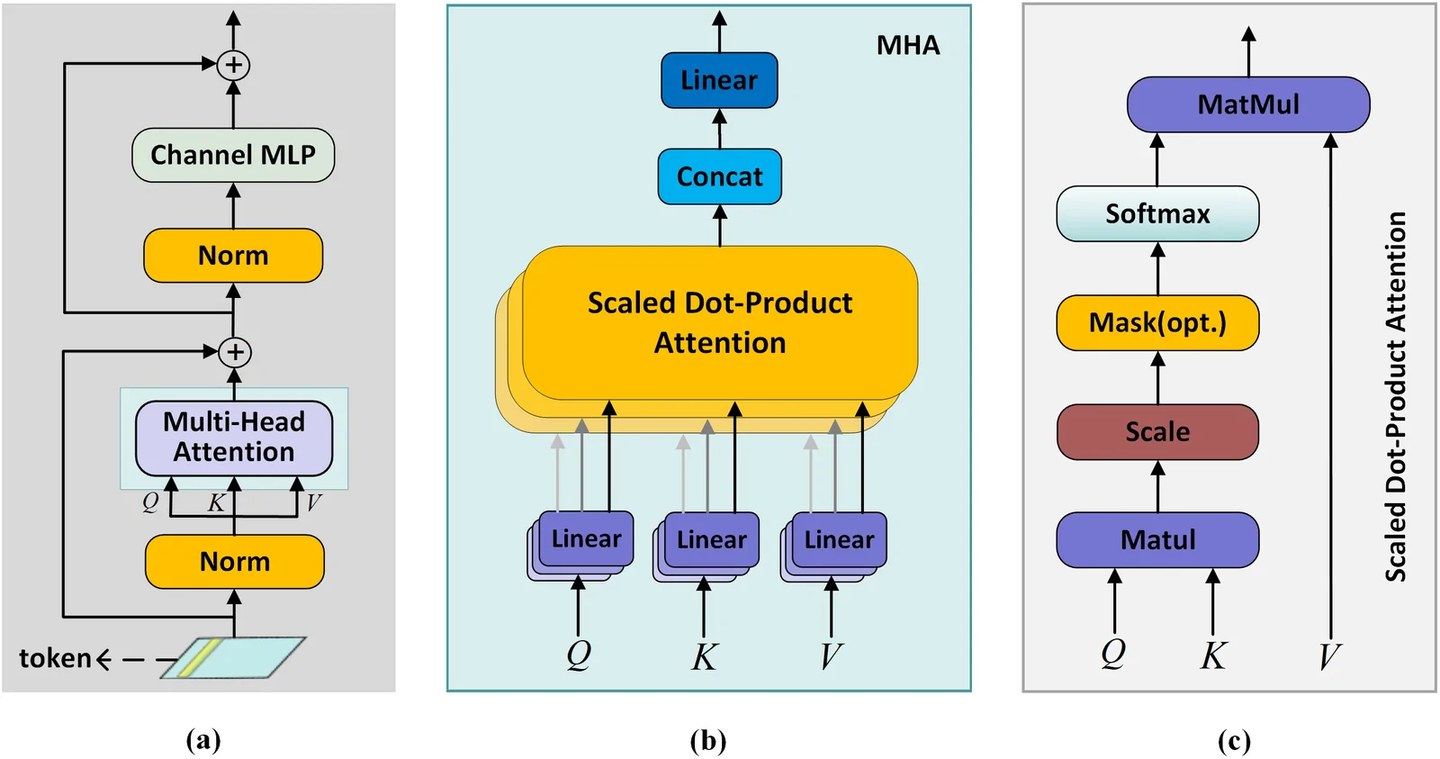
The network uses four parallel convolutional neural network (CNN) branches to extract temporal and spatial features. Each branch is followed by a Transformer block that learns global relationships among local temporal features. The four outputs are concatenated along the channel dimension and passed to a channel attention module for fusion. A CNN performs the final classification instead of a conventional fully connected layer, with the aim of reducing computational complexity.
Training data were augmented through segmentation and reconstruction. The network was evaluated on three public BCI datasets and compared with five state-of-the-art deep learning networks. Average accuracy reached 80.21% on Dataset 1's 4-class tasks, 90.19% on Dataset 2's 2-class tasks, and 97.32% on Dataset 3's 4-class tasks. The network exceeded the strongest respective baselines: FBCNet, MSFBCNN, and MSFBCNN.
These findings support motor imagery classification performance on the tested datasets. The authors present the network as a potential approach for BCI applications; classification results on public datasets do not by themselves establish real-time performance or clinical effectiveness.