/ EN

Motor Decoding

85 entries

Motor decoding translates neural signals from the motor cortex into limb movement intentions, one of the most mature BCI applications. This topic tracks decoding research from fine finger movements to whole-body actions, including online cursor control, robotic arm operation, and gait restoration.

September 2026

Synchron Stent Electrode Beats Scalp EEG per Channel in One ALS Patient

A participant with severe upper-limb paralysis caused by amyotrophic lateral sclerosis (ALS) wore an endovascular stent-electrode array and a scalp EEG cap at the same time, in the same session, while attempting ankle flexion and extension. Both recordings changed markedly during attempted movement, but the stent array showed stronger per-channel motor modulation and was unaffected by skull attenuation. Scalp EEG was more susceptible to eye blinks and jaw-muscle activity, while the stent array picked up prominent cardiac signals. Neither method reliably distinguished left from right ankle movement, leaving spatial localization an open problem.
AI Should Read Intent in BCI Exoskeletons While Controllers Enforce Limits, Review Says

A brain-computer interface can read neural activity tied to movement, while a powered exoskeleton supplies the force needed to carry it out. But EEG is noisy, muscle signals shift with fatigue and recovery, and the right level of assistance depends heavily on the user and the task, so AI's main value lies in handling several changing signals at once rather than relying on a single fixed input. The review surveys how EEG, EMG and mechanical sensing are combined for exoskeleton control and contrasts two applications with very different goals: stroke rehabilitation and healthy users. The author argues that higher classification accuracy alone is not enough, since latency, calibration, fatigue, uncertainty and physical safety also determine whether a system is truly usable.

Low-Cost 8-Channel EEG and VR Headset Reach Up to 90% Accuracy in Single-Subject Test

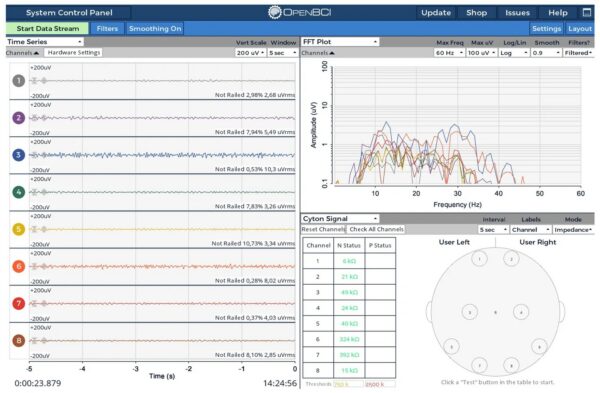
Researchers paired an 8-channel OpenBCI Cyton board and an EEG cap laid out on the international 10-20 system with a Meta Quest 2 headset to capture motor imagery and attention signals, reaching up to 90% subject-specific online classification accuracy with the EEGNet model when the signal was stable. The work targets cognitive control training for attention-deficit/hyperactivity disorder (ADHD), building EEG sensing into a virtual reality (VR) serious game so users can regulate their mental state in real time; earlier approaches mostly relied on hardware-heavy multichannel systems and did not combine motor imagery with attention levels. The team also documented artifacts from high impedance, channel saturation and mechanical tension from the headset strap, showing that a low-cost setup is usable only once skin-electrode impedance and mechanical interference are under control. This is a single-subject feasibility study with no clinical evaluation.

fMRI-Guided Training Lifts EEG Individual-Finger Decoding Accuracy to 74.53%

Because the fingers' representations sit close together in the motor cortex, telling individual finger movements apart from scalp EEG has long been difficult. Researchers first learned a set of spectral projections from simultaneously recorded EEG and functional MRI (fMRI), then used the class geometry derived from fMRI to correct EEG predictions. In tests on 12 healthy participants, group average accuracy for two-class movement execution rose from 66.93% to 74.53%, and for three-class execution from 44.83% to 56.58%; for two-class motor imagery it rose from 80.78% to 85.63%. At inference the system uses EEG alone, with no paired fMRI data required.

Random Forest Tells Real From Imagined Movements, Even on Consumer-Grade EEG

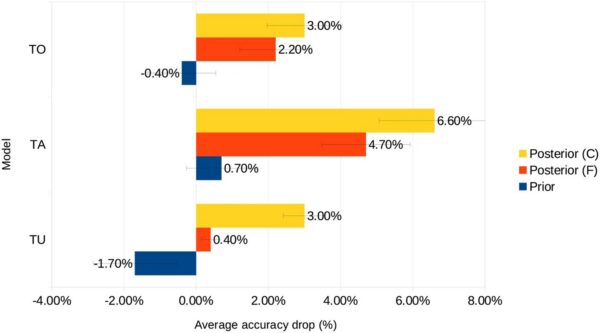
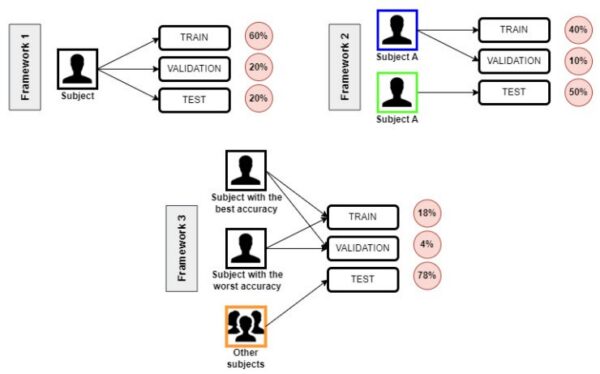
Can a machine tell from EEG alone whether a person is actually moving or only imagining the movement? A preprint study tested a Random Forest classifier on consumer-grade and research-grade EEG systems and found it could separate the two kinds of activity and identify which body part was involved. EEG is a basic tool for studying the brain's electrical activity during movement, and BCIs use that activity to build assistive technologies, particularly for people with physical disabilities; because extracting features and patterns from the signal remains complex, the task is often handed to machine learning. The study also found that differences in EEG between individuals drag down classification accuracy, meaning a model that works for one person may perform worse on another. The work is a preprint and has not been peer reviewed.

New Filtering Pipeline Keeps BCI Decoding at 76% During Brain Stimulation

Running a motor-imagery BCI while transcranial alternating current stimulation (tACS) is switched on has been difficult, because stimulation artifacts swamp the brain rhythms the decoder relies on and push accuracy close to chance. In a controlled test with 14 healthy participants, a real-time spatial filtering pipeline combining spatio-spectral decomposition with beamforming held accuracy at 76 ± 9% during stimulation, while a standard Laplacian filter managed only 58 ± 9%. That makes closed-loop "stimulate while reading" operation feasible at the signal level; whether it actually improves BCI performance or produces neuroplastic changes, the paper explicitly leaves to future research.

EEG Motor-Imagery BCI Steers Wheelchair Prototype, With SVM Decoding at 90.7%

A research team built an EEG motor-imagery brain-computer interface and connected its decoder to a physical differential-drive wheelchair prototype, offering people with severe motor impairments a non-invasive means of control, though the uncertainty of EEG decoding has long hindered such systems from driving physical actuators. Using Filter Bank Common Spatial Pattern features on a public dataset, the team compared support vector machine (SVM), k-nearest neighbors and linear discriminant analysis classifiers; SVM reached 90.7% mean accuracy, and 85.9% when replayed on an independent dataset through a hardware-in-the-loop setup. Confidence-based command validation raised accuracy among accepted commands to 97.6%, at the cost of accepting only 60.7% of them. Layered safeguards (confidence gating, self-terminating steering, transition braking, communication timeout supervision and a hardware emergency cutoff) limit the consequences of decoding errors.

Preprint: Federated NEXUS-MI Cuts Motor-Imagery BCI Backbone Traffic by About 42%

Motor-imagery brain-computer interfaces vary widely between users and have little calibration data, and federated learning lets them share a model without uploading raw EEG. NEXUS-MI treats gateway synchronization as a joint learning-and-communication control problem: raw EEG and classifier heads stay local, while an edge coordinator maintains the shared backbone network. On the BCICIV-2a and OpenBMI datasets, communication-aware coordination cut server-to-client backbone traffic by about 42%, with small, implementation-dependent differences in cohort-average accuracy. Those averages masked individual vulnerability: on BCICIV-2a, losses relative to an ideal-link reference reached about 12 percentage points.

Imagining Jogging Strengthens Sense of Owning a BCI-Controlled Avatar, Keio Team Finds

Participants steering a virtual avatar with a brain-computer interface reported a stronger sense that the avatar's body was their own when they imagined jogging than when they imagined opening their right hand, even though jogging imagery produced weaker EEG signals. Forward movement was driven by motor imagery-related sensorimotor rhythm event-related desynchronization from scalp EEG and direction by eye gaze, as participants guided a jogging avatar along a curved course before rating their embodiment in questionnaires. The researchers say neural signal strength and embodied experience can diverge, so the congruence between imagery and action should be weighed alongside standard decoding metrics.

1,145-Patient Meta-Analysis Finds Stronger Evidence for Robotic Stroke Rehab Than BCI

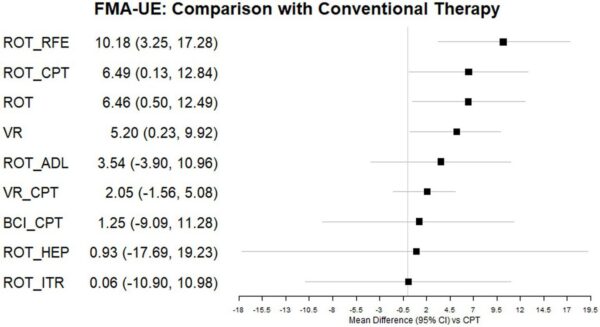
Which new technology does most for upper-limb recovery after stroke: virtual reality, robotics or a brain-computer interface (BCI)? A systematic review and network meta-analysis placed all three in a single evidence network, pooling 25 randomized controlled trials and 1,145 stroke survivors. The authors searched PubMed, Web of Science, the Cochrane Library and Embase from inception to October 2025, used conventional physical therapy as the common comparator in a star-shaped network, and applied a Bayesian random-effects model to estimate relative efficacy and calculate SUCRA rankings. Robot-assisted training produced the most robust findings, with two studies supporting robotics plus conventional physical therapy and three supporting robotics alone; only one BCI study yielded extractable data, too little to judge efficacy. The authors caution that the top-ranked intervention, robotics combined with rehabilitative functional electrical stimulation, rests on a single trial and should not be read as definitive evidence of superiority.

At-Home BCI Therapy Beats Home Exercise for Chronic Stroke Arm Deficits in Randomized Trial

Chronic stroke patients who used an at-home brain-computer interface (BCI) therapy system gained a mean 6.0 points on the Upper Extremity Fugl-Meyer Assessment after 12 weeks, versus 1.5 points for those on a home exercise program. Response rates were 55.5% and 9.6%, for a number needed to treat of 2.2. The trial also exposed the dropout problem in home-based studies: 17 of 42 control participants withdrew because they were dissatisfied with their group assignment.

Compact Hybrid Deep Learning Model Reaches 83.89% on Four-Class Motor Imagery EEG

Researchers have proposed a compact hybrid deep learning model for classifying four-class motor imagery EEG signals. Combining spatial convolutional filtering, bidirectional temporal modeling and an attention mechanism, the end-to-end model reached a mean accuracy of 83.89% on the public BCI Competition IV Dataset 2a, outperforming conventional baselines. The authors say bidirectional temporal modeling and attention weighting make motor imagery classification more robust, which could help BCIs assist patients with motor disabilities, and that the model offers an efficient option for decoding in resource-constrained settings.

Vietnamese BCI Speller Types up to 4.95 Characters a Minute in Two-Person Pilot

Two participants typed Vietnamese at 4.95 and 3.45 characters per minute using motor imagery EEG in a pilot test of BCI-vSpeller, a speller built around a custom virtual keyboard of more than 160 selectable keys covering characters, tone marks and special symbols. Researchers from VNU University of Engineering and Technology in Hanoi, reported the findings in Technology and Disability. BCI spellers let users enter text by controlling an interface with mental signals, an approach aimed at people with severe speech and mobility impairments.

Umbrella Review Ties Post-Stroke BCI Gains to Motor Attempt and 20-60 Minute Sessions

Motor attempt, meaning a patient's effort to move a paralyzed limb, was the intent-inducing modality most consistently tied to significant therapeutic effects in an umbrella review of 17 meta-analyses of brain-computer interface systems for stroke motor recovery, published in Symmetry on September 4, 2026 with a literature search cutoff of June 30, 2026. Electrical stimulation was a consistently effective feedback type, while robot-assisted and visual feedback gave inconsistent results, and higher weekly session frequency and moderate session durations of about 20 to 60 minutes were linked to consistent recovery. Combining motor attempt with electrical stimulation may yield greater benefits, the authors suggest.

Speech Imagery BCIs May Be Overrated as Only 36% of Participants Reach Significance

Speech imagery (SI) brain-computer interface results may be hard to reproduce, a University of Essex team reports. When the researchers re-ran published decoding pipelines, classification accuracy averaged 11.25 percentage points below the original reports, with gaps ranging from 2% to 39%; in a replication analysis, only 36% of SI participants cleared the threshold for statistical significance, against 91% in motor imagery (MI) datasets. Published in the Journal of Neural Engineering on September 4, 2026, the study is the first to assess both the reproducibility and the replicability of SI decoding. Every SI study evaluated was missing methodological details, and the authors conclude that SI's feasibility as a practical BCI paradigm may have been overestimated, a warning for clinical applications and follow-up research that rely on it.

U2Multi-UDA Merges Alignment, Fusion and Fine-Tuning to Lift Motor Imagery Accuracy

Researchers have proposed U2Multi-UDA, a unified multilevel multisource unsupervised domain adaptation framework for motor imagery brain-computer interfaces that raised mean accuracy by 2.69, 1.89 and 3.83 percentage points over the best-performing baselines on two public datasets and one self-constructed dataset, with consistent gains in Kappa. It tackles two persistent obstacles, wide variation between subjects and a shortage of labeled target-domain data, which existing methods address at only one level of adaptation, whether domain alignment, feature interaction or model fine-tuning. The single pipeline aligns source and target distributions with optimal transport while mutual information estimates how relevant each source domain is to the target, fuses spatio-temporal EEG features through multisource cross-attention guided by those weights and reinforced with pseudolabels, and closes with segmented weight-decomposed low-rank adaptation for parameter-efficient fine-tuning that curbs overfitting.

NETBCI Dataset Pairs MEG and EEG from 19 Users across Four BCI Training Sessions

A team in France and the United States has released NETBCI, a longitudinal multimodal dataset pairing magnetoencephalography (MEG) and electroencephalography (EEG) from 19 healthy subjects across 4 sessions performed on 4 different days, built to study how brain networks reorganize during brain-computer interface training. Controlling a BCI remains a learned skill that a non-negligible proportion of users never acquire even after several sessions, the authors write, and the causes of that inter-individual variability remain an open question. Each session comprises 2 eyes-open resting-state recordings of 3 minutes each plus 6 runs in which participants either sustained right-hand motor imagery or stayed at rest to control the position of a virtual cursor, and the release also includes anonymized MRI scans and behavioral scores; the authors say they hope the sample size and range of modalities will support analyses beyond brain network reorganization.
August 2026

UT Dallas Team Quantifies How Overlapping ICMS Activation Volumes Erode Discrimination

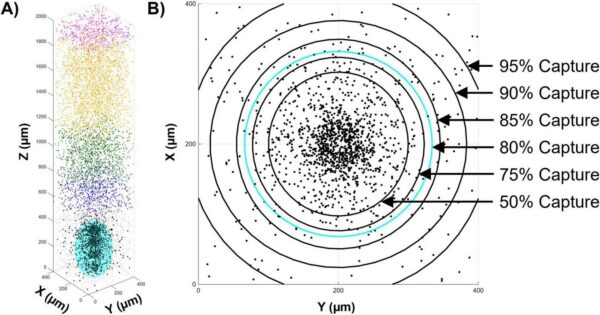
Researchers at the University of Texas at Dallas paired a biophysically realistic computational model with rat behavioral data and found that discrimination accuracy falls off exponentially as the neuronal activation volumes evoked by intracortical microstimulation (ICMS) overlap (R² = 0.88). With minimal overlap, an intersection-over-union below 1%, rats averaged 85% accuracy, while IoU above 20% left them near chance. The work, published in Frontiers in Computational Neuroscience, gives a mechanistic basis for setting electrode spacing in sensory neuroprosthetics.

72-Trial Meta-Analysis Ranks Noninvasive BCI Options for Post-Stroke Arm Recovery

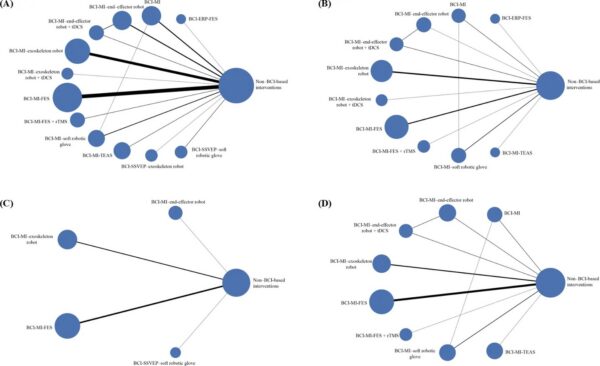
A network meta-analysis of 72 randomized controlled trials covering 2,906 stroke patients found that noninvasive brain-computer interface (BCI) interventions significantly improve upper limb motor function and activities of daily living, with BCI combined with motor imagery and transcutaneous electrical acupoint stimulation ranking highest for motor recovery. The review, published in the Journal of Medical Internet Research on August 28, 2026, sorted 12 intervention types by paradigm, feedback device and adjunctive stimulation to produce relative rankings for clinical use. Evidence certainty was low to moderate, so the authors describe the findings as exploratory and call for higher-quality trials.

Diffusion Inverse Filtering Lifts BCI Emotion Recognition With Fewer Electrodes

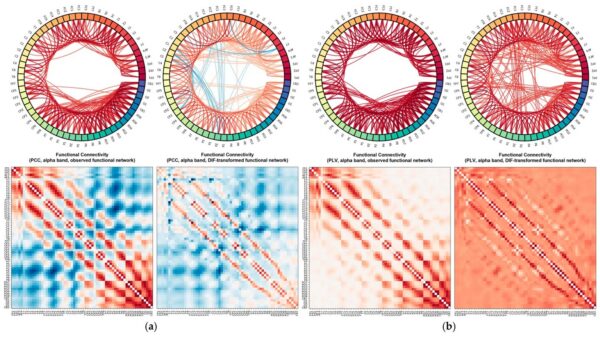
A team at Chiba University in Japan has proposed Diffusion Inverse Filtering (DIF), a signal-processing method that undoes the spatial smearing volume conduction introduces into EEG, sharpening the functional-connectivity features that brain-computer interfaces (BCIs) rely on. Tested on an emotion-recognition task, DIF generally improved performance as electrodes were thinned out, and it is compatible with existing BCI pipelines. The work appeared in Brain Sciences on August 27, 2026.

Tianjin University Team Cuts EEG Channels Without Losing Decoding Accuracy

A team at Tianjin University in northern China has built a graph neural network framework that jointly optimizes EEG channel selection and classification, picking a small subset of channels for motor imagery decoding while holding accuracy close to that of the full electrode set. Reported in the journal Chaos, the method was validated on three datasets — BCI Competition IV 2a, High Gamma and a newly collected set — and could cut system complexity for uses such as neurorehabilitation.

Preprint: Quantum-Inspired Circuits Lift Neural Decoding Accuracy in 3 of 4 Seeds

A preprint bolts parameterized quantum circuits onto a ResNet-50 backbone as residual sidecar modules and tests them on 31-class decoding of neural population activity from imagined handwriting. The backbone-gradient variant improved accuracy in three of four seeds and consistently lowered linear CKA similarity to the baseline features, which the authors read as a structural reorganization of the learned representation. They claim no quantum advantage.

Gaze-Plus-Motor-Imagery BCI Reaches 100% Accuracy With 16-Channel EEG

Motor imagery BCIs have long faced two problems: wide variation between users and only a small number of distinguishable commands. In this study, users first select a target by looking at it, then confirm the choice with imagined movement, merging the two steps into one. In tests with 15 healthy participants using 16-channel EEG, the hybrid paradigm outperformed motor imagery alone in every channel configuration, reaching up to 100% accuracy. The researchers also found that fixating on the target made EEG responses more stable, which supports using fewer electrodes and lowering the hardware barrier.

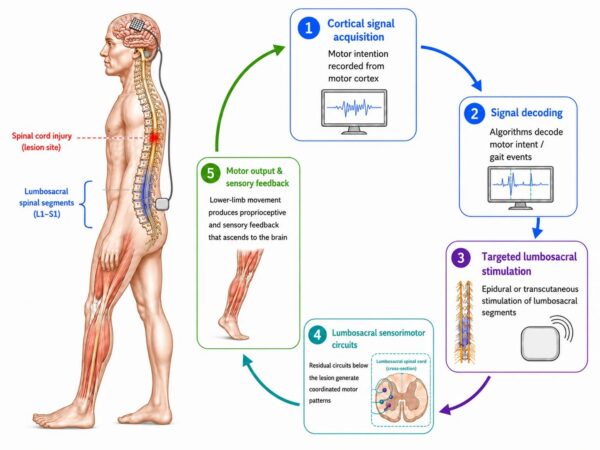
Brain-Spine Interfaces Remain Supported by Limited Clinical Evidence

A review in *Neurosurgical Review* finds encouraging motor outcomes from early preclinical work and highly selected clinical studies of brain-spine interfaces, but concludes that the evidence remains preliminary. Safety, durability, patient selection, access, long-term functional benefit, technical complexity, ethics and specialist training all remain barriers to routine care.

BELT Runs Motor-Imagery BCI Decoding on an ARM Chip in 6.75 Milliseconds

Researchers proposed BELT, a modular Bayesian edge-cloud architecture that combines user-specific adaptation, lightweight classification and compressed data transfer. BELT-lite achieved 87.9% and 80.6% mean accuracy on the BCI Competition IV-2b and IV-2a datasets, respectively, and processed each sample in 6.75 milliseconds on an ARM Cortex-A7—21% faster than EEGNet but about 2.7 percentage points less accurate.

Subject-Specific Frequency Bands Improve Motor-Imagery EEG Decoding

Researchers at United International University in Bangladesh proposed SSLFF, a framework that selects frequency sub-bands for each user, fuses complementary spectral information and extracts time-localized features. The paper reports statistically significant accuracy gains over conventional methods and stable performance across parameter changes, although the abstract does not provide absolute accuracy figures.

MRieHy Framework for Online MI-BCI Adaptation

Researchers propose MRieHy, a multi-feature Riemannian hypergraph framework for online test-time adaptation of motor imagery BCI decoding. It aligns multi-day distributions via Riemannian means of covariance matrices, builds one hypergraph with Riemannian distance and a second with cosine similarity, fuses them with adaptively learned weights, and decodes buffered online samples after Riemannian alignment. On a private four-class ECoG dataset and two public four-class EEG datasets, MRieHy shows notable gains over state-of-the-art baselines, targeting the cross-day transferability and online operation that clinical MI-BCI still lacks.

Wearable BCI Hits 79.38% Online Decoding Accuracy

The study was published in ITM Web of Conferences on August 14, 2026, addressing the demand for portable, real-time brain-computer interface systems in stroke rehabilitation by completing the physical integration and online experimental validation of a wearable system. The system uses a specialized EEG headset with miniaturized acquisition circuits secured via pogo pins, featuring 10 core recording channels positioned over the sensorimotor cortex. During the evaluation phase, the research team recruited 6 healthy subjects and 2 stroke-affected hemiplegic patients for closed-loop experiments based on motor imagery and motor attempts. Common Spatial Pattern was used for spatial feature extraction and Linear Discriminant Analysis for intention classification, with personalized sub-band optimization applied to further improve recognition. The authors report an average offline recognition rate of 84.91% and a classification accuracy of 79.38% in the more challenging online real-time testing. Analysis of spatiotemporal spectra and R² value distributions validated activation patterns in the sensorimotor areas during motor intention triggering, which the authors present as support for advancing the technology from laboratory settings toward community rehabilitation.

EEG2MOTION: Full-Body Motion From Brain Signals

Researchers debut EEG2MOTION, billed as the first EEG-motion-text dataset for human motion synthesis, with nearly 20,000 paired samples across thousands of motions, plus a generative framework (EMMM) that couples an EEG encoder with a motion decoder to synthesize coherent full-body motions from non-invasive brain activity. Multimodal contrastive learning aligns non-invasive EEG embeddings with text, video and motion representations to decode high-level semantics. The team says it is the first work to generate diverse whole-body motions from non-invasive brain signals.
© 2026 BCIwiki.com Digest Topics Tips Subscribe Revisions About