
/ EN

清华大学

2 entries

Tsinghua University

September 2026

Tsinghua Team Launches TrustBCI to Share BCI Data Without Moving It

Training accurate BCI models depends on large, diverse EEG datasets, but that data is usually locked inside individual hospitals and labs, stored in inconsistent formats and restricted by privacy rules, which makes it hard to share. TrustBCI brings three functions into one platform: turning raw BCI datasets into assets that can be exchanged, using incentives to keep institutions contributing data, and letting users run computations without access to the raw records. The platform demonstrates two workflows, controllable data synthesis, which generates new datasets, and privacy-preserving query, which returns only query results. That suggests BCI models could be trained jointly across institutions without first pooling the data in one place.
July 2026

Beihang and Tsinghua Team Fuses EEG, Video and Motion to Flag VR Cybersickness

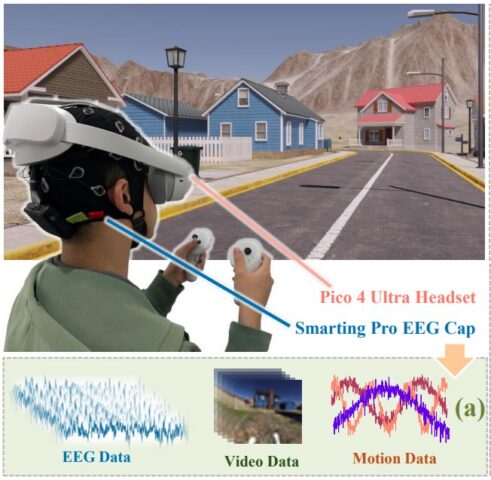
Researchers at Beihang University and Tsinghua University in Beijing built a multimodal contrastive learning framework that pairs EEG with synchronized video and motion data to detect cybersickness in virtual reality, representing the EEG as a connectivity graph and using an attention-based encoder to map the video and motion streams onto the same structure. Fusing all three signals separated cybersick from non-cybersick states more cleanly than any single modality or pair, and the model automatically pruned prefrontal connections unrelated to cybersickness. The setup used mBrainTrain's Smarting PRO 32-channel wireless EEG system and a Pico 4 Ultra headset, with 29 healthy adults navigating a VR scene under their own control.
© 2026 BCIwiki.com Digest Topics Tips Subscribe Revisions About