
/ EN

China

188 entries
September 2026

Peking University Third Hospital Joins Chinese Invasive BCI Trial for Spinal Cord Injury

Peking University Third Hospital, a top-tier (Grade 3A) general hospital in Beijing whose neurosurgery department is one of its key specialties, is taking part in a clinical trial of a Chinese-developed invasive brain-computer interface (BCI), neurosurgeons Yang Jun and Yu Tao wrote in the 16th issue of China Hospital CEO magazine. The trial enrolls patients with spinal cord injury and relies on a multidisciplinary team (MDT) to restore hand function after implantation. Invasive BCIs read neural signals through electrodes placed inside the skull or on the cortical surface, so surgery and rehabilitation depend on close coordination among neurosurgery, rehabilitation and imaging departments. The disclosure marks one step in Chinese hospitals' clinical validation of domestic systems. Public information has not named the system or disclosed enrollment, follow-up milestones or primary endpoints, and no efficacy or safety data have been released.
Anhui Pushes BCI Milestones to 2028, Hands Research Lead to USTC

Anhui issued a 2026-2030 BCI action plan on June 15, 2026 that sets its near-term milestones in 2028 rather than 2027 and frames every target as a minimum, including at least three approved invasive BCI clinical trials. Research leadership goes to the University of Science and Technology of China, with Hefei as the hub, Bengbu handling key components and Wuhu clinical translation.

Beijing's BCI Plan Sets No Output Targets, Bets on Companies Instead

Beijing issued China's first provincial-level brain-computer interface (BCI) action plan on January 7, 2025, setting every 2027 and 2030 target in terms of companies and platforms rather than output or revenue. The plan calls for three to five unicorns or would-be unicorns by 2027 and around 100 innovative small and medium-sized firms by 2030. On the payment side, Beijing prices invasive BCI implantation at RMB 7,980 per procedure and covers all three BCI service fees under Category A of basic medical insurance, limited to four hospitals.

Shanghai Aims to Partially Restore Sight With BCIs by 2030

Shanghai's science and technology commission issued a BCI action plan on January 10, 2025, pledging to help blind patients partially regain sight by 2030 and to have more than five invasive or semi-invasive products complete medical device type testing by 2027. The city's healthcare security bureau created three BCI service fee items in August 2025 but left prices to hospitals and explicitly excluded them from basic medical insurance payment.

Sichuan Targets 3,000 Invasive BCI Operations a Year by 2030

Sichuan's industry department and seven other agencies issued a BCI and human-machine interaction plan on May 12, 2025, targeting 3,000 invasive BCI operations a year by 2030 and the registration of three invasive and five non-invasive products by 2027. The province prices BCI services in five tiers by hospital grade, with implantation ranging from RMB 6,583 to RMB 4,389, all paid out of pocket.

Shandong Health Commission Leads 16-Agency Push on BCI Clinical Validation

Shandong's health commission and 15 other agencies issued a BCI clinical translation plan on July 7, 2026, following a 2025 industry plan led by the provincial science department. The 14-measure plan sets up a clinical research alliance and a provincial clinical database, cuts review time for Class II devices to 90 working days, and targets more than 30 multicenter validation projects and a RMB 2 billion industry by 2028.

Jiangxi Sets 10-Day Clock for Mutual Recognition of BCI Ethics Reviews

Jiangxi issued BCI support measures on November 26, 2025 that set no numeric targets but called for mutual recognition of clinical research ethics reviews, and its health commission followed on May 26, 2026 with guidance requiring participating sites to finish recognition reviews within 10 working days. Invasive projects for neurological or psychiatric treatment also need provincial expert review within 20 working days.

Jiangsu Opens BCI Trials to Nuclear, Mining and Power Industries

Jiangsu's industry department and eight other agencies issued a BCI action plan in March 2026 that invites companies in hazardous chemicals, nuclear power, mining and electric power to pilot the technology first. Nearly all its numeric targets, including at least 20 registered medical products, fall in 2030, and a widely cited RMB 6,600 implant price appears only in a 2025 draft, not in the province's final pricing notice.

Tianjin Stakes BCI Product Targets on Non-Invasive Devices

Tianjin's municipal government issued a 2026-2030 BCI action plan on May 26, 2026 that limits every numeric product target to non-invasive devices, aiming for more than ten in large-scale clinical use by 2030, while invasive products get a single unquantified approval goal. The plan also targets an industry fund cluster of more than RMB 10 billion by 2030.

Guangdong Plans 200 BCI Wards and Splits Roles Between Shenzhen and Guangzhou

Guangdong's provincial Party science and technology committee office issued a 2026-2030 BCI plan on June 5, 2026 that calls for 200 BCI hospital wards serving more than 500,000 patients cumulatively by 2030. The plan assigns invasive devices and signal decoding to Shenzhen and non-invasive systems to Guangzhou, and follows provincial BCI prices set nine months earlier, with implantation capped at RMB 6,600.

Zhejiang, First to Reimburse BCI Fees, Cuts Device Review to 40 Days

Zhejiang became the first Chinese province to reimburse a BCI service when it covered non-invasive fitting fees under Category B insurance from September 1, 2025, limited to smart bionic prosthesis fittings. Its 18 industry-academia-research measures, dated July 16, 2026, cut review of qualifying Class II BCI devices to 40 working days and offer research hospitals up to RMB 8 million per project.

Tsinghua Team Launches TrustBCI to Share BCI Data Without Moving It

Training accurate BCI models depends on large, diverse EEG datasets, but that data is usually locked inside individual hospitals and labs, stored in inconsistent formats and restricted by privacy rules, which makes it hard to share. TrustBCI brings three functions into one platform: turning raw BCI datasets into assets that can be exchanged, using incentives to keep institutions contributing data, and letting users run computations without access to the raw records. The platform demonstrates two workflows, controllable data synthesis, which generates new datasets, and privacy-preserving query, which returns only query results. That suggests BCI models could be trained jointly across institutions without first pooling the data in one place.

StairMed Plans 4-Patient Trial of Wireless Implant for Mandarin Speech

Shanghai-based StairMed has taken its wireless implantable brain-computer interface system into human evaluation for people with speech impairments. The prospective, single-arm trial (NCT07647315) actually began on September 1, 2026, is now recruiting, and plans to enroll 4 participants. Subjects will undergo surgical implantation and brain-control training, followed by an expected 12 months of follow-up recording adverse events, serious adverse events and device deficiencies, along with efficacy data on brain-controlled interaction and communication. Primary completion is expected on August 30, 2028, and the study as a whole on December 30, 2028. The registry record does not disclose the implant site, decoding method or detailed eligibility criteria, and no interim results have been posted, so conclusions on safety and efficacy will have to wait for follow-up data.

Anisotropic Hydrogel Electrode Records P300 and SSVEP Signals

Electrodes for non-invasive brain-computer interfaces have long traded off conductivity, conformity to the skin and durability. A conductive hydrogel made by in situ directional freezing copolymerization forms vertically aligned ion channels and an interconnected nanoporous network, giving it higher conductivity than conventional hydrogel electrodes. In preliminary P300 and steady-state visual evoked potential (SSVEP) experiments, it recorded signals comparable in quality to conventional wet- and dry-electrode benchmarks, while also offering a tissue-matched compressive modulus, high stretchability, skin adhesion and rapid self-healing. The paper presents these experiments as a feasibility demonstration and reports no data on long-term wear stability, scaled-up fabrication or human clinical trials.

OPM-MEG Beats EEG by 3.6 Points in Non-Invasive Speech Decoding

Ten native Mandarin speakers read aloud six single-vowel rhymes while optically pumped magnetometer magnetoencephalography (OPM-MEG) and EEG recorded the same task. In the 150-500 ms window after stimulus onset, OPM-MEG decoded significantly more accurately than EEG with all five classifiers tested. The best-performing combination, common spatial pattern features with a linear support vector machine, reached a mean accuracy of 60.3% for OPM-MEG versus 56.7% for EEG. That suggests speech BCIs that need no implanted electrodes and do not restrict head movement may have a clearer signal path than EEG.

Neuracle Registers Cortical Electrode in China's NMPA Device Identifier Database

Neuracle Medical Technology (Shanghai) Co., Ltd. has registered a cortical electrode, model 1014-35, in the medical device unique identification (UDI) database of China's National Medical Products Administration (NMPA), under registration certificate Guoxiezhuzhun 20263120536. Neuracle's product line spans EEG acquisition equipment and implantable electrodes. The electrode belongs to an implantable EEG electrode kit (cortical electrode, blank electrode, electrode dilator, tunneler, torque wrench, lead fixation clip, fixation screws and electrode protective sleeve) that holds its own registration certificate and is also a component of an implantable BCI hand motor function compensation system. That system comprises a BCI implant, the electrode kit, an EEG signal transceiver, a pneumatic glove, a single-use surgical toolkit, and three software packages for EEG decoding, medical testing and clinical management.

1,145-Patient Meta-Analysis Finds Stronger Evidence for Robotic Stroke Rehab Than BCI

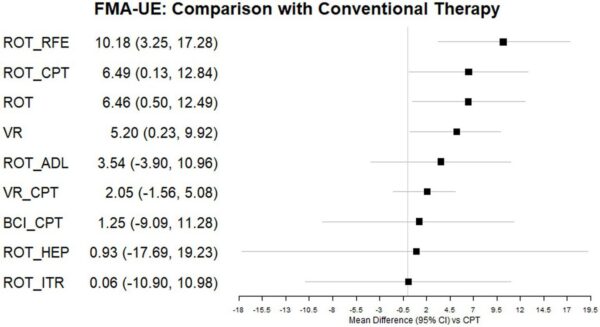
Which new technology does most for upper-limb recovery after stroke: virtual reality, robotics or a brain-computer interface (BCI)? A systematic review and network meta-analysis placed all three in a single evidence network, pooling 25 randomized controlled trials and 1,145 stroke survivors. The authors searched PubMed, Web of Science, the Cochrane Library and Embase from inception to October 2025, used conventional physical therapy as the common comparator in a star-shaped network, and applied a Bayesian random-effects model to estimate relative efficacy and calculate SUCRA rankings. Robot-assisted training produced the most robust findings, with two studies supporting robotics plus conventional physical therapy and three supporting robotics alone; only one BCI study yielded extractable data, too little to judge efficacy. The authors caution that the top-ranked intervention, robotics combined with rehabilitative functional electrical stimulation, rests on a single trial and should not be read as definitive evidence of superiority.

Peking Union Medical College Team's 480-Target Hybrid BCI Hits 260 Bits per Minute

A team at the Institute of Biomedical Engineering, Chinese Academy of Medical Sciences and Peking Union Medical College, has built a hybrid brain-computer interface (BCI) that combines surface electromyography (sEMG) with steady-state visual evoked potentials (SSVEP), encoding 480 targets with 120 flicker frequencies and four hand gestures. In online experiments it achieved a mean classification accuracy of 84.55 ± 7.23% and a mean information transfer rate (ITR), a key measure of practical BCI performance, of 260.07 ± 30.41 bits/min. Its command set matches the largest target counts in existing systems, and the authors place its performance among the top, offering a technical reference for large-command-set BCIs. The work appeared in Cognitive Neurodynamics on September 7, 2026.

BCI Training Improves Post-Stroke Arm Function Across 35 Trials, 1,188 Patients

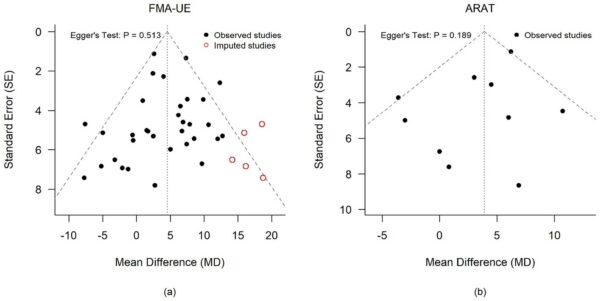
Brain-computer interface training significantly improves upper-limb motor function after stroke, according to a systematic review and meta-analysis of 35 randomized controlled trials involving 1,188 participants, published in Frontiers in Neurology on September 3, 2026. Pooled data showed mean improvements of 4.55 points on the Fugl-Meyer Assessment-Upper Extremity (FMA-UE), 3.90 points on the Action Research Arm Test (ARAT) and 8.53 points on the Wolf Motor Function Test (WMFT), but the effect depended heavily on the comparator: a mean difference of 6.70 against usual care versus only 1.97 against sham-contingent controls. Twenty-two trials reported multi-level neuroplastic changes, though the evidence was insufficient to explain the mechanisms of recovery.

Anti-Fouling Coating Shields Neural Electrode, Signal Stays Clear for Six Months

Researchers at the Technical Institute of Physics and Chemistry of the Chinese Academy of Sciences and collaborating institutions have developed a neural electrode interface that, they report, significantly extended electrode operational lifetime and improved signal fidelity over six months of in vivo implantation. The material, a benzyloxycarbonyl-substituted poly(ornithine-alt-glycine) coating abbreviated OGCbz, resists biofouling and immunogenic rejection without degrading electrical performance, targeting what the authors call the critical obstacle to electrodes that combine long-term recording with tunable biofunctional control: an immune-mediated foreign body response in which glial scar encapsulates implants like cement. Substituting the Cbz group with other functional moieties preserves those antifouling and biocompatibility properties while adding new ones, and as a proof of concept the peptide sequence IKVAV and the antibody cetuximab gave the interface neuron affinity and tumor cell proliferation inhibition respectively; the six-month result came from the IKVAV-functionalized version.

48-Subject Study Shows 3-Channel P300 Matches 8-Channel Performance

Researchers at Guangzhou Maritime University, Guangdong University of Technology and Guangzhou University in southern China combined a genetic algorithm with Bayesian linear discriminant analysis to pick a fixed, strongly generalizable three-channel subset from a conventional eight-channel P300 BCI, avoiding per-user recalibration. In offline and online virtual reality experiments with 48 healthy subjects, the three-channel system matched the eight-channel system on accuracy and information transfer rate, while equipment preparation fell from 30 minutes to 3, a 90% cut. NASA-TLX scores showed significantly lower mental and physical workload. The study was published in Biomimetics on September 1, 2026.

SEDAT: Hybrid Tokenizer Lifts EEG Foundation Model Accuracy by up to 15.3%

Researchers at Northwestern Polytechnical University propose SEDAT, a hybrid tokenizer for large EEG foundation models that folds squeeze-and-excitation spatial aggregation, data-adaptive Gaussian average filtering, instantaneous-frequency-guided segmentation and Fourier-domain resampling into a single efficient pipeline. Evaluated on 10 heterogeneous EEG datasets with four foundation models, LaBraM, EEGFormer, EEGPT and NeuroGPT, SEDAT improved classification by up to 15.3% over fixed-length windowing and by 1.2-4.6% over the next-best tokenizer, the authors report. The study was published in the Journal of Neural Engineering on September 1, 2026.

U2Multi-UDA Merges Alignment, Fusion and Fine-Tuning to Lift Motor Imagery Accuracy

Researchers have proposed U2Multi-UDA, a unified multilevel multisource unsupervised domain adaptation framework for motor imagery brain-computer interfaces that raised mean accuracy by 2.69, 1.89 and 3.83 percentage points over the best-performing baselines on two public datasets and one self-constructed dataset, with consistent gains in Kappa. It tackles two persistent obstacles, wide variation between subjects and a shortage of labeled target-domain data, which existing methods address at only one level of adaptation, whether domain alignment, feature interaction or model fine-tuning. The single pipeline aligns source and target distributions with optimal transport while mutual information estimates how relevant each source domain is to the target, fuses spatio-temporal EEG features through multisource cross-attention guided by those weights and reinforced with pseudolabels, and closes with segmented weight-decomposed low-rank adaptation for parameter-efficient fine-tuning that curbs overfitting.

One EEG Diffusion Model Decodes Motor Imagery, Hemiplegic Side and Recovery

Researchers have proposed a unified EEG-based framework that simultaneously performs motor imagery classification, hemiplegic side detection and functional recovery prediction, aimed at motor rehabilitation after stroke. Stroke remains one of the leading causes of long-term motor disability worldwide, the authors note, and motor imagery brain-computer interfaces are seen as a way to accelerate recovery. Current MI-BCI methods, however, generalize poorly across patients, lack an effective functional assessment step, and are limited by scarce patient data and a shortage of suitable augmentation approaches. The framework introduces a diffusion model tailored to the spatio-temporal characteristics of EEG, built on a decoupled neural architecture with rotary spatial encoding and autoregressive temporal fusion. To offset data scarcity, the team designed two augmentation strategies adapted to stroke EEG. Experiments across multiple MI-BCI tasks show superior performance and generalizability, the authors say, supporting the method's potential for personalized stroke rehabilitation.
August 2026

Guangdong Drafts 2027 Rules for a Standalone BCI Research Track

The Guangdong Provincial Department of Science and Technology in southern China (广东省科学技术厅) has opened public consultation on the 2027 application guidelines for a brain-computer interface track within the province's key-fields R&D program, one of the main channels through which Guangdong allocates research money. A dedicated track gives the field its own entry point rather than making it compete inside a broader category. Because such guidelines normally set research directions, funding levels and eligibility, comments at this stage bear directly on where next year's money goes; the notice went up on the department's own website and does not carry the text of the guidelines.

Seven Chinese Ministries Put Brain-Machine Tech in Elder Care Product Plan

Seven Chinese ministries, led by the Ministry of Commerce and including the National Development and Reform Commission and the Ministry of Industry and Information Technology, jointly issued implementing opinions on expanding and upgrading consumer goods (《关于推动商品消费扩容升级的实施意见》). In a section on products for older adults, the document calls for stronger R&D on key technologies and core components and for wider use of brain-machine integration and artificial intelligence in age-friendly products and rehabilitation aids. Brain-computer interfaces have until now figured mainly in China's science and industrial planning documents; framing them as consumption policy aimed at two named product categories is new, and the text was published in the State Council's policy document database, the central government's official repository for such documents.

Shenzhen Drafts China's First BCI Industry Rules, Requiring Separate Brain Data Consent

The Shenzhen Municipal Bureau of Science, Technology and Innovation (深圳市科技创新局) in southern China and the city's Bureau of Justice have opened public consultation on draft regulations to promote the brain-computer interface industry in the Shenzhen Special Economic Zone, a status that carries authority to write binding local rules of the city's own. According to Jiemian News, a Chinese business news outlet, the draft defines a BCI as technology that opens an information channel between the brain and external devices for coordinated interaction between biological and machine intelligence, and states that the municipal government shall write BCI industry development into the city's economic and social development plan and its science and innovation plan. On data, the report says processing brain data and other sensitive personal information would require separate written consent from the individual, alongside strict compliance with national rules on cross-border data transfer; legislating specifically for the BCI industry in special economic zone regulation form is a first in China.
© 2026 BCIwiki.com Digest Topics Tips Subscribe Revisions About