
中 / EN

Yonsei University

2 entries
October 2026

Yonsei University Collaboration Tracks Partial Cortical Network Recovery Without Return to the Pre-Stroke State in Mice

A collaboration involving Yonsei University used a fully soft, liquid metal-based multichannel neural interface to record stable electrophysiological signals in freely moving mice and compare cortical networks within the same animals before and after ischemic stroke. Analyses of population-level activity patterns and functional connectivity both showed acute suppression followed by partial recovery. The peri-infarct networks did not return to their pre-stroke state, instead reorganizing into a distinct, reproducible functional configuration. The study demonstrates an approach to tracking network reorganization during recovery, rather than treating stroke with the interface or establishing rehabilitation benefits in humans.
August 2026

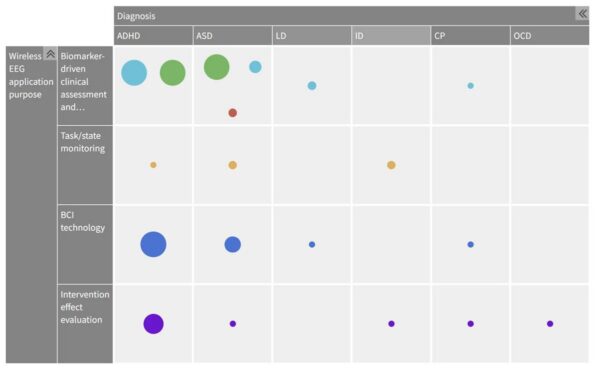
Wireless EEG Use Climbs in Children With Developmental Disabilities, BCI at 28.1%

Researchers at Yonsei University in South Korea and the University of Toronto reviewed 64 studies covering 3,103 participants and found wireless EEG increasingly used in research on children with developmental disabilities, with brain-computer interfaces accounting for 28.1% of the included studies. BCI work favored low-channel, dry-electrode, consumer-grade devices, while biomarker-driven studies used higher channel counts and signal fidelity; reporting on data quality was thin, with 85.9% of studies giving no validation against wired EEG and 79.7% not specifying impedance thresholds. Published August 25, 2026 in the Journal of Medical Internet Research, it is the first scoping review to map wireless EEG use across a broad spectrum of developmental disabilities in children.
© 2026 BCIwiki.com Digest Topics Tips Subscribe Revisions About