
/ EN

Brazil

2 entries
September 2026

Random Forest Tells Real From Imagined Movements, Even on Consumer-Grade EEG

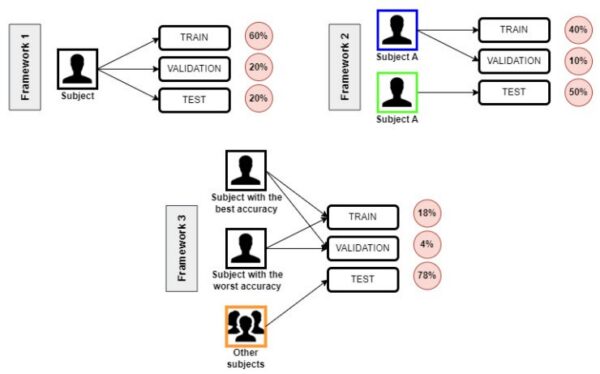
Can a machine tell from EEG alone whether a person is actually moving or only imagining the movement? A preprint study tested a Random Forest classifier on consumer-grade and research-grade EEG systems and found it could separate the two kinds of activity and identify which body part was involved. EEG is a basic tool for studying the brain's electrical activity during movement, and BCIs use that activity to build assistive technologies, particularly for people with physical disabilities; because extracting features and patterns from the signal remains complex, the task is often handed to machine learning. The study also found that differences in EEG between individuals drag down classification accuracy, meaning a model that works for one person may perform worse on another. The work is a preprint and has not been peer reviewed.
August 2026

BCI-guided FES trial targets gait in spinal cord injury

A new clinical trial at Brazil's Santos Dumont Institute will test whether brain-computer interface (BCI)-guided functional electrical stimulation (FES) can improve muscle activation and gait in people with spinal cord injury. The institute is a well-known Brazilian center for neurorehabilitation research. Registered on ClinicalTrials.gov as NCT07768930 and first posted on August 17, 2026, the study is active but not yet recruiting. The intervention involves ankle dorsiflexion rehabilitation: patients wear an EEG cap, the system detects motor-imagery-related brain signals in real time, and when an intention is detected, it triggers FES to stimulate the tibialis anterior muscle to assist ankle dorsiflexion. Primary outcomes are improvements in muscle activation patterns and gait kinematics. The trial is at an early stage, with enrollment details not yet disclosed.
© 2026 BCIwiki.com Digest Topics Tips Subscribe Revisions About