/ EN

Clinical

80 entries
September 2026

Singapore Trial Tests EEG-Headband Games for Rehab in Children With Brain Injury

KK Women's and Children's Hospital in Singapore has registered a clinical trial of brain-computer interface neurofeedback training (BCI-NFT) for children and adolescents aged 7 to 21 with acquired brain injury from causes including traumatic brain injury, stroke, encephalitis, brain tumors and epilepsy. The intervention group will complete 12 sessions of about 60 minutes each over 10 weeks, wearing a wireless EEG headband while interacting with neurofeedback computer games; the control group receives standard care first and then crosses over to training. A cohort of peers with no history of brain injury will provide normative EEG data. The trial plans to enroll 70 participants, with primary endpoint results expected in February 2028.

Peking University Third Hospital Joins Chinese Invasive BCI Trial for Spinal Cord Injury

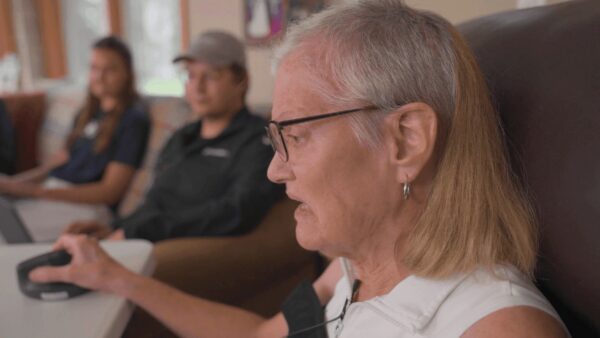
Peking University Third Hospital, a top-tier (Grade 3A) general hospital in Beijing whose neurosurgery department is one of its key specialties, is taking part in a clinical trial of a Chinese-developed invasive brain-computer interface (BCI), neurosurgeons Yang Jun and Yu Tao wrote in the 16th issue of China Hospital CEO magazine. The trial enrolls patients with spinal cord injury and relies on a multidisciplinary team (MDT) to restore hand function after implantation. Invasive BCIs read neural signals through electrodes placed inside the skull or on the cortical surface, so surgery and rehabilitation depend on close coordination among neurosurgery, rehabilitation and imaging departments. The disclosure marks one step in Chinese hospitals' clinical validation of domestic systems. Public information has not named the system or disclosed enrollment, follow-up milestones or primary endpoints, and no efficacy or safety data have been released.

Paradromics Implant Lets First Participant Speak Her Own Words in Real Time

A Michigan woman who had nearly lost the ability to speak to motor neuron disease used Paradromics' Connexus device, implanted on the surface of her brain, to turn brain signals into words of her own choosing in real time and to talk with her family. The 421 platinum-iridium microwires at the edge of the device record signals from individual neurons, and software decodes them into text and synthesized speech. The work is part of the FDA-approved Connect-One early feasibility study; Connexus remains an investigational device, and the company plans six years of follow-up to assess safety and durability.

StairMed Plans 4-Patient Trial of Wireless Implant for Mandarin Speech

Shanghai-based StairMed has taken its wireless implantable brain-computer interface system into human evaluation for people with speech impairments. The prospective, single-arm trial (NCT07647315) actually began on September 1, 2026, is now recruiting, and plans to enroll 4 participants. Subjects will undergo surgical implantation and brain-control training, followed by an expected 12 months of follow-up recording adverse events, serious adverse events and device deficiencies, along with efficacy data on brain-controlled interaction and communication. Primary completion is expected on August 30, 2028, and the study as a whole on December 30, 2028. The registry record does not disclose the implant site, decoding method or detailed eligibility criteria, and no interim results have been posted, so conclusions on safety and efficacy will have to wait for follow-up data.

At-Home BCI Therapy Beats Home Exercise for Chronic Stroke Arm Deficits in Randomized Trial

Chronic stroke patients who used an at-home brain-computer interface (BCI) therapy system gained a mean 6.0 points on the Upper Extremity Fugl-Meyer Assessment after 12 weeks, versus 1.5 points for those on a home exercise program. Response rates were 55.5% and 9.6%, for a number needed to treat of 2.2. The trial also exposed the dropout problem in home-based studies: 17 of 42 control participants withdrew because they were dissatisfied with their group assignment.

Shandong Hospital Registers Retrospective Cohort Study of Closed-Loop BCI Exoskeleton in Stroke Recovery

The study asks whether adding closed-loop BCI exoskeleton training to conventional rehabilitation improves lower-limb recovery in stroke patients. The retrospective cohort plans to enroll 58 patients in a closed-loop training group and 57 in a conventional rehabilitation group, with the primary endpoint being change in FMA-LE score from baseline to week 6. Secondary outcomes include motor imagery-related EEG features, the 10-Meter Walk Test and the Berg Balance Scale, indicating the researchers want to track both walking function and the brain signals themselves. The trial is self-funded by the research team and has not yet begun recruiting.

Anhui Hospital to Build 400-Person Post-Stroke BCI Dataset

About 70% to 80% of stroke survivors cannot live independently because of physical disability, and regaining walking function is central to changing that. This observational, cross-sectional study plans to enroll 200 stroke patients and 200 healthy controls, collecting EEG, fNIRS, sEMG, fMRI and other central and peripheral physiological signals alongside clinical measures such as Facial Action Units, the Berg Balance Scale and Fugl-Meyer motor function. The goal is a reusable non-invasive BCI dataset for stroke rehabilitation research. First enrollment is set for October 1, 2026.
August 2026

Chinese Hospitals Test Closed-Loop BCI Neuromodulation for Resistant Depression

A multicenter trial has begun in China to test closed-loop brain-computer interface neuromodulation for treatment-resistant depression, run jointly by the Shanghai Mental Health Center and two Beijing hospitals, Anding Hospital and Xuanwu Hospital. The study will compare closed-loop deep brain stimulation and transcutaneous auricular vagus nerve stimulation against sham stimulation, enrolling patients who have responded inadequately to standard antidepressant treatment. It uses a patient-preference design with randomized assignment within each intervention group.

Singapore's NUH Tests Lifescapes BCI for Hand Recovery After Stroke

National University Hospital in Singapore has registered a clinical trial (NCT07784920) evaluating Lifescapes, an EEG-based brain-computer interface, for hand motor recovery after stroke. The 32-participant study, not yet recruiting, will compare Lifescapes therapy delivered with reduced therapist supervision against conventional rehabilitation and assess whether it is operationally feasible in the local clinical setting. Lifescapes combines motor imagery practice, biofeedback, neuromuscular electrical stimulation and robotic assistance for stroke patients with severe hand paralysis; an earlier trial in 40 patients showed improvement in motor function.

BCIFlex Begins China Trial of Implantable Wireless BCI in Tetraplegia

BCIFlex Medical Technology has begun a clinical trial in China evaluating the safety and efficacy of an implantable wireless brain-computer interface in patients left tetraplegic by spinal cord injury. The trial is registered on ClinicalTrials.gov as NCT07784088 and is recruiting. The sponsor is a Chinese device maker headquartered in the Haidian district of Beijing with an office in Shanghai, working on invasive ultra-thin flexible electrodes; its products include digital EEG systems and stereo-EEG depth electrodes.

Stanford Team Records Psychiatric Brain Circuits at Millisecond Precision

A Stanford program is recording brain activity in psychiatric inpatients at millisecond precision, combining noninvasive electrode arrays with deep brain recording electrodes to trace the circuits behind schizoaffective disorder, borderline personality disorder, autism and cancer-induced depression. The Human Neural Circuitry program, led by neuroscientist Karl Deisseroth at the Wu Tsai Neurosciences Institute, has run for three years and moves data over fiber-optic and copper links fast enough for round trips of under half a millisecond, allowing the system to sense and respond in a closed loop. Deisseroth said the key innovation is getting results at millisecond precision, which he called a crucial step toward understanding complex psychiatric symptoms.

BCI-guided FES trial targets gait in spinal cord injury

A new clinical trial at Brazil's Santos Dumont Institute will test whether brain-computer interface (BCI)-guided functional electrical stimulation (FES) can improve muscle activation and gait in people with spinal cord injury. The institute is a well-known Brazilian center for neurorehabilitation research. Registered on ClinicalTrials.gov as NCT07768930 and first posted on August 17, 2026, the study is active but not yet recruiting. The intervention involves ankle dorsiflexion rehabilitation: patients wear an EEG cap, the system detects motor-imagery-related brain signals in real time, and when an intention is detected, it triggers FES to stimulate the tibialis anterior muscle to assist ankle dorsiflexion. Primary outcomes are improvements in muscle activation patterns and gait kinematics. The trial is at an early stage, with enrollment details not yet disclosed.

Tongji Hospital Performs Central China's First Fully Invasive BCI Implant

Surgeons at Tongji Hospital in Wuhan, central China, implanted a 256-channel brain-computer interface on 3 August using electrodes 2 to 3 micrometres thick, compared with semi-invasive arrays that are millimetres thick, sit outside the dura and carry eight contacts. Eastern China's Shandong performed its own first provincial case in late July. Hubei now covers all three BCI approaches clinically.

StairMed BCI Users Complete Three to Four Hours of Computer Work

People's Daily Online reported that multiple people with high-level paralysis used StairMed's minimally invasive implantable BCI for three to four consecutive hours of computer work, including e-commerce logistics coordination and vending-machine data labeling. The company reported a 256-channel system and latency below 50 milliseconds. The article did not provide a participant count, standardized protocol or adverse-event table.
July 2026

Three Weeks of Motor Imagery BCI Improves Arm Function in Subacute Stroke

A study of 60 patients with subacute stroke hemiplegia found that adding motor imagery brain-computer interface training to conventional rehabilitation significantly improved upper limb motor function, simplified upper limb function scores, and daily living abilities. The experimental group of 30 received 3 weeks of additional BCI training, 5 days per week, while the control group received only conventional rehabilitation. The experimental group showed greater improvements in Fugl-Meyer upper limb scores, simplified upper limb function scores, and Barthel Index, with statistically significant differences.

Eastern China's Shandong Performs Its First Invasive Brain-Computer Interface Implant

Surgeons in eastern China have implanted a brain-computer interface in a man who has been unable to move his limbs for more than two years. Eight ultraflexible electrodes sit 4 mm into his cortex, wired to a chip mounted on the skull. It is the first invasive BCI operation performed in Shandong province, and the patient now begins up to six months of training to control devices by thought.

Portugal's University of Aveiro Registers VR-Based BMI Trial in Spinal Cord Injury

The University of Aveiro in Portugal has registered a study (NCT07732868) testing a brain-machine interface protocol that pairs virtual reality with sensory feedback, visual, auditory and tactile, and/or an exoskeleton in people with spinal cord injury. Participants attend 12 monitored sessions, one a week, each lasting roughly one to two hours, moving a virtual avatar through motor imagery while non-invasive EEG records brain activity. The study focuses on changes in brain activity that track clinical improvement and on how information moves between brain regions, and it collects age, sex, injury level and type, time since injury, functional grade and neuropathic pain; it is at the registration stage with no results yet.

Hospices Civils de Lyon trial decodes motor imagery for stroke rehab

Hospices Civils de Lyon has registered a clinical study in France to decode motor imagery from non-invasive brain recordings as a prerequisite for innovative motor rehabilitation therapies. Combining MRI, MEG, and EEG, the study will design a subject-specific neurophysiological model, noting that standard BCI approaches neglect transient features such as beta bursts. The approach will first be validated in healthy subjects, then assessed for feasibility in stroke patients.

EPFL launches clinical study of brain-controlled spinal cord stimulation for lower-limb recovery

Ecole Polytechnique Fédérale de Lausanne (EPFL) has launched a clinical study evaluating the preliminary safety and effectiveness of a cortical recording device (ECoG) combined with lumbar targeted epidural electrical stimulation (EES) to restore voluntary lower-limb motor function in participants with chronic spinal cord injury and mobility impairment. The study aims to establish a direct bridge between motor intention and the spinal cord below the lesion, potentially improving or restoring voluntary leg control and promoting neurological recovery when combined with neurorehabilitation.

Paradromics Implants Connexus BCI in Patient With Motor Neuron Disease

Surgeons in Michigan have implanted Paradromics' Connexus brain-computer interface in a patient with motor neuron disease who had lost most of her ability to speak. Connexus records from individual neurons through 421 microelectrodes seated 1.5 millimeters into the motor cortex; the signals pass to a transceiver in the patient's chest, where AI converts them into text on a screen. Austin, Texas-based Paradromics received FDA approval in the fall of 2025 to begin the clinical trial.

VA optimizes implanted BCI to help paralyzed veterans use computers at home

The VA Office of Research and Development is advancing a high-performance implanted brain-computer interface (BCI) to improve independence for Veterans and others with tetraplegia or inability to speak due to ALS, spinal cord injury, or stroke. The project enhances deep learning decoders and multi-state gesture decoding, deployed on a battery-powered mobile BCI device for independent home use of computers and touch-enabled devices. Accuracy and usability will be evaluated in participants already enrolled in the BrainGate investigational clinical trial.

Can a BCI boost attention in older adults? UT Austin launches trial

The University of Texas at Austin has registered a study on ClinicalTrials.gov to explore whether an EEG-based brain-computer interface (BCI) decoding the P300 event-related potential in real time, combined with non-invasive interventions such as mindfulness relaxation or transcranial electrical stimulation, can enhance attention and memory neural markers—proxies for cognitive reserve—in healthy older adults and those with mild cognitive impairment (MCI). The trial is recruiting and aims to test whether targeted modulation of attention-related brain activity can support cognitive reserve.

NeuroXess Registers Fully Implanted Wireless Functional BCI Study for Upper-Limb Functional Replacement

NeuroXess registered a prospective, multicenter, single-arm trial (NCT07720882) enrolling people with tetraplegia caused by spinal cord injury to evaluate the safety and clinical efficacy of an implantable BCI system for compensatory hand movement and upper-limb functional replacement. The study is at the registration stage with no results yet.

Guangzhou Workshop to Demonstrate EEG-Driven Closed-Loop TMS in July

Clinicians and researchers in Guangzhou, southern China, will get hands-on time with closed-loop systems that trigger transcranial magnetic stimulation from real-time EEG analysis at a workshop on July 17, 2026. Shenzhen Yingchi Technology, one of the supporting companies, will bring EEG-driven closed-loop TMS devices and near-infrared brain function imaging equipment. The session is organized by the Professional Committee on Brain Function Detection and Regulation Rehabilitation of the Chinese Association of Rehabilitation Medicine, alongside the committee's 2026 annual conference and the 8th Brain Function Detection and Regulation Rehabilitation Forum.

University Hospital, Grenoble Registers Chronic BCI Study for Speech Rehabilitation in Locked-In Syndrome

Grenoble University Hospital has registered a clinical study (NCT07698496) assessing the feasibility and effectiveness of a chronic brain-computer interface for speech rehabilitation in people with locked-in syndrome (LIS), where non-invasive communication carries high cognitive load and existing invasive speech BCIs still rely on percutaneous connectors with infection risk. Using an intracranial epidural BCI paired with a speech synthesizer, the SpeechBCI protocol will test two complementary approaches in the same subject — a speech BCI (primary objective, the BCI_PAROLE device) and a cursor BCI (secondary), both running on the WIMAGINE intracranial epidural system. The trial is in the registration stage and has no clinical results yet.

SpikeGadgets Takes Neuropixels Recording Wireless in Freely Moving Animals

SpikeGadgets has released wireless dataloggers compatible with Neuropixels probes, letting an animal carry the entire recording system and write high-density probe data straight to onboard storage instead of down a cable. Four studies over the past year used the setup in bats, rats and marmosets, and their findings are reshaping long-standing assumptions about hippocampal replay, prefrontal sequence coding and vocal communication.
© 2026 BCIwiki.com Digest Topics Tips Subscribe Revisions About