

BCIwiki (bciwiki.com) — Researchers affiliated with the 964th Hospital of the Joint Logistic Support Force in Changchun, China, The Chinese University of Hong Kong, and collaborators published a systematic review and network meta-analysis in Frontiers in Neuroscience on October 27, 2026. It synthesized 16 randomized trials of BCI-triggered functional electrical stimulation, BCI-controlled robotic rehabilitation and conventional rehabilitation after stroke.
The review identified 16 randomized controlled trials published from January 2020 to October 2025 through PubMed, Web of Science, Embase, IEEE Xplore, the Cochrane Library and MEDLINE. Interventions included brain-computer interface (BCI)-triggered functional electrical stimulation, BCI-controlled robotic rehabilitation and conventional rehabilitation. The primary outcome was motor recovery measured with the Fugl-Meyer Assessment. The researchers used a frequentist random-effects network meta-analysis and assessed certainty of evidence with CINeMA.
Compared with conventional rehabilitation, BCI-triggered functional electrical stimulation improved motor recovery, with a standardized mean difference of 0.57 and a 95% confidence interval of 0.12 to 1.01. The effect of BCI-controlled robotic rehabilitation versus conventional rehabilitation remained uncertain: the standardized mean difference was 0.17, with a 95% confidence interval of −0.25 to 0.60.
No trial directly compared the two BCI modalities, creating a star-shaped network with conventional rehabilitation as the common comparator. The indirect comparison numerically favored electrical stimulation, with a standardized mean difference of 0.39, but its 95% confidence interval of −0.22 to 1.01 crossed the no-difference value of 0. This does not establish superiority over robotic rehabilitation.
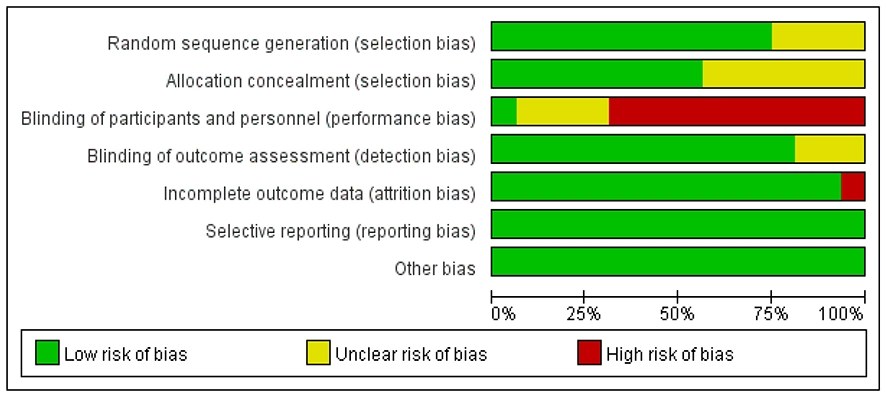
The authors noted that indirectness, imprecision and heterogeneity limited certainty of evidence, with very low confidence in the comparison between the two BCI modalities. P-score rankings remain exploratory pending direct head-to-head trials to determine their relative effects.