

Stroke is the leading cause of disability worldwide, and brain-computer interfaces offer a new path for post-stroke motor recovery. This topic focuses on BCI combined with exoskeletons, functional electrical stimulation, or transcranial stimulation for upper and lower limb rehabilitation and at-home use.
September 2026
At-Home BCI Therapy Beats Home Exercise for Chronic Stroke Arm Deficits in Randomized Trial
Chronic stroke patients who used an at-home brain-computer interface (BCI) therapy system gained a mean 6.0 points on the Upper Extremity Fugl-Meyer Assessment after 12 weeks, versus 1.5 points for those on a home exercise program. Response rates were 55.5% and 9.6%, for a number needed to treat of 2.2. The trial also exposed the dropout problem in home-based studies: 17 of 42 control participants withdrew because they were dissatisfied with their group assignment.
Shandong Hospital Registers Retrospective Cohort Study of Closed-Loop BCI Exoskeleton in Stroke Recovery
The study asks whether adding closed-loop BCI exoskeleton training to conventional rehabilitation improves lower-limb recovery in stroke patients. The retrospective cohort plans to enroll 58 patients in a closed-loop training group and 57 in a conventional rehabilitation group, with the primary endpoint being change in FMA-LE score from baseline to week 6. Secondary outcomes include motor imagery-related EEG features, the 10-Meter Walk Test and the Berg Balance Scale, indicating the researchers want to track both walking function and the brain signals themselves. The trial is self-funded by the research team and has not yet begun recruiting.
Anhui Hospital to Build 400-Person Post-Stroke BCI Dataset
About 70% to 80% of stroke survivors cannot live independently because of physical disability, and regaining walking function is central to changing that. This observational, cross-sectional study plans to enroll 200 stroke patients and 200 healthy controls, collecting EEG, fNIRS, sEMG, fMRI and other central and peripheral physiological signals alongside clinical measures such as Facial Action Units, the Berg Balance Scale and Fugl-Meyer motor function. The goal is a reusable non-invasive BCI dataset for stroke rehabilitation research. First enrollment is set for October 1, 2026.
Umbrella Review Ties Post-Stroke BCI Gains to Motor Attempt and 20-60 Minute Sessions
Motor attempt, meaning a patient's effort to move a paralyzed limb, was the intent-inducing modality most consistently tied to significant therapeutic effects in an umbrella review of 17 meta-analyses of brain-computer interface systems for stroke motor recovery, published in Symmetry on September 4, 2026 with a literature search cutoff of June 30, 2026. Electrical stimulation was a consistently effective feedback type, while robot-assisted and visual feedback gave inconsistent results, and higher weekly session frequency and moderate session durations of about 20 to 60 minutes were linked to consistent recovery. Combining motor attempt with electrical stimulation may yield greater benefits, the authors suggest.
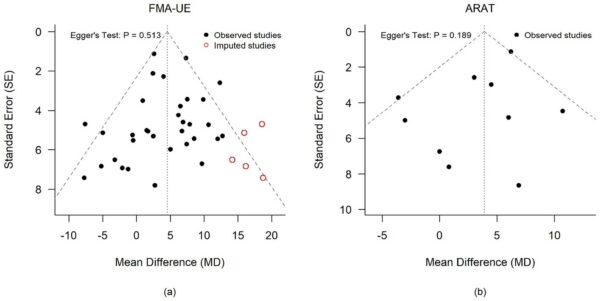
BCI Training Improves Post-Stroke Arm Function Across 35 Trials, 1,188 Patients
One EEG Diffusion Model Decodes Motor Imagery, Hemiplegic Side and Recovery
Researchers have proposed a unified EEG-based framework that simultaneously performs motor imagery classification, hemiplegic side detection and functional recovery prediction, aimed at motor rehabilitation after stroke. Stroke remains one of the leading causes of long-term motor disability worldwide, the authors note, and motor imagery brain-computer interfaces are seen as a way to accelerate recovery. Current MI-BCI methods, however, generalize poorly across patients, lack an effective functional assessment step, and are limited by scarce patient data and a shortage of suitable augmentation approaches. The framework introduces a diffusion model tailored to the spatio-temporal characteristics of EEG, built on a decoupled neural architecture with rotary spatial encoding and autoregressive temporal fusion. To offset data scarcity, the team designed two augmentation strategies adapted to stroke EEG. Experiments across multiple MI-BCI tasks show superior performance and generalizability, the authors say, supporting the method's potential for personalized stroke rehabilitation.
August 2026
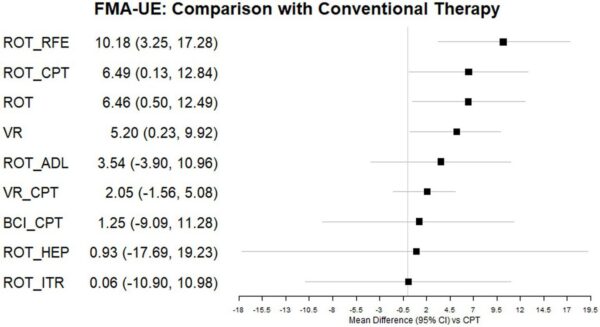
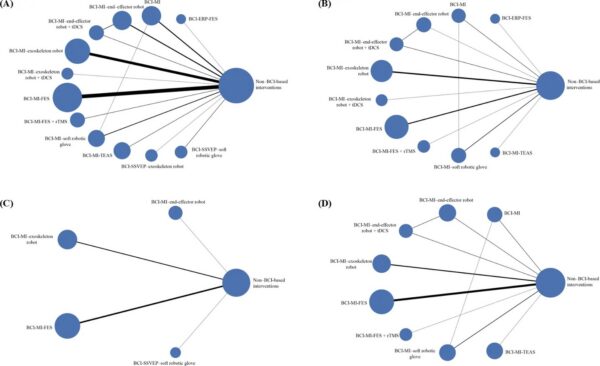
72-Trial Meta-Analysis Ranks Noninvasive BCI Options for Post-Stroke Arm Recovery
Review Outlines Three BCI Paradigms for Post-Stroke Hand Rehabilitation
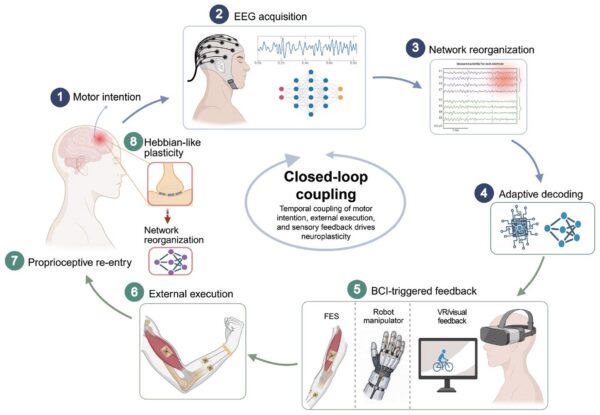
A review in Topics in Stroke Rehabilitation maps the neurophysiological basis of non-invasive EEG-based brain-computer interfaces for post-stroke hand recovery and sorts the field into three paradigms: motor imagery with physical feedback, motor imagery with virtual or multisensory feedback, and steady-state visual evoked potential (SSVEP)-driven training. These systems decode sensorimotor-cortex rhythms during imagined hand movement in real time to drive exoskeletons, functional electrical stimulation or virtual reality, closing a Hebbian feedback loop meant to strengthen or remodel damaged pathways in patients whom conventional rehabilitation, which depends on active movement, often cannot reach. Studies confirm the approaches can improve upper-limb function, the review says, but clinical adoption still faces low signal-to-noise ratios, wide individual variability and 'BCI blindness.'
BCIs Move into Orthopedic Rehab, Targeting Muscle Inhibition after Surgery
Brain-computer interfaces are moving out of neurology and into orthopedic rehabilitation, according to a review arguing that BCIs can raise corticospinal excitability and induce neuroplasticity by decoding movement-related neural signals and closing a feedback loop between central and peripheral systems. The target is postoperative muscle inhibition caused by insufficient central motor drive; available evidence suggests motor imagery-based BCI training improves quadriceps voluntary activation and limits strength loss after ACL reconstruction, though the authors cite thin mechanistic evidence, patient heterogeneity and a lack of standardized protocols as barriers to translation. The review, by researchers at the First Affiliated Hospital of Jinan University in southern China's Guangzhou and other institutions, was published on August 25, 2026, in the Chinese Journal of Reparative and Reconstructive Surgery.
Review Maps How Closed-Loop BCIs May Support Post-Stroke Recovery
BCI emerges as hotspot in post-stroke motor rehab
Published in Neural Regeneration Research on August 18, 2026, the study conducted a bibliometric analysis of 3173 articles from the Web of Science Core Collection on post-stroke limb motor dysfunction and functional recovery from 2016 to 2025, by authors from Beijing Rehabilitation Hospital, Capital Medical University. The field is in a period of rapid expansion, with technology-assisted rehabilitation as the dominant trend and robot-assisted training and virtual reality as the two major technological keywords. Burst literature analysis revealed three hotspot phases, with the recent phase (2020 to present) covering neuromodulation (brain-computer interface and non-invasive brain stimulation), global disease burden and public health policy. Highly cited studies focus on comparative efficacy, robot-assisted training, brain-computer interfaces, vagus nerve stimulation and prediction of rehabilitation outcomes.
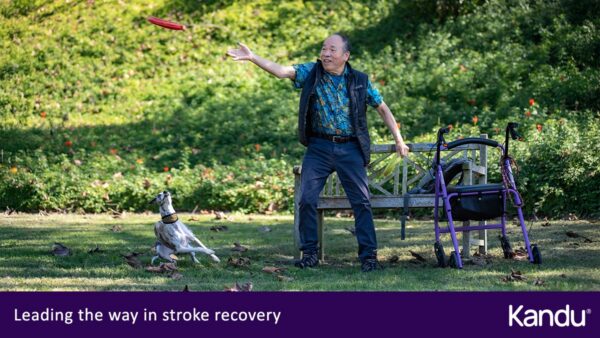
Kandu's At-Home IpsiHand BCI Improves Arm Function in Chronic Stroke Trial
BCI-guided FES trial targets gait in spinal cord injury
A new clinical trial at Brazil's Santos Dumont Institute will test whether brain-computer interface (BCI)-guided functional electrical stimulation (FES) can improve muscle activation and gait in people with spinal cord injury. The institute is a well-known Brazilian center for neurorehabilitation research. Registered on ClinicalTrials.gov as NCT07768930 and first posted on August 17, 2026, the study is active but not yet recruiting. The intervention involves ankle dorsiflexion rehabilitation: patients wear an EEG cap, the system detects motor-imagery-related brain signals in real time, and when an intention is detected, it triggers FES to stimulate the tibialis anterior muscle to assist ankle dorsiflexion. Primary outcomes are improvements in muscle activation patterns and gait kinematics. The trial is at an early stage, with enrollment details not yet disclosed.
Wuhan Union Hospital Registers 1,000-Patient Cohort Testing Non-Invasive BCI for Stroke
A multicenter cohort study aims to enroll 1,000 stroke patients, with the treatment arm receiving closed-loop BCI plus functional electrical stimulation rehabilitation and the control arm receiving conventional training. The primary endpoint is 2-week change in upper and lower limb FMA scores. First enrollment is scheduled for September 1, 2026.
July 2026
Three Weeks of Motor Imagery BCI Improves Arm Function in Subacute Stroke
A study of 60 patients with subacute stroke hemiplegia found that adding motor imagery brain-computer interface training to conventional rehabilitation significantly improved upper limb motor function, simplified upper limb function scores, and daily living abilities. The experimental group of 30 received 3 weeks of additional BCI training, 5 days per week, while the control group received only conventional rehabilitation. The experimental group showed greater improvements in Fugl-Meyer upper limb scores, simplified upper limb function scores, and Barthel Index, with statistically significant differences.
June 2026
Anhui Hospital Registers 60-Patient BCI Trial for Post-Stroke Motor Dysfunction
The trial compares motor imagery BCI plus standard rehabilitation against standard rehabilitation alone in stroke patients with hemiplegia, tracking limb motor function and daily living ability. It planned to enroll 60 participants, 30 per arm, with the first participant enrolled on August 10, 2022; the registry now lists the study as completed. Beyond motor scales, the primary outcomes include functional connectivity and a lateralization index measured with fNIRS, probing brain-network changes rather than behavior scores alone.
Northwestern Polytechnical University Registers BCI Stroke Rehabilitation Trial With 4 Arms
A newly registered trial tests a brain-computer interface in post-stroke rehabilitation across 4 parallel arms: full cross-domain (emotion-cognition-motor) adaptive training, integrated cognitive and motor task training, single-dimension motor training, and conventional rehabilitation. Each arm plans 22 participants, 88 in total. It enrolls patients aged 30 to 80 with a first cerebral infarction or hemorrhage 3 months to 1 year earlier, unilateral hemiplegia, and upper-limb Brunnstrom stage II to IV. The primary outcome is a motor function score; secondary outcomes include EEG motor imagery event-related synchronization/desynchronization, prefrontal theta/alpha power ratio, and EEG-fNIRS coupling.
May 2026
Shanghai Trial to Test BCI-Driven Lower Limb Exoskeleton in 60 Stroke Patients
The randomized controlled trial plans to enroll 60 patients with lower limb motor impairment after stroke, with the intervention group receiving BCI-assisted exoskeleton rehabilitation training and the control group conventional walking training. Primary outcomes include lower limb surface electromyography, lower limb motor function, the Modified Barthel Index, a balance scale and functional ambulation, testing whether a BCI-driven exoskeleton adds functional benefit over conventional gait training. Punan Hospital, Pudong New Area, Shanghai is the sponsor, with first enrolment set for May 30, 2026. The trial is registered with the Chinese Clinical Trial Registry (ChiCTR) under number ChiCTR2600125531, with a registration date of May 28, 2026, and recruitment has not yet started.
ChiCTR Registers Trial of Motor Imagery BCI for Lower-Limb Stroke Rehab
The Chinese Clinical Trial Registry (ChiCTR) has logged a study of how brain-computer interface training built on a motor imagery paradigm affects lower-limb motor function in stroke patients. Registered on May 28, 2026 as ChiCTR2600125562, the trial is recruiting; design, sample size and sponsor are absent from the record carried by the WHO International Clinical Trials Registry Platform (ICTRP) and must be read from the original ChiCTR entry.
Xuanwu Hospital Registers BCI Rehabilitation Trial Enrolling 58 Stroke Patients
The randomized controlled trial plans to enroll 58 patients with upper limb motor dysfunction after stroke. The test group will receive feedback-based rehabilitation training through brain-computer interface interaction, while the control group will undergo traditional upper limb circular motion training. The primary outcome is the Fugl-Meyer Motor Assessment-Upper Extremity (FMA-UE), with secondary outcomes covering motor function, daily living activities, quality of life and neurophysiological measures including EEG, transcranial magnetic stimulation and fNIRS. The trial was prospectively registered, with first enrolment set for June 1, 2026, and recruitment has not yet started.
Xi'an Jiaotong University Second Hospital Registers BCI Ankle Rehabilitation Trial in 120 Stroke Patients
The multicenter randomized controlled trial pits closed-loop BCI ankle training against conventional active and passive ankle training in subacute stroke patients who are 4 to 12 weeks past onset and have less than 10 degrees of active ankle dorsiflexion. Primary endpoints are active ankle dorsiflexion range of motion and Manual Muscle Testing of the ankle; secondary endpoints include Functional Ambulation Classification, the Berg Balance Scale and the Fugl-Meyer Motor Assessment of the Lower Limb. The trial plans to enroll 120 patients, 60 per arm, with first enrolment set for May 31, 2026.
Xi'an Jiaotong University Second Hospital Registers BCI Lower-Limb Stroke Trial for 222 Patients
The multicenter randomized controlled trial plans to enroll 222 patients who are 1 to 3 months past their first stroke and have motor impairment in the affected lower limb. The experimental group will receive 4 weeks of motor imagery-based BCI-driven active and passive lower limb training, while the control group gets 4 weeks of conventional training. The primary outcome is the Fugl-Meyer Assessment Lower Extremity Section, with balance, daily living ability and walking classification as secondary outcomes. First enrolment is set for May 31, 2026.
Xuanwu Hospital Registers Trial Combining Non-invasive BCI, Spinal Cord Stimulation and Exoskeleton for Spinal Cord Injury
Can a non-invasive brain-computer interface read motor intention and, combined with spinal cord stimulation and exoskeleton training, improve function after spinal cord injury? Xuanwu Hospital, Capital Medical University has registered a single-arm exploratory trial that plans to enroll 10 patients aged 18 to 65 with spinal cord injury. The intervention combines all three into one rehabilitation regimen. The primary outcome is the overall clinical efficacy rate 6 months after surgery; secondary outcomes include improvement in the Visual Analogue Scale for pain and the incidence of adverse events related to the trial devices.
Xi'an Jiaotong University First Affiliated Hospital Registers Multicenter Trial of SSVEP-BCI-Driven Stimulation for Post-Stroke Dysphagia
The trial tests whether a steady-state visual evoked potential (SSVEP) brain-computer interface can drive functional electrical stimulation of swallowing muscles more effectively than conventional neuromuscular electrical stimulation. It plans to enroll 90 patients, 45 per arm, all within 6 months of a first ischemic or hemorrhagic stroke and aged 18 to 80. The primary outcome is the Standard Swallowing Assessment, with secondary measures including the Functional Oral Intake Scale and the Penetration-Aspiration Scale. First enrollment is listed for June 1, 2026.
Chinese Trial Pairs Tactile-Feedback BCI With Motor Imagery for Stroke Arm Recovery
A trial combining tactile-feedback brain-computer interface training with motor imagery for upper-limb rehabilitation after stroke is recruiting in China. Registered with the Chinese Clinical Trial Registry as ChiCTR2600124911 on May 19, 2026 and carried by the WHO International Clinical Trials Registry Platform, the trial record is available through the WHO International Clinical Trials Registry Platform.
Huashan Hospital Completes BCI Trial Comparing 3 Motor Imagery Modes in 54 Stroke Patients
The trial split 54 stroke patients with hand impairment into three groups using kinesthetic, hybrid and visuomotor imagery to drive BCI training, with upper-limb Fugl-Meyer score as the primary endpoint. The registration record does not yet report which imagery mode worked best.
Trial Pairs iTBS With Motor Imagery BCI Training for Post-Stroke Arm Impairment
Guangdong Provincial Hospital of Traditional Chinese Medicine has registered a parallel-design interventional trial, ChiCTR2600124411, that plans to enroll 81 patients with unilateral upper-limb impairment after stroke in three groups of 27. Two groups receive intermittent theta-burst stimulation (iTBS) over the dorsolateral prefrontal cortex or the primary motor cortex, and one receives sham stimulation; all three undergo motor imagery BCI training. Primary outcomes are BCI decoding accuracy, the Fugl-Meyer Assessment and brain network topology. The trial was registered on May 12, 2026 and is not yet recruiting.
Xuzhou Rehabilitation Hospital Completes Stroke BCI Trial With Modified Constraint Therapy
A trial at Xuzhou Rehabilitation Hospital Affiliated to Xuzhou Medical University paired a motor imagery brain-computer interface with modified constraint-induced movement therapy to restore upper-limb function after stroke. The hospital is a rehabilitation specialty facility affiliated with Xuzhou Medical University, and the combined approach is meant to test whether a BCI adds benefit on top of established rehabilitation training. It planned 40 participants, 20 in the combined group and 20 in the control group, with the first patient enrolled on December 24, 2025; the registry now lists the study as completed. The primary endpoint is the Fugl-Meyer Assessment for Upper Extremity, with the Wolf Motor Function Test and modified Barthel Index as secondary measures. Funding comes from the New Round of Xuzhou "Pengcheng Talent Program" — High-level Healthcare Talent Recruitment and Development Project, project number 2025TD14. No results are posted, so whether the combined approach beats constraint therapy alone remains unknown.
April 2026
ChiCTR Registers Trial of Early BCI Training After Stroke Reperfusion
The Chinese Clinical Trial Registry (ChiCTR) has logged a study of the safety and efficacy of early brain-computer interface training given after reperfusion therapy in patients with acute ischemic stroke, an attempt to pin down when in the recovery window such training should start. Registered on April 27, 2026 as ChiCTR2600123548, the trial has not begun recruiting, and design, sample size and sponsor are absent from the record carried by the WHO International Clinical Trials Registry Platform (ICTRP) and must be read from the original registration.