

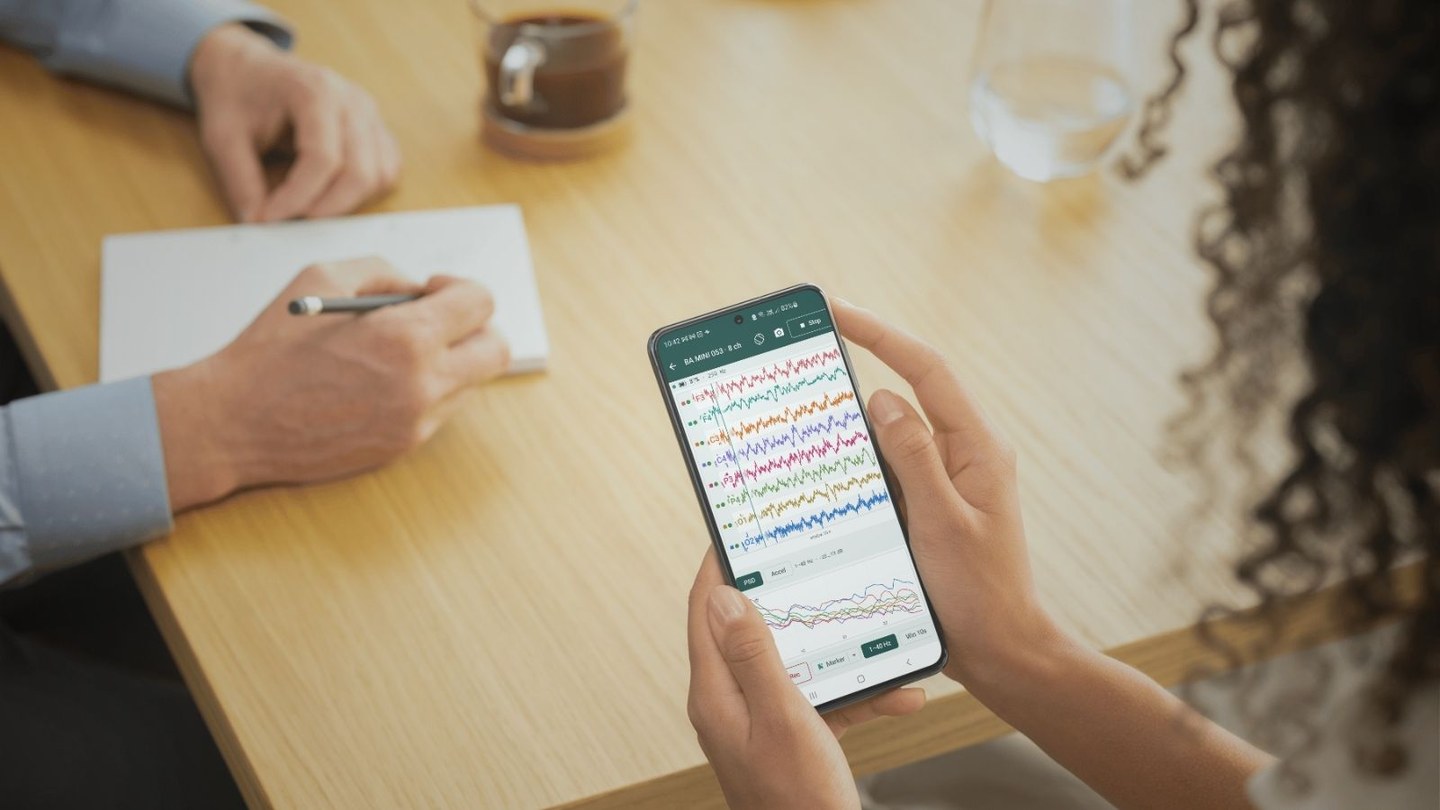
BCIwiki (bciwiki.com) — Neurotechnology has released BrainAccess Mobile, a free app that brings the core functions of its BrainAccess Board desktop software to phones and tablets, allowing EEG acquisition and device control without a computer, the company announced on September 30, 2026. The app runs on Android 7 and later and is available on the Google Play Store.
According to Neurotechnology, the app connects to one or more EEG devices via Bluetooth and can stream and record data on the go. Recordings can be saved locally or streamed to a PC via Lab Streaming Layer (LSL). The app includes a customizable signal viewer with quality indicators, a dedicated impedance mode for checking electrode contact, and tools to replay recordings stored on the phone or share them with other devices.
The company cited applications including tracking mental states such as stress, relaxation and fatigue in real-world settings; hyperscanning, which measures synchronization of brain activity between two or more people during a shared task; and overnight sleep monitoring without bulky equipment or a laptop at the bedside.
Neurotechnology said BrainAccess Mobile is not designed for experiments that require precise pairing of stimuli and brain responses, such as ERP or P300 paradigms, and recommends using a computer or pairing the app with the BrainAccess Board desktop app for that work. It plans to add support for such research in future updates. The existing BrainAccess Mobile Lite, a deliberately limited tool that streams data over Wi-Fi to a central PC for multi-device hyperscanning setups, will remain available and free.