/ EN

Industry News

29 entries
September 2026

ANT Neuro, optohive to Build Hybrid EEG-fNIRS Cap

ANT Neuro, the Dutch EEG equipment maker headquartered in Hengelo, announced a strategic collaboration on September 1, 2026 with optohive AG, the Swiss developer of the HiveOne functional near-infrared spectroscopy system. Under the agreement, HiveOne will be sold and supported through ANT Neuro's regional sales and technical teams, reaching the research customers the company says it has served for nearly 30 years. The two will also co-develop a hybrid cap that holds ANT Neuro's eego EEG technology and HiveOne together and synchronizes both data streams through Lab Streaming Layer; optohive was founded in 2025 as an ETH Zurich spin-off, the announcement said.
August 2026

Shenzhen Drafts China's First BCI Industry Rules, Requiring Separate Brain Data Consent

The Shenzhen Municipal Bureau of Science, Technology and Innovation (深圳市科技创新局) in southern China and the city's Bureau of Justice have opened public consultation on draft regulations to promote the brain-computer interface industry in the Shenzhen Special Economic Zone, a status that carries authority to write binding local rules of the city's own. According to Jiemian News, a Chinese business news outlet, the draft defines a BCI as technology that opens an information channel between the brain and external devices for coordinated interaction between biological and machine intelligence, and states that the municipal government shall write BCI industry development into the city's economic and social development plan and its science and innovation plan. On data, the report says processing brain data and other sensitive personal information would require separate written consent from the individual, alongside strict compliance with national rules on cross-border data transfer; legislating specifically for the BCI industry in special economic zone regulation form is a first in China.

Vivani Merges Cortigent Into Nasdaq-Listed ClearOne, Giving Orion Implant a New Parent

The Orion visual neuroprosthetic system, originally developed by Second Sight Medical Products, is changing parent companies again, Neurotech Reports said. Vivani Medical has agreed a reverse merger with Nasdaq-listed ClearOne under which its Cortigent unit becomes a wholly owned ClearOne subsidiary; ClearOne will be renamed Cortigent Holdings Inc. and is expected to trade as CRGT. ClearOne agreed as part of the transaction to file a Form S-1 registration statement to raise $10 million to $15 million, and Cortigent plans a pivotal trial of Orion in about 60 patients, though funding remains a challenge.

Chinese Insurers Begin Covering BCI Procedures and Surgical Risk

Chinese insurers have begun introducing BCI-related coverage. Shanghai's 2026 Hu-huibao plan added up to 150,000 yuan for out-of-pocket materials used in inpatient BCI surgery, PICC Property and Casualty underwrote an invasive-BCI surgical accident policy for the Second Affiliated Hospital of Zhejiang University School of Medicine, and China Pacific Property Insurance covered patients receiving Neuracle's NEO implant at Huashan Hospital.

Fujian Targets a 3 Billion Yuan BCI Industry by 2030

Six Fujian government departments jointly issued a provincial BCI action plan for 2026–2030. It calls for key technical breakthroughs, more than five innovative small and medium-sized companies, one cross-strait joint laboratory and two provincial innovation platforms by 2027; by 2030, Fujian aims to have 30 companies, a complete industry chain and an industry worth more than 3 billion yuan.

WABO Appoints Speech-Cognition Researcher Jianwu Dang as Joint Scientist

WABO appointed Jianwu Dang to its Scientific Advisory Board and named him joint scientist. Dang, a researcher at the Shenzhen Institutes of Advanced Technology and a distinguished professor at Shenzhen University of Advanced Technology, will support task-conditioned intent models that combine EEG, EMG, speech, text and task context; WABO said the work is not aimed at context-free mind reading.

Wearable Devices Patents User Authentication From Gesture and Neural Signals

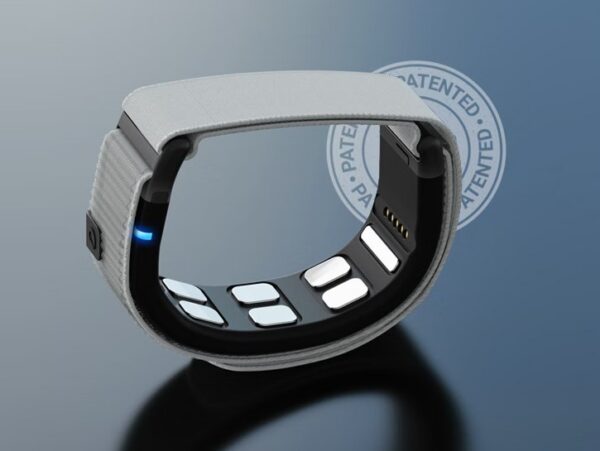
Israel's Wearable Devices said the U.S. Patent and Trademark Office has granted it a continuation patent covering user authentication that combines gesture input with biopotential sensors recording neural signals. The technology could be applied to secure payments, user detection and authorization of sensitive actions, adding a biometric layer to gesture-controlled devices.

Shanghai's Neuro Space Hits One-Year Mark: 52 Firms, World's First Invasive BCI Approved

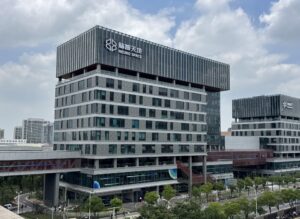
One year after its June 2025 launch, Neuro Space (脑智天地) — Shanghai's BCI industry cluster at the Hongqiao International Medical Center and China's first dedicated BCI industrial zone — has entered full operation across its 25,000 m² pilot area. As of July 2026, the cluster hosts 52 registered BCI companies and 22 startup incubators spanning flexible electrodes, BCI chips, ultrasound-based interfaces, and vision restoration. On the commercialization front, the world's first approved invasive BCI medical device, developed in Shanghai, received regulatory clearance in 2026, with its first clinical prescription issued in July. Five additional Class III devices are currently in clinical trials or under regulatory review. Shanghai accounts for nearly 60% of China's BCI financing events, totaling approximately RMB 2.117 billion. Products showcased at a recent open-day event include a non-invasive brain-controlled consumer device driven by EEG-based attention metrics, an integrated transcranial magnetic stimulation navigation system for depression treatment, and LingXi Cloud, a clinical data platform housing over 2.1 million cases of multimodal brain-disorder data at petabyte scale.

WABO EEG Art Demo Yields 100+ Works at ChinaJoy

WABO (瓦博科技) says it ran a four-day neural art experience at the Snapdragon Pavilion during ChinaJoy 2026, held from July 31, 2026 to August 3, 2026 in Shanghai, producing more than 100 AI artworks with participants. Visitors wore a non-invasive EEG headband and viewed feedback derived from their signal state, with task-specific features feeding the artwork-generation process; the company says no private thoughts were read. The setup paired WABO's acquisition hardware with a Snapdragon X Elite laptop, keeping signal processing, model inference and image generation on the endpoint, which the company describes as a practical test of a neural-intent workflow outside a controlled development setting.

Haidian Hosts Nearly 60% of China's Key BCI Firms

Beijing's Haidian district is accelerating its push to become a hub for brain-computer interface development, with nearly 60% of China's key BCI companies based in the district, CCTV.com reported on August 6, 2026. According to the report, the Zhongguancun (Haidian) BCI Industry Cluster was formally unveiled at the 2026 Zhongguancun Forum annual meeting and now hosts more than 20 BCI projects, and an AI-plus-BCI standards testing and validation laboratory has been completed. The report did not disclose a list of the cluster's projects, the methodology behind the company figure, or further construction plans.

BrainPatch Wins FCC Certification for US Market

BrainPatch, which makes non-invasive neurotechnology, says it has secured FCC certification, a step the company needed before it could sell its products in the US. In a blog update dated August 3, 2026, the firm said the approval confirms its technology meets US regulatory requirements and marks a milestone in its international expansion; it also brings the technology closer to buyers, partners and backers in the country it calls the largest consumer market.
July 2026

Neurotech Leaders Forum Returns to imec With Europe at an Inflection Point

The second annual Neurotech Leaders Forum drew executives, investors, researchers and regulators from Europe and the United States to imec's campus in Leuven, Belgium, on June 23-24, 2026, for sessions on clinical translation, capital formation, regulatory strategy and emerging frontiers. Thomas Stieglitz of the University of Freiburg gave the Day 1 keynote, arguing for perseverance and functionalist design, and later sessions covered women's health, European BCI ventures and the region's capital and regulatory challenges. Companies showing new work included WISE SpA, with its Heron spinal cord stimulation lead, and Melora Medical, with a transcutaneous auricular vagus nerve stimulation (taVNS) device for dermatology.

Nanjing Builds Full BCI Industry Chain

Nanjing has built end-to-end competitiveness across the brain-computer interface industry chain, People's Daily Online reported on July 28, 2026. According to the report, the city earlier issued an action plan to become a national hub for BCI industry innovation and has set up a 3+3+3 BCI industry innovation system, drawing on universities including Southeast University and Nanjing University of Aeronautics and Astronautics to build 3 provincial- and ministerial-level key laboratories, and landing three core platforms covering neural signal coding and decoding, dedicated chips and brain imaging. The 2026 national BCI conference was also held in Nanjing. The report summed up the city's strengths as research, medical resources, application scenarios and capital ecosystem.

BrainAccess Rebuilds Its Board App Interface and Adds AI Assistant Jena

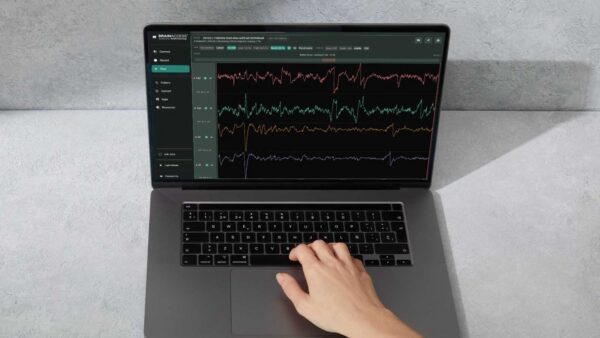
BrainAccess released a major update to its desktop application BrainAccess Board on July 27, 2026, featuring a rebuilt interface, improved functionality and a new AI assistant called Jena that monitors device and signal quality in real time. The company, which supplies EEG devices and software for neuroscience research and clinical use, said the update is aimed at ease of use and data management during EEG acquisition and analysis.

BrainAccess Releases MATLAB API for Direct EEG Data Acquisition

BrainAccess, the EEG system line from Neurotechnology, has released a MATLAB API that lets users connect its wireless dry-electrode headsets over Bluetooth, configure channels and sampling rate, start and stop data streams and pull data straight into MATLAB arrays, work that previously required Python, C or the LSL MATLAB toolbox. The toolbox installs as a single .mltbx package for desktop MATLAB R2025b or newer, mirrors the structure of the existing Python API and supports session annotations and saving directly to .mat files, so recordings can go straight into tools such as Signal Processing Toolbox and EEGLAB. BrainAccess devices, sold in MINI, MIDI, MAXI and HALO models, are widely used in neuroscience research and engineering.

Precision Neuroscience Hires BCI Pioneer John Donoghue as Scientific Advisor

Placing electrodes on the brain's surface rather than inserting them into tissue is the key difference between Precision Neuroscience's approach and the BrainGate approach Donoghue pioneered. The New York-based company develops minimally invasive, safely removable, high-bandwidth BCIs; its first system, Layer 7, is aimed at people with ALS, spinal cord injury and brainstem stroke, a population the company estimates at 315,000 in the US. The company says its Layer 7 cortical surface array has been implanted in nearly 100 patients at several leading academic medical centers, that it has raised $180 million from investors, and that it has received FDA 510(k) clearance. Donoghue, a professor emeritus at Brown University, will advise on device design, signal decoding and clinical strategy as the company pushes ahead with a long-term implant study and commercial launch.

Inner Mongolia Opens First BCI Hospital Ward

The first brain-computer interface hospital ward in China's Inner Mongolia autonomous region was unveiled in Hohhot, CCTV.com reported on July 17, 2026. At the unveiling ceremony, Hurile, head of the rehabilitation medicine department at Inner Mongolia Medical University, delivered a briefing introducing the ward's construction, technical strengths and development plans, framing the ward as a starting point for building a new clinical rehabilitation ecosystem in the autonomous region. The report did not disclose the ward's bed capacity, equipment, patient scope or opening date, nor the full name of the hospital housing the ward.

Neurosom Wins US Patent for Bayesian EEG Source Mapping and Stimulation Targeting

Neurosom announced it has been granted a patent for a method that combines Bayesian statistical modeling with personalized EEG data and brain atlas models to achieve "super-resolution" in locating the origins of brain electrical activity, potentially improving the guidance of transcranial electrical stimulation (TES). The patent, titled "Method for Bayesian Super-Resolution of Electroencephalographic Source Analysis and Transcranial Electrical Stimulation" (US Pat. No. 12,663,866), was announced on July 9, 2026.

NIRx and Artinis Form fNIRS Partnership Backed by Gilde Healthcare

NIRx Medical Technologies and Artinis Medical Systems, the Dutch fNIRS pioneer, have formed a strategic partnership backed by healthcare investor Gilde Healthcare to speed innovation and broader adoption of functional near-infrared spectroscopy (fNIRS) brain imaging. Both companies keep their own brands and operating locations while combining R&D and commercial scale, and leadership is unchanged, with Dr. Patrick Britz remaining chief executive of NIRx and Dr. Willy Colier chief executive of Artinis.

MEGIN Opens Dual-MEG Hyperscanning Facility at Tsinghua to Record Two Brains at Once

MEG systems maker MEGIN says it has opened a side-by-side dual-MEG hyperscanning facility at Tsinghua University in Beijing, built with the Department of Neuroscience and Biomedical Engineering at Aalto University. Two MEGIN TRIUX neo systems sit in adjacent magnetically shielded rooms, which the company says allows simultaneous whole-head recording from two interacting participants with millisecond-level synchronization, opening a real-time window on how two brains interact during natural conversation, cooperation and play. MEGIN says the first scientific work from the facility will be presented at the BIOMAG 2026 conference in Beijing, running August 23 to 25, 2026; the announcement does not disclose what the facility cost, how long it took to build, or which research projects are already under way.

Divergence Neuro Adds BrainBit's 19-Channel DragonEEG to Its Platform

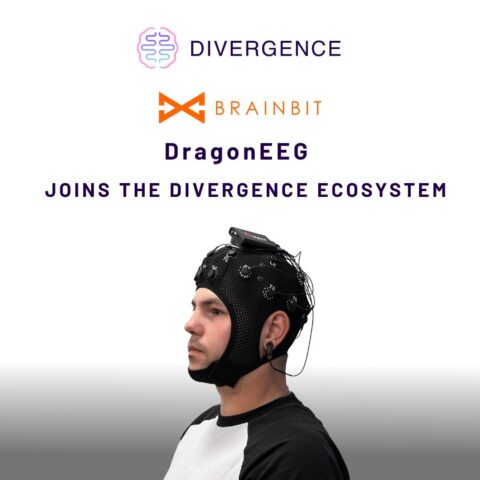
Divergence Neuro has added support for BrainBit's DragonEEG to its platform, bringing in a system with 19 EEG channels laid out on the international 10-20 system plus dedicated EMG, ECG and EOG poly channels. The integration gives clinicians, researchers, educators and developers research-grade EEG acquisition inside the Divergence ecosystem for qEEG brain mapping, neuroscience research and professional neurotechnology development, as qEEG use spreads through neurofeedback, mental health and cognitive performance work.

Microsoft and INBRAIN Neuroelectronics Partner on AI-Driven BCI Therapeutics

Microsoft and INBRAIN Neuroelectronics said they will work together on AI-driven brain-computer interface therapeutics, pairing INBRAIN's graphene-based neural interfaces with Microsoft's cloud computing and data infrastructure to speed development of treatments for neurological disorders. INBRAIN, a Spanish neurotechnology company, says its system combines graphene electrodes with AI algorithms to read and modulate brain signals with high precision, on a platform it describes as bringing together neuroscience, bioelectronics and AI.

INBRAIN and Microsoft Partner on AI for Real-Time BCI Adaptation

INBRAIN Neuroelectronics has announced a partnership with Microsoft to apply the software company's large language models and data analytics tools to make its brain-computer interfaces adapt in real time. INBRAIN builds graphene-electrode BCIs for neurological disorders, spanning invasive and non-invasive applications, and recently partnered with the Mayo Clinic to speed clinical development and commercialization of its BCI therapies, with investigator-led clinical research under way.

INBRAIN and Microsoft Team Up on AI for Neurology and BCI

Barcelona-based INBRAIN Neuroelectronics said it will work with Microsoft on AI for neurology and brain-computer interfaces, combining INBRAIN's neuroscience, bioelectronics and AI work with Microsoft's cloud and AI infrastructure. INBRAIN's graphene-based neural interface is being developed as an adjunctive therapy for Parkinson's disease; it received FDA breakthrough device designation in 2023 and entered its first-in-human study in the fall of 2025.
June 2026

OYMotion and MicroPort NeuroScientific Partner on Endovascular BCI Rehab System

OYMotion and MicroPort NeuroScientific signed a strategic cooperation agreement on May 28, 2026 to jointly develop an interventional brain-computer interface rehabilitation system. The first product will be a multi-channel endovascular BCI that threads a signal-recording stent through the blood vessels to a target brain region, capturing intracranial electrical activity without opening the skull. MicroPort NeuroScientific will build the BCI system as a whole and OYMotion the limb side, with the pair targeting medical rehabilitation and human-machine interaction.

NeuroXess Says Two Paralyzed Patients Played Brain-Controlled Chess 800 km Apart

NeuroXess said two people with high-level paralysis played chess against each other across about 800 kilometers, between Shanghai and Nanchang in eastern China, using its "Triple-Full" (三全) brain-computer interface: one selected and placed pieces on a virtual board by thought, with the commands relayed in real time to a robot stand-in that moved the pieces at the other end, where the second participant gripped physical pieces through a brain-controlled exoskeleton glove. The company said the first participant was implanted at Huashan Hospital, Fudan University, in October 2025, moved a cursor by thought on the fifth day after surgery and reached 5.2 bits per second after 17 days of training, while the second was implanted at the First Affiliated Hospital of Nanchang University in December 2025 and was eating, drinking and writing with a brain-controlled exoskeleton one month after surgery. The outcomes come from the vendor's own account and have not been validated in peer-reviewed publication.
April 2026

China Hubei Approves a Provincial BCI Innovation Centre Led by a Hospital

On 31 March 2026 Hubei's provincial science and technology department approved the formation of a provincial brain-computer interface technology innovation centre, led by Tongji Hospital in Wuhan together with 12 organisations including Huazhong University of Science and Technology and Hubei Optics Valley Laboratory. Chinese reports describe it as the country's first provincial BCI platform positioned as comprehensive and full-chain. Its stated priorities are neural signal decoding, domestic sourcing of core components, and refining both non-invasive and implanted approaches. It is headed by Tang Zhouping, the hospital's party secretary.
January 2026

NeuroXess Breaks Ground on BCI Factory Targeting 10,000-Unit Supply

NeuroXess broke ground on a roughly 14,300-square-meter BCI manufacturing project in Jiangxi province in eastern China. The company said the facility would produce flexible implantable electrodes, neural recording equipment, surgical robots and fully implanted wireless BCI systems, with a target of stable supply at the 10,000-unit scale. NeuroXess expects the factory to begin operating in the second half of 2026, but the capacity and timeline remain company projections.
September 2025

Chinese Hospital Opens Its Own Brain-Computer Interface Research Institute

Tongji Hospital in Wuhan announced a brain-computer interface research institute on 5 September 2025, which it says is the first of its kind run by a hospital in China rather than by a university or a company. The institute covers basic research, clinical application and commercialisation, with the stated aim of building a full-chain BCI system spanning prevention, diagnosis, treatment and rehabilitation of neurological disease.
© 2026 BCIwiki.com Digest Topics Tips Subscribe Revisions About