

BCIwiki (bciwiki.com) — A systematic review and meta-analysis published in Frontiers in Neurology on 2026-10-19 pooled 11 randomized controlled studies involving 559 participants to assess brain-computer interface (BCI) training for cognitive function and activities of daily living (ADL) after stroke. Cognitive function served as the primary indicator of nonmotor dysfunction.
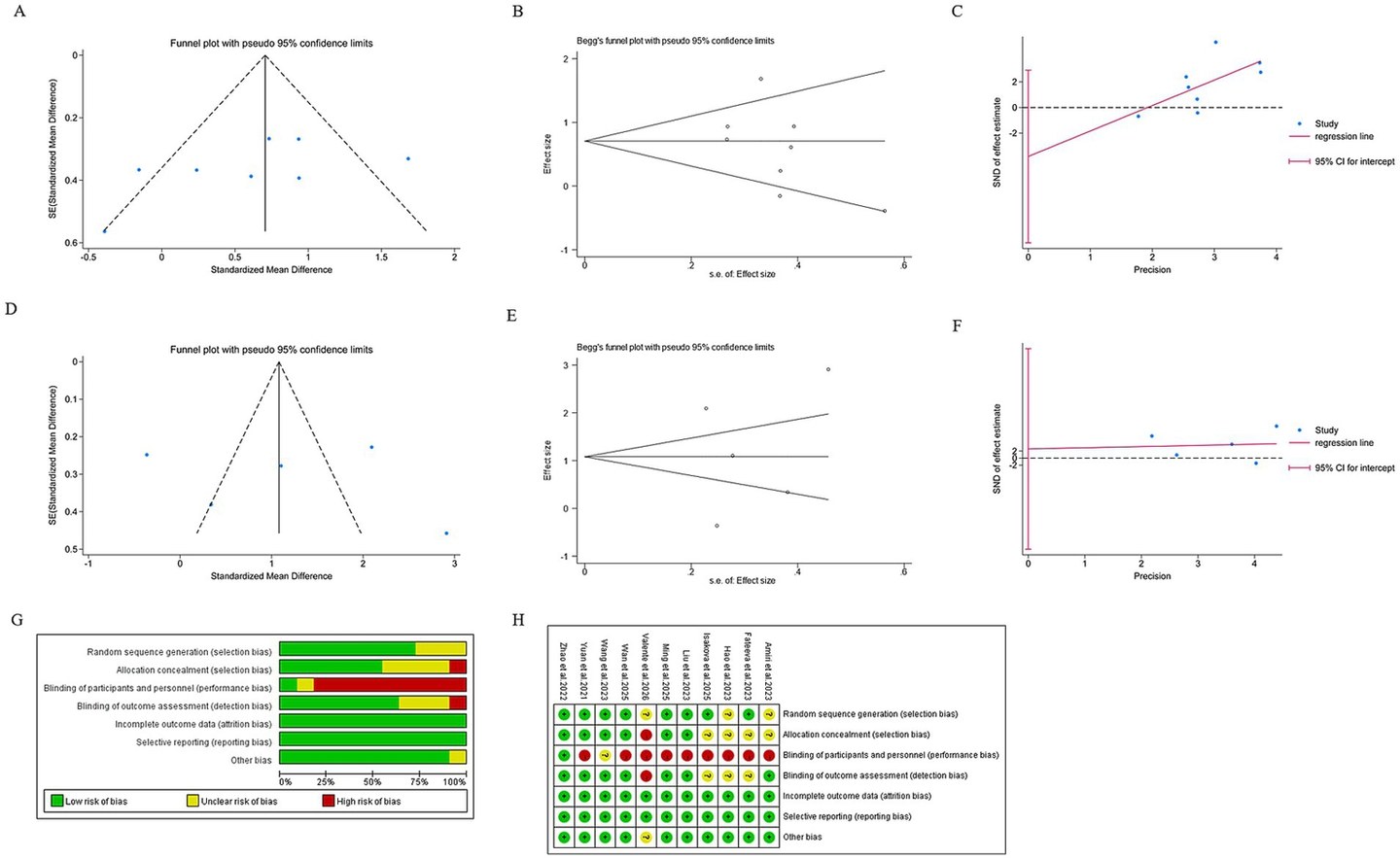
The review followed PRISMA guidelines and was registered with PROSPERO under CRD420261453809. Searches covered PubMed, Web of Science, Google Scholar, CNKI, and Wanfang Data through March 2026. The researchers used Review Manager 5.3 for statistical analyses and risk-of-bias assessment.
Compared with conventional rehabilitation, the pooled effect on cognition was a standardized mean difference (SMD) of 0.634, with a 95% confidence interval of 0.214 to 1.055 and p = 0.003. For ADL, the SMD was 1.198, with a 95% confidence interval of 0.079 to 2.316 and p = 0.036. Both results were statistically significant. SMD allows effects measured with different scales to be pooled; it is neither a percentage improvement nor a direct point change on an individual scale.
Subgroup analyses suggested exploratory patterns of benefit in some strata. Most comparisons showed no significant differences, including scale type, region, sample size, stroke type, BCI type, intervention intensity, and intervention duration, all with p > 0.05. The comparison involving first-episode stroke in the ADL analysis was an exception, with p = 0.001.
Using GRADE, evidence certainty was rated low for cognition and very low for ADL. The authors therefore describe preliminary promise and call for further high-quality research. They also conclude that current evidence is insufficient to recommend BCI for emotion or speech rehabilitation.