

BCIwiki (bciwiki.com) — A mini-review argues that brain implants, including deep brain stimulation (DBS) systems, brain–computer interfaces (BCIs) and speech neuroprostheses, are moving from the proof-of-concept stage to early clinical deployment. The study was published in Frontiers in Neuroscience on August 19, 2026.
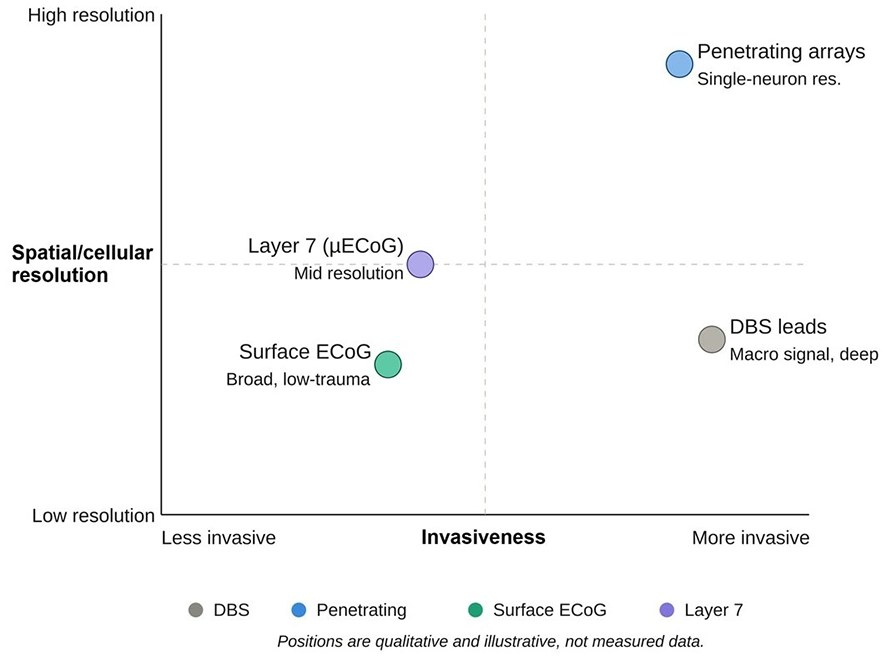
The authors contend these systems share a common closed-loop architecture (sensing, decoding, stimulation or output, power and telemetry, and chronic clinical validation), and that their translational pace is set by bottlenecks at these shared stages. Noting recent milestones such as the regulatory clearance of a cortical interface and an expanding set of implanted-BCI trials, the review highlights three recurring bottlenecks across all three technologies — long-term stability, neural coding and equitable access — alongside enabling advances in flexible electrodes, AI-assisted decoding and neuromorphic edge processing, and unresolved controversies over electrode architecture and system design.