

BCIwiki (bciwiki.com) — According to the journal record from Frontiers in Neuroergonomics, a pilot study aimed at future exo-ankle control was published on October 16, 2026. Author affiliations include Air University and Riphah International University in Pakistan, and The Chinese University of Hong Kong. The researchers developed and evaluated a non-invasive brain-computer interface (BCI) framework that decodes functional near-infrared spectroscopy (fNIRS) signals from the motor cortex to generate offline and simulated-online control commands.
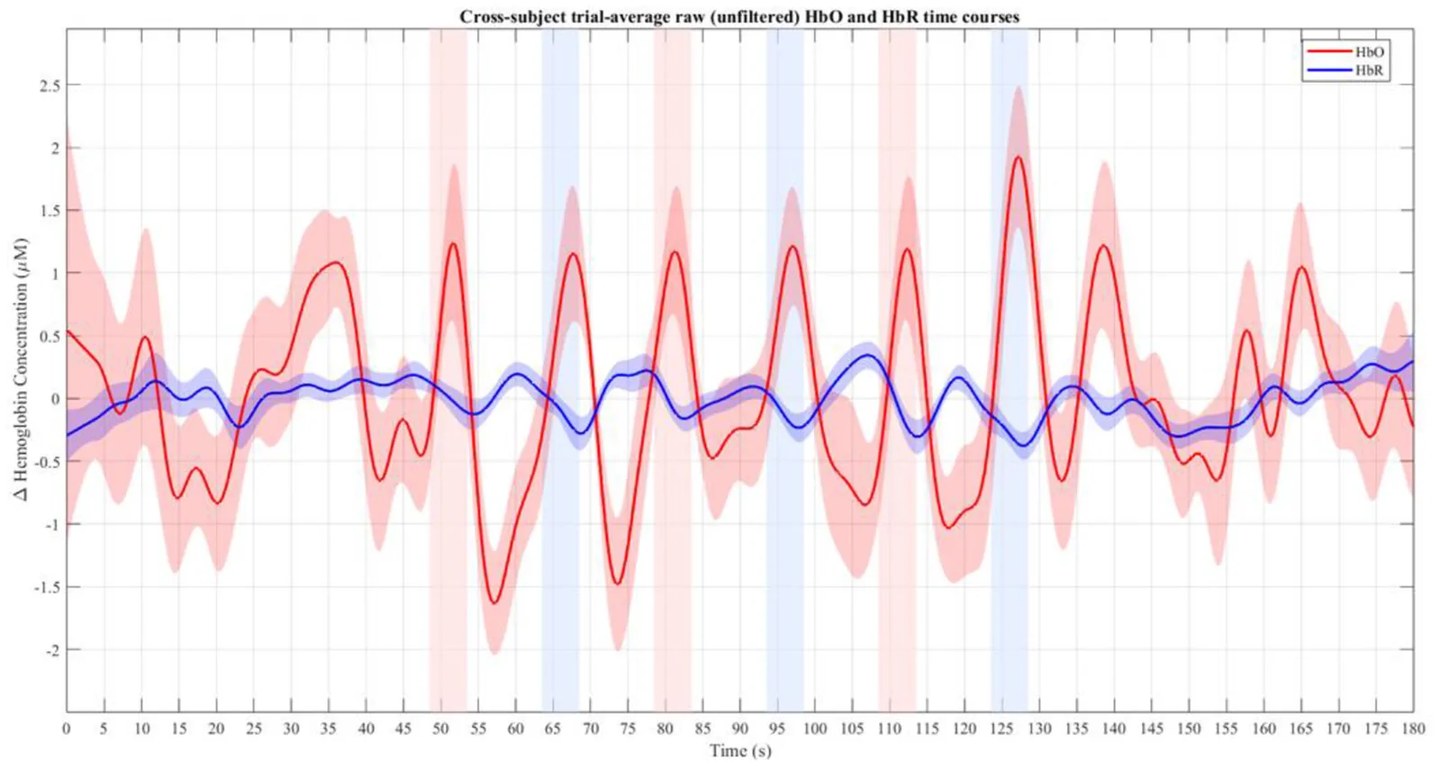
Using a PsychoPy-based paradigm, the study recorded data from 20 healthy participants and 7 patients with ankle motor impairment during rest, dorsiflexion and plantar flexion—the latter two referring to lifting the toes upward and pointing them downward. After preprocessing, the researchers evaluated combinations of 6 statistical features and 4 classifiers: linear discriminant analysis (LDA), quadratic discriminant analysis (QDA), support vector machine (SVM) and k-nearest neighbor (kNN).
Under leave-one-subject-out cross-validation across the 20 healthy participants, with one participant held out for testing in each round, SVM achieved a mean offline classification accuracy of 72.50% ± 13.8%. The corresponding results were 65.83% ± 13.5% for kNN, 63.75% ± 16.1% for LDA and 60.42% ± 17.7% for QDA. A Friedman test indicated a significant overall difference among classifiers (p = 0.0311); this does not establish that every pair differed significantly.
Simulated-online testing used SVM with sliding-window step sizes of 0.5, 1 and 1.5 s under participant-specific leave-one-trial-out validation. The highest mean accuracy was 62.2% ± 14.1% at a 1.5-s step size. The patient group achieved a mean accuracy of 57.23% ± 5% using SVM under leave-one-trial-out cross-validation. These evaluations differ in their populations and validation procedures and should not be treated as direct comparisons under identical conditions.
The authors interpret the offline and simulated-online findings as proof-of-concept feasibility for fNIRS-based exo-ankle control, providing a basis for future prospective rehabilitation research. The results do not establish prospective real-time control or improvements in patients' ankle function.