

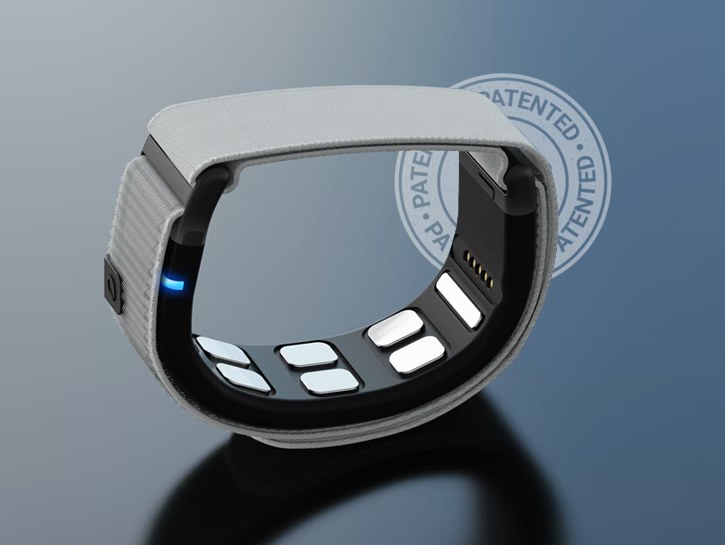
BCIwiki (bciwiki.com) — Wearable Devices Ltd. (Nasdaq: WLDS, WLDSW) announced on August 11, 2026, that the US Patent and Trademark Office (USPTO) has granted a continuation patent titled "Gesture and Voice-Controlled Interface Device." The patent covers technology that combines gesture sensors with biopotential sensors to record neural signals for user authentication when the device is worn. According to Wearable Devices, the technology could enable secure payments, user detection, and authorization of sensitive actions.
Guy Wagner, President and Chief Scientific Officer of Wearable Devices, said the patent grant marks a milestone in making neural interfaces secure and personal, with claims covering the combination of gesture recognition with unique biopotential signals to verify that a gesture was performed by a specific person. The company believes this approach could become a key feature in future wearables, enabling not only gesture control but also user authentication.
Wearable Devices specializes in AI-powered touchless sensing wearables, with consumer products including the Mudra Band and Mudra Link, designed for touch-free control of digital devices via gestures across multiple operating systems. The company said the patent grant is part of its IP strategy to create barriers to entry for competitors in the human-computer interaction market.