/ EN

Consumer Neurotech

13 entries

Consumer neurotech brings brain signal acquisition from clinical settings into daily life, with applications in focus training, sleep monitoring, gaming, and emotion management. This topic tracks consumer EEG device launches, market regulation, and validation.

September 2026

BCI-Adaptive Learning Platform Lifts Retention in 90-Learner Study

Researchers divided 90 learners into two groups: one used a BCI platform that read attention, cognitive load and mental fatigue in real time and adjusted content and pacing accordingly; the other followed a conventional online course. The BCI group showed stronger sustained engagement and better knowledge retention. The mixed-methods design combined quantitative data (pre- and post-test scores, task completion rates and neural activity indicators) with surveys and semi-structured interviews on perceived engagement, usability and the overall learning experience. The participants came from English House Language Center, the European University of Armenia and Mesrop Mashtots University. The authors also flag unresolved privacy, ethical and accessibility questions around collecting and using neural data in education.
Apple to Acquire Certain Sonera Assets and Hire Staff, EU Filing Shows

On May 8, 2026, Apple notified the European Commission under Article 14 of the Digital Markets Act that it would, through a subsidiary, acquire certain assets of Sonera and offer jobs to and hire certain Sonera employees. The deal value was not disclosed and neither party has announced it; May 8 is the filing date, and no closing date has been made public. The Commission describes Sonera as a company developing chip-scale magnetic sensors. Founded in 2018 in Berkeley, California, as a University of California, Berkeley spinout, Sonera builds acoustically driven ferromagnetic resonance magnetic sensors that operate at room temperature and has raised about $20 million.
August 2026

Seven Chinese Ministries Put Brain-Machine Tech in Elder Care Product Plan

Seven Chinese ministries, led by the Ministry of Commerce and including the National Development and Reform Commission and the Ministry of Industry and Information Technology, jointly issued implementing opinions on expanding and upgrading consumer goods (《关于推动商品消费扩容升级的实施意见》). In a section on products for older adults, the document calls for stronger R&D on key technologies and core components and for wider use of brain-machine integration and artificial intelligence in age-friendly products and rehabilitation aids. Brain-computer interfaces have until now figured mainly in China's science and industrial planning documents; framing them as consumption policy aimed at two named product categories is new, and the text was published in the State Council's policy document database, the central government's official repository for such documents.

BCIs in Elderly Care: Review of 177 Studies Maps Six Ethical Themes

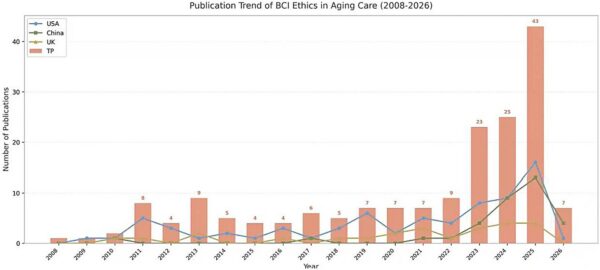
A systematic review in Frontiers in Digital Health screened 12,423 records and analyzed 177 studies of brain-computer interfaces in elderly care, identifying six recurring ethical themes: privacy and data security, informed consent and autonomy, personhood and identity, technical risk and safety, equity and access, and risk-benefit trade-offs. The authors argue those risks are built into the technology's interaction logic rather than sitting at its margins: decoding uncertainty can turn into care misjudgment, the inferability of neural data extends privacy exposure into psychological territory and power asymmetry, and technology-mediated communication strains trust and accountability. Responsible deployment, they conclude, requires embedding ethical principles systematically into care processes.

Wireless EEG Use Climbs in Children With Developmental Disabilities, BCI at 28.1%

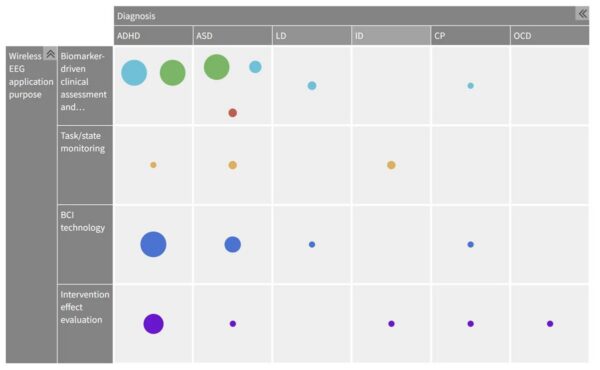
Researchers at Yonsei University in South Korea and the University of Toronto reviewed 64 studies covering 3,103 participants and found wireless EEG increasingly used in research on children with developmental disabilities, with brain-computer interfaces accounting for 28.1% of the included studies. BCI work favored low-channel, dry-electrode, consumer-grade devices, while biomarker-driven studies used higher channel counts and signal fidelity; reporting on data quality was thin, with 85.9% of studies giving no validation against wired EEG and 79.7% not specifying impedance thresholds. Published August 25, 2026 in the Journal of Medical Internet Research, it is the first scoping review to map wireless EEG use across a broad spectrum of developmental disabilities in children.

Wearable Devices Patents User Authentication From Gesture and Neural Signals

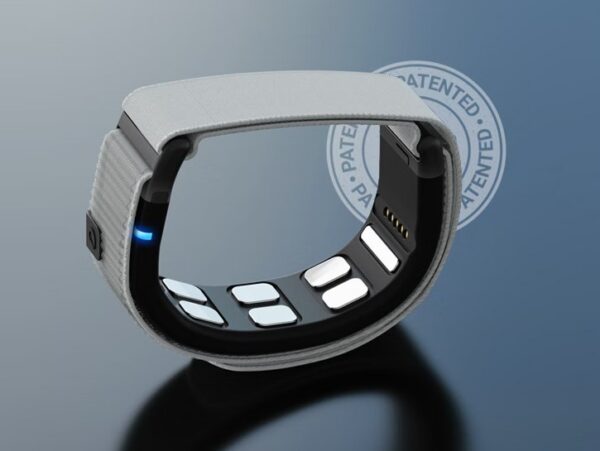
Israel's Wearable Devices said the U.S. Patent and Trademark Office has granted it a continuation patent covering user authentication that combines gesture input with biopotential sensors recording neural signals. The technology could be applied to secure payments, user detection and authorization of sensitive actions, adding a biometric layer to gesture-controlled devices.

WABO EEG Art Demo Yields 100+ Works at ChinaJoy

WABO (瓦博科技) says it ran a four-day neural art experience at the Snapdragon Pavilion during ChinaJoy 2026, held from July 31, 2026 to August 3, 2026 in Shanghai, producing more than 100 AI artworks with participants. Visitors wore a non-invasive EEG headband and viewed feedback derived from their signal state, with task-specific features feeding the artwork-generation process; the company says no private thoughts were read. The setup paired WABO's acquisition hardware with a Snapdragon X Elite laptop, keeping signal processing, model inference and image generation on the endpoint, which the company describes as a practical test of a neural-intent workflow outside a controlled development setting.

BrainPatch Wins FCC Certification for US Market

BrainPatch, which makes non-invasive neurotechnology, says it has secured FCC certification, a step the company needed before it could sell its products in the US. In a blog update dated August 3, 2026, the firm said the approval confirms its technology meets US regulatory requirements and marks a milestone in its international expansion; it also brings the technology closer to buyers, partners and backers in the country it calls the largest consumer market.
July 2026

Brain-Computer Interface for Smart Home Design Based on Machine Learning and Deep Learning Techniques

Researchers built an EEG-based brain-computer interface for smart-home control using a motor imagery dataset from 25 subjects collected with a 64-channel BCI2000 system. Features extracted from a CNN's convolutional layers trained SVM, CNN and LDA classifiers that remove the noise and overlap behind misclassifications and map selected features onto categories an Arduino UNO can act on; the three models reached overall accuracies of 99%, 96% and 99%. The authors say the scheme could let users control smart-home devices with brainwaves, potentially helping older adults and people with limited mobility.

Divergence Neuro Adds BrainBit's 19-Channel DragonEEG to Its Platform

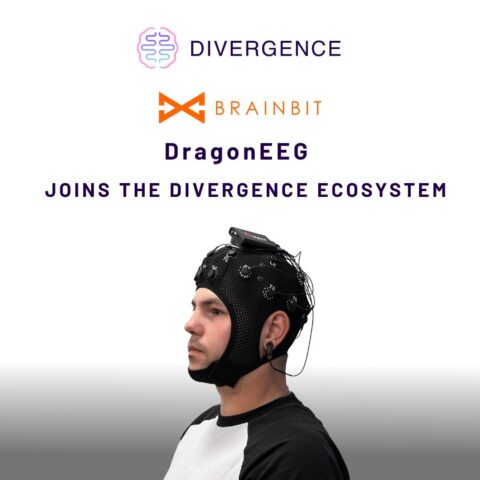
Divergence Neuro has added support for BrainBit's DragonEEG to its platform, bringing in a system with 19 EEG channels laid out on the international 10-20 system plus dedicated EMG, ECG and EOG poly channels. The integration gives clinicians, researchers, educators and developers research-grade EEG acquisition inside the Divergence ecosystem for qEEG brain mapping, neuroscience research and professional neurotechnology development, as qEEG use spreads through neurofeedback, mental health and cognitive performance work.
June 2026
September 2024
April 2024
© 2026 BCIwiki.com Digest Topics Tips Subscribe Revisions About