

BCIwiki (bciwiki.com) — The study was published in Advances in Ophthalmology Practice and Research on August 10, 2026. Visual impairment is a major global public health issue. Irreversible blindness caused by end-stage outer retinal diseases, optic nerve injuries, and other conditions remains refractory to conventional therapies. Brain-computer interface technology has emerged as a promising interdisciplinary strategy for ophthalmic diagnosis, functional assessment, and artificial visual restoration.
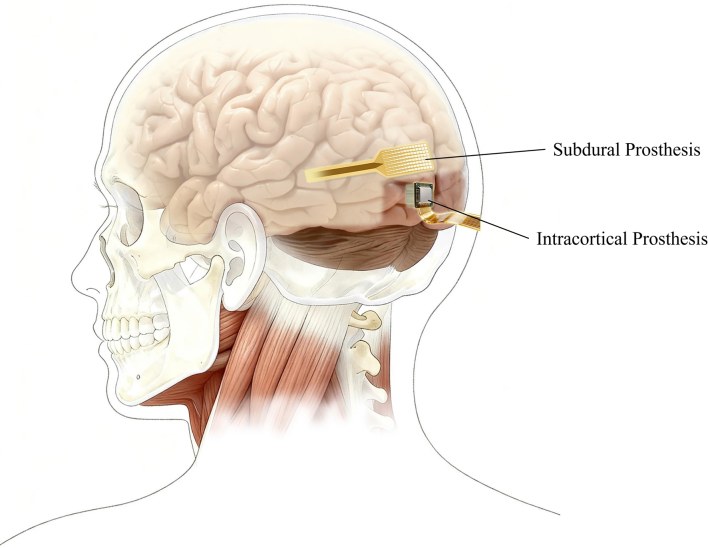
Researchers Zhou J., Hu D., Wu M., Hong Z., Li R., and Chen Q. summarise recent advances in BCI technology for ophthalmic applications. In diagnosis and assessment, BCIs provide objective and quantitative measures for evaluating visual disorders through neural signals, using modalities such as steady-state visual evoked potentials, functional near-infrared spectroscopy, and functional magnetic resonance imaging. In treatment, implantable visual prostheses, particularly retinal and cortical prostheses, have shown substantial progress in partial visual reconstruction.
However, major barriers remain, including difficulties in signal acquisition, immature encoding and decoding algorithms, limited electrode array performance, inefficient wireless transmission, implantation-related complications, high device costs, and insufficient evidence for some non-invasive interventions. Future advances in artificial intelligence, flexible electronics, virtual reality, wireless systems, and closed-loop strategies are expected to improve precision, safety, and accessibility.