

BCIwiki (bciwiki.com) — The study was published in Frontiers in Neuroscience on August 11, 2026. EEG-based brain-computer interfaces have been widely explored for detecting and monitoring mental health-related states, but existing approaches are primarily observational and offer limited support for intervention. Closed-loop EEG-based BCIs address this limitation by incorporating real-time feedback, with neurofeedback serving as a key paradigm in which users learn to modulate their own brain activity to support improvements in mental states.
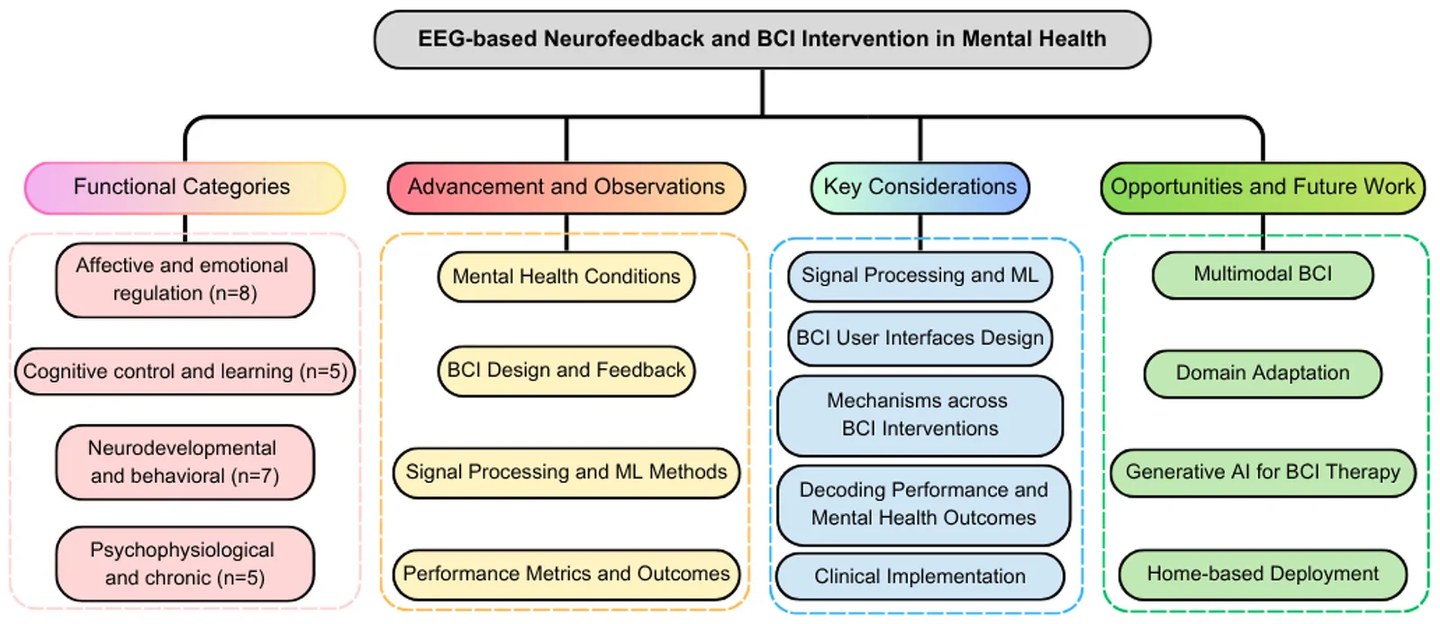
Researchers Yue Zhang, Kun Qian, Damien Coyle, Muhammad Dangana, and Benjamin Metcalfe conducted a review guided by PRISMA reporting principles. A structured search across Scopus, Web of Science, and PubMed yielded 1,101 records, of which 25 studies met the inclusion criteria. Findings were organized across four categories: application domains, paradigm design and feedback mechanisms, signal processing and machine learning methods, and performance metrics and outcomes.
The review also discusses signal processing and ML considerations, user interface design, and regulatory mechanisms, and outlines future research directions including multimodal BCIs, domain adaptation, generative AI integration for BCI-based therapeutic interventions, and home-based deployment. Current findings support the technical feasibility and emerging therapeutic potential of closed-loop EEG-based neurofeedback and BCI interventions in mental health, though the evidence base remains preliminary, as many studies were small pilot or feasibility studies.