
/ EN

United Kingdom

13 entries
September 2026

CoME Framework Scores How Mobile an EEG Study Really Is

A participant walking on a treadmill and one walking freely outdoors with a recorder on their back can both be described as doing mobile EEG, yet their freedom of movement differs enormously. The CoME framework, proposed in 2017, scores a study on four dimensions (device mobility, participant mobility, system specification and channel count) in a format such as (2D, 4P, 17S, 32C). Device and participant mobility have to be scored separately: a head-mounted system used for resting-state recording earns a high device score but still rates 0P for participant mobility. The framework is not a product ranking, and a higher score does not mean a better system.
Generative AI Lowers the Bar for BCI Attacks, Putting Cognitive Autonomy at Risk

Researchers have mapped the brain-computer interface (BCI) attack surface along five dimensions (forged neural signals, desynchronization-based evasion, replay hijacking, "Vein Tapping" eavesdropping and embedded backdoors), which they group as "NERVE Attacks" and describe as orthogonal and together spanning the full BCI stack. Their EEGle framework, which the team is releasing to the community for building and verifying device security, surfaced 17 new neuro-specific attack instances and a stealth-versus-effectiveness trade-off in backdoor design. The authors warn that generative AI is lowering the barrier for non-expert attackers, with risks to cognitive autonomy, mental privacy and physical safety, from neural data exfiltration to malicious control of BCI-connected devices. The preprint, by Zahra Tarkhani, Georgios Akkogiounoglou, Lorena Qendro, Isabel Tscherniak and Anil Madhavapeddy, has not been peer reviewed.

Speech Imagery BCIs May Be Overrated as Only 36% of Participants Reach Significance

Speech imagery (SI) brain-computer interface results may be hard to reproduce, a University of Essex team reports. When the researchers re-ran published decoding pipelines, classification accuracy averaged 11.25 percentage points below the original reports, with gaps ranging from 2% to 39%; in a replication analysis, only 36% of SI participants cleared the threshold for statistical significance, against 91% in motor imagery (MI) datasets. Published in the Journal of Neural Engineering on September 4, 2026, the study is the first to assess both the reproducibility and the replicability of SI decoding. Every SI study evaluated was missing methodological details, and the authors conclude that SI's feasibility as a practical BCI paradigm may have been overestimated, a warning for clinical applications and follow-up research that rely on it.
August 2026

BrainPatch Wins FCC Certification for US Market

BrainPatch, which makes non-invasive neurotechnology, says it has secured FCC certification, a step the company needed before it could sell its products in the US. In a blog update dated August 3, 2026, the firm said the approval confirms its technology meets US regulatory requirements and marks a milestone in its international expansion; it also brings the technology closer to buyers, partners and backers in the country it calls the largest consumer market.
July 2026

Deep Learning Localizes Epileptogenic Zones

The researchers developed a deep learning architecture that analyzes multichannel interictal intracranial EEG to localize epileptogenic zones without requiring seizure-period recordings or manual annotation. The model combines a Morlet-wavelet temporal Transformer with a spatial attention encoder. It was evaluated with 50.5 hours of recordings from 161 patients and 17,012 channels at 7 independent centers. Leave-one-center-out validation produced a pooled AUROC of 0.778 with a 95% confidence interval of 0.748 to 0.808, and discrimination remained above chance at every held-out center. The results indicate performance comparable to established electrophysiological baselines across centers and implantation modalities, but prospective clinical validation is still needed. This medRxiv preprint has not been peer reviewed.

UCL Workshop Syncs EEG, Eye Tracking, ECG and GSR in a Flight Simulator

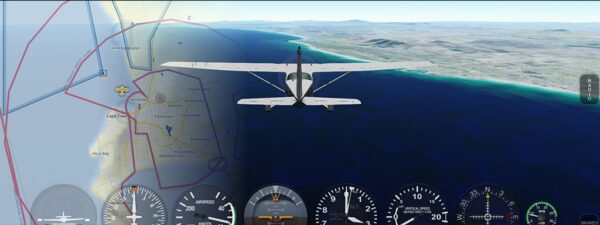
Researchers demonstrated synchronized EEG, ECG, GSR and eye tracking during a flight-simulation experiment at a workshop held with Professor Tom Carlson at University College London. A g.Nautilus 28-channel wireless EEG headset, ECG and GSR sensors and Tobii Pro Glasses 3 captured the signals in real time, tracking mental workload, engagement and heart rate variability (HRV) across two complete flight cycles of take-off, free flight and landing. The rig can be set up in 30 minutes and leaves participants free to move throughout.

Preprint: Learning Residual Kinematic Corrections for Continuous Neural Decoding via Reinforcement Learning

A preprint proposes a two-stage CNN-LSTM-RL framework that uses reinforcement learning to apply residual kinematic corrections to the output of a CNN-LSTM continuous motor imagery decoder. The RL agent is trained offline, without direct EEG input, to optimize motion accuracy against a target trajectory. Compared with CNN-LSTM alone, CNN-LSTM-RL lifted the 2D mean correlation from 0.5076 to 0.7181 and the VR-scene correlation from 0.6420 to 0.7780, cutting RMSE by 40.2% and 38.2% respectively. The authors say correcting kinematic error through offline residual RL strengthens 3D BCI motor imagery decoding without additional neural data; the study has not been peer reviewed.
May 2026

Enhancing Brain Signal Generation Through a Hybrid Approach Integrating Reinforcement Learning and Diffusion Models

The study introduces RLED, a reinforcement learning-enhanced EEG diffusion framework for adaptive data augmentation in endogenous EEG tasks such as motor imagery and emotion recognition. Reinforcement learning dynamically regulates the diffusion training process to balance temporal, spectral and category-related features. Across four datasets, the high-quality synthetic EEG signals it generated consistently improved classification performance.

sEEG Study Finds Motor Imagery Activity Shifts by Task Stage and Frequency Band

Intracranial recordings from ten epilepsy patients show that neural activity during cued limb motor imagery changes with the phase of the task: low-frequency (8-30 Hz) activity was mostly suppressed during preparation and switched to activation once imagery began, while high-frequency (60-115 Hz) responses were stronger, more widely distributed, and at some contacts followed an activation-then-suppression sequence. The stereoelectroencephalography (sEEG) data indicate that responses are not uniform but shift with task stage and brain region, which the authors tie to stage-aware feature design for BCIs and to neurorehabilitation.
April 2026

Enhancing the Capability and Accuracy of Motor Imagery Classification: A Deep Neural Network-Powered Multifaceted Strategy Model

Researchers propose DPMS-Net, a deep network that uses dynamic convolution to mine discriminative cues across temporal, spatial and frequency dimensions, combines channel and temporal attention, and adds a spectral-domain analysis component to surface subtle oscillatory features hidden in the EEG spectrum. On the BCI Competition IV 2a and 2b datasets it reached subject-dependent accuracies of 83.93% and 88.38%, and 67.67% on a self-collected stroke-patient dataset. The authors say its efficient decoding and robustness suit neurorehabilitation BCI systems.
January 2026
September 2025

Neuropixels Ultra Doubles Neuron Yield With 6-Micrometer Site Spacing

A Neuron paper describes Neuropixels Ultra, which packs 6,144 switchable recording sites at 6-micrometer center-to-center spacing while reading 384 channels simultaneously. In mouse visual cortex recordings, neuronal yield increased by more than twofold. The study also improved subcellular signal detection and cell-type classification, but it did not report simultaneous recording from 10,000 neurons.
© 2026 BCIwiki.com Digest Topics Tips Subscribe Revisions About