

BCIwiki (bciwiki.com) — Neural signals recorded by a single high-density electrocorticography (ECoG) implant can support simultaneous decoding of speech and gestures in people with paralysis, researchers at the University of California, San Francisco (UCSF) reported in Nature Neuroscience on September 15, 2026.
Stroke and neurodegenerative diseases can impair both speech and nonverbal gestures, the authors noted. Brain-computer interfaces (BCIs) aim to restore these functions by translating neural activity into commands for external devices, but earlier work has mostly decoded speech or gestures in isolation.
The team first showed that isolated upper-limb and orofacial movements could be reliably decoded in 3 participants. Running parallel speech and gesture decoders, the researchers then let participants control a personalized virtual avatar by attempting speech and gestures, either simultaneously or separately.
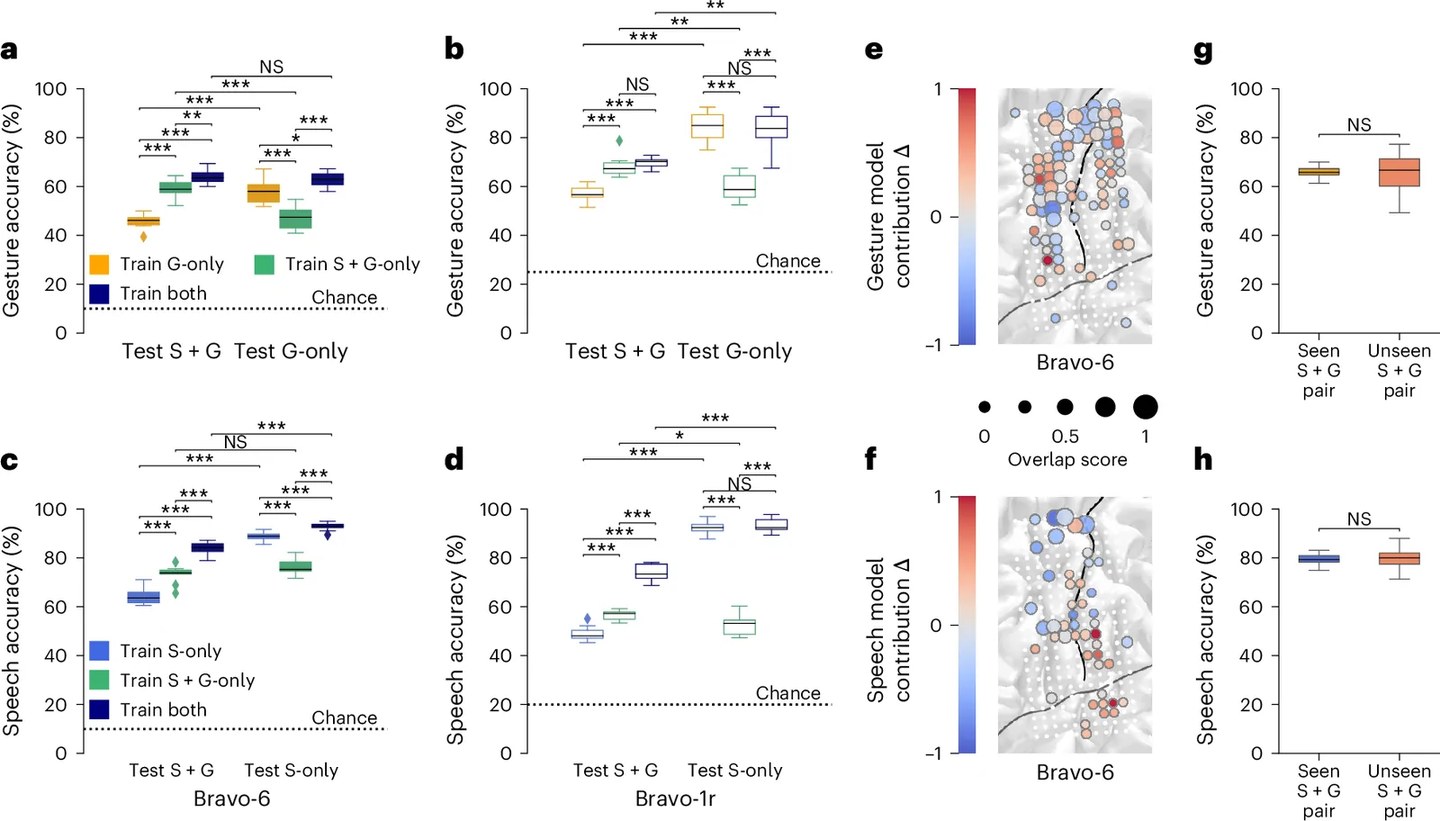
Training the models on both isolated and simultaneous data improved performance across behavioral contexts. The authors said the findings show that one cortical implant can support multi-effector control, a step toward BCIs that allow more natural communication for people with paralysis.
Contributors came from UCSF's Department of Neurological Surgery, Weill Institute for Neurosciences and Department of Neurology, and the UC Berkeley-UCSF Graduate Program in Bioengineering.