

BCIwiki (bciwiki.com) — Researchers in Shanghai and Jiamusi have designed a trial to test whether showing stroke survivors grasping videos and real objects at the same time strengthens motor-cortex signals during brain-computer interface (BCI) training, according to a study protocol published in Frontiers in Human Neuroscience on September 29, 2026. The team is from Shanghai Pudong New Area People's Hospital, Jiamusi University and Shanghai University of Traditional Chinese Medicine.
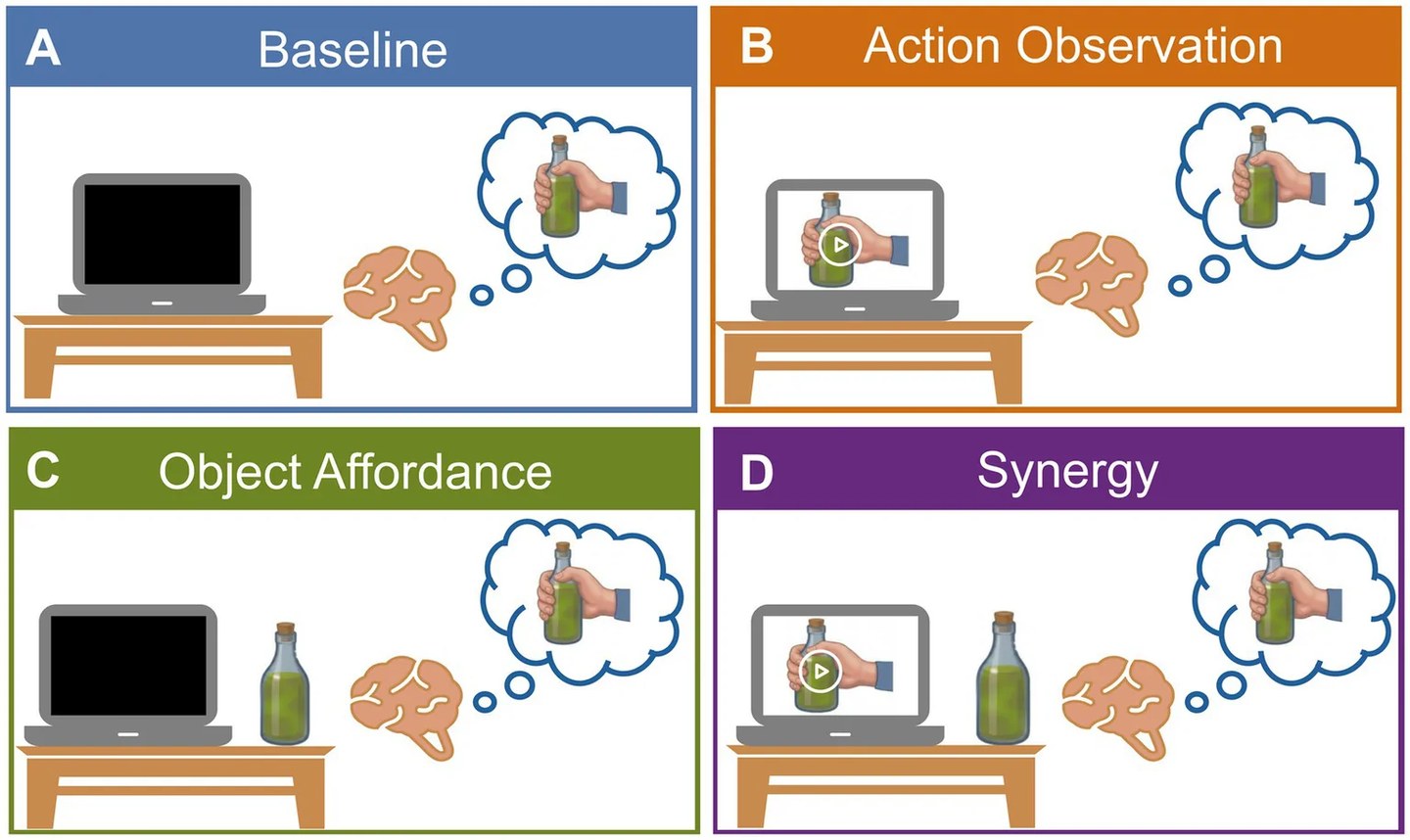
The randomized within-subject 2×2 factorial study enrolls subacute stroke survivors with hemiplegia and age-matched healthy controls. Each participant imagines a grasp under four conditions: baseline motor imagery alone, action observation with video guidance, object affordance with a physical object as the focus, and a synergy condition combining both. The authors call the approach a 'Phygital' intervention, pairing physical targets with a digital feedback loop.
A 32-channel EEG system measures event-related desynchronization in the mu and beta bands over the sensorimotor cortex, while surface electromyography checks that muscles stay at rest. When significant task-related desynchronization appears, the system triggers a soft robotic hand exoskeleton that delivers time-locked proprioceptive feedback.
The researchers hypothesize a significant interaction between the two cues, with action observation producing a larger effect when an object is present, along with better BCI performance than in single-cue conditions. No results have been reported. The study was prospectively registered with the Chinese Clinical Trial Registry (ChiCTR) on October 27, 2025, under ChiCTR2500111192.