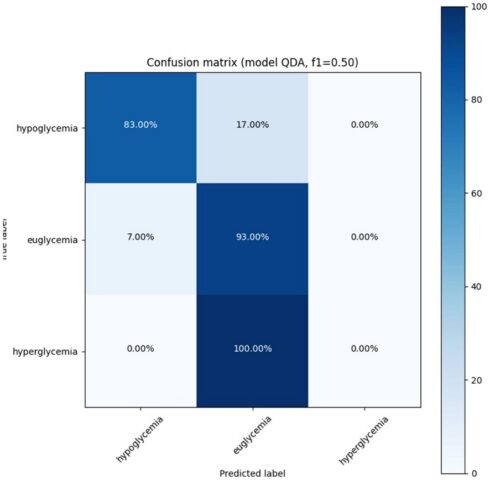
A proof-of-concept study reports that a non-invasive EEG-based approach can separate hypoglycemic from non-hypoglycemic states in people with type 1 diabetes, with a quadratic discriminant analysis classifier reaching 96.2% accuracy on a limited dataset. Hypoglycemia was accompanied by characteristic changes in the delta and beta bands, which the authors say points to a non-invasive, real-time route to early warning.
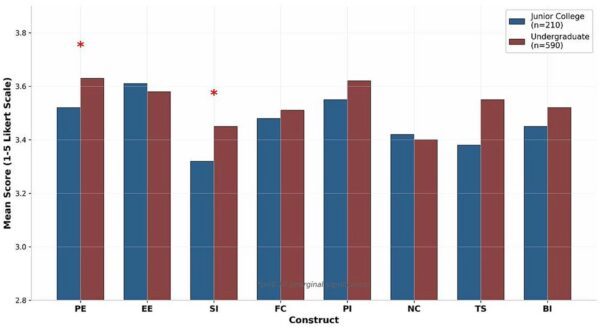
A survey of 800 students at 10 Chinese universities found teacher support was the strongest predictor of willingness to use BCI technology (beta=0.337), while performance expectancy was not significant (beta=0.059). Neuroethical concern was also non-significant in the structural model, yet 28 of 40 interviewees named privacy as their leading worry, suggesting concern may reflect engagement rather than rejection before adoption.