

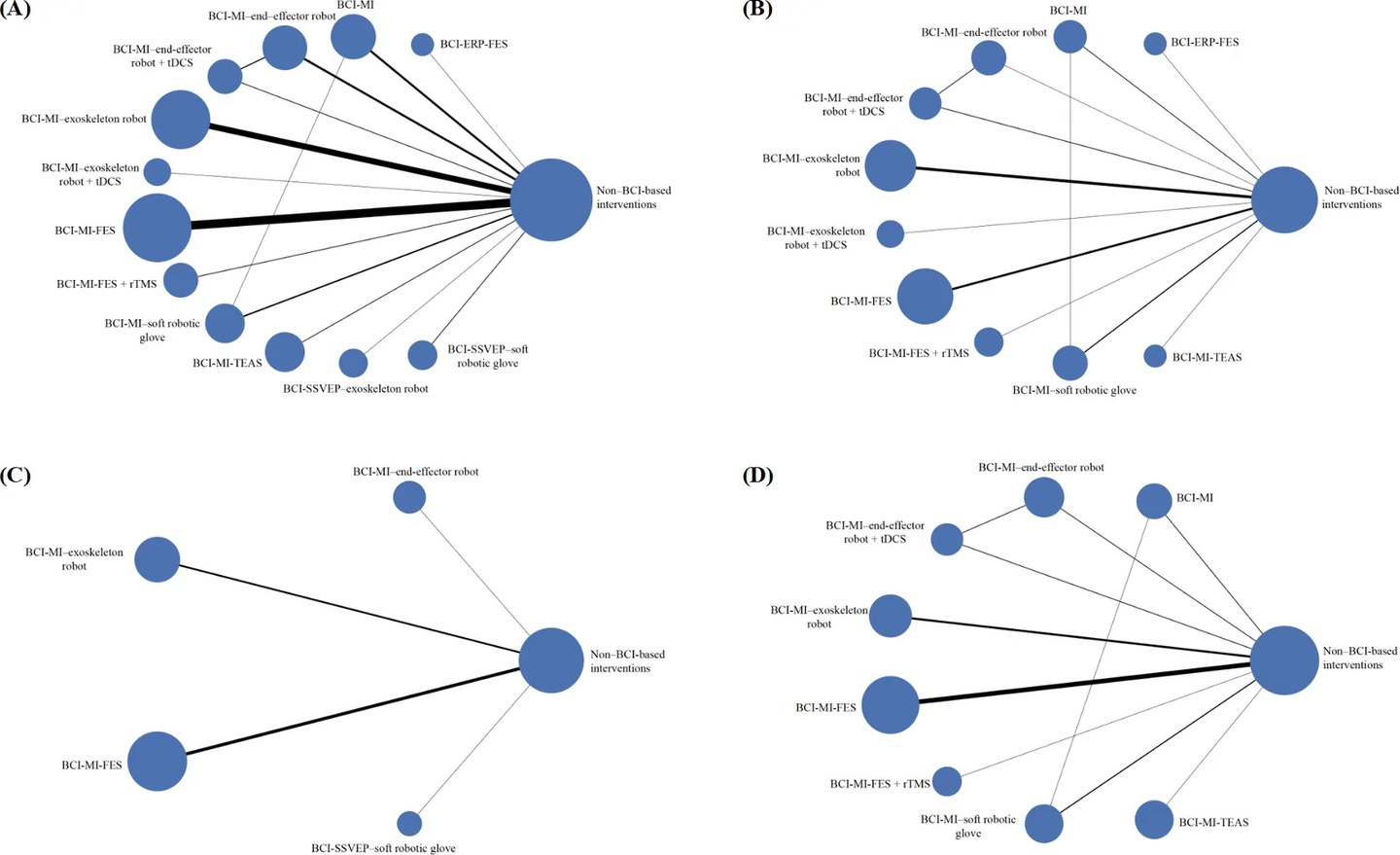
BCIwiki (bciwiki.com) — Noninvasive brain-computer interface (BCI) interventions significantly improve upper limb motor function and activities of daily living after stroke, with BCI-motor imagery-transcutaneous electrical acupoint stimulation (BCI-MI-TEAS) ranking highest for motor improvement, according to a systematic review and network meta-analysis published in the Journal of Medical Internet Research on August 28, 2026. The team searched 10 databases including PubMed, Cochrane Library, and Web of Science, and included 72 randomized controlled trials involving 2906 stroke patients, evaluating 12 BCI-based interventions.
Pairwise meta-analyses showed that, compared with control groups, BCI-based interventions significantly improved the Fugl-Meyer Assessment of Upper Extremity (mean difference 5.33, 95% CI 4.28 to 6.38), Action Research Arm Test (mean difference 5.26), Wolf Motor Function Test (mean difference 7.25), and Modified Barthel Index (mean difference 8.18). Network meta-analysis revealed that BCI-MI-TEAS achieved the highest surface under the cumulative ranking curve (SUCRA 95.5%) for FMA-UE; BCI-motor imagery with end-effector robots plus transcranial direct current stimulation showed advantages for fine motor dexterity; and BCI-motor imagery with exoskeleton robots ranked highest for activities of daily living.
The authors noted this is the first network meta-analysis comparing the efficacy of different BCI-based interventions. Unlike previous reviews, interventions were categorized by experimental paradigms, external feedback devices, and adjunctive noninvasive brain stimulation to enable clinically meaningful comparisons. However, they cautioned that evidence quality ranged from very low to high, with substantial heterogeneity, so the findings remain exploratory and high-quality trials are needed to establish clinical utility.