

BCIwiki (bciwiki.com) — A systematic review and network meta-analysis that placed virtual reality, robotics and brain-computer interfaces into a single evidence network concluded that robotics-based interventions have stronger supporting evidence than the alternatives for improving upper-limb motor function after stroke, while BCI interventions were backed by only one eligible study with extractable data, leaving no reliable conclusions. The study was published in Frontiers in Neurology on September 9, 2026.
The review searched PubMed, Web of Science, the Cochrane Library and Embase from inception to October 2025 and included 25 randomized controlled trials with 1,145 stroke survivors. Two reviewers independently screened studies, extracted data and assessed risk of bias with RoB 2.0. A Bayesian random-effects network meta-analysis estimated relative treatment effects and calculated SUCRA values. The evidence network was star-shaped, with conventional physical therapy as the common comparator.
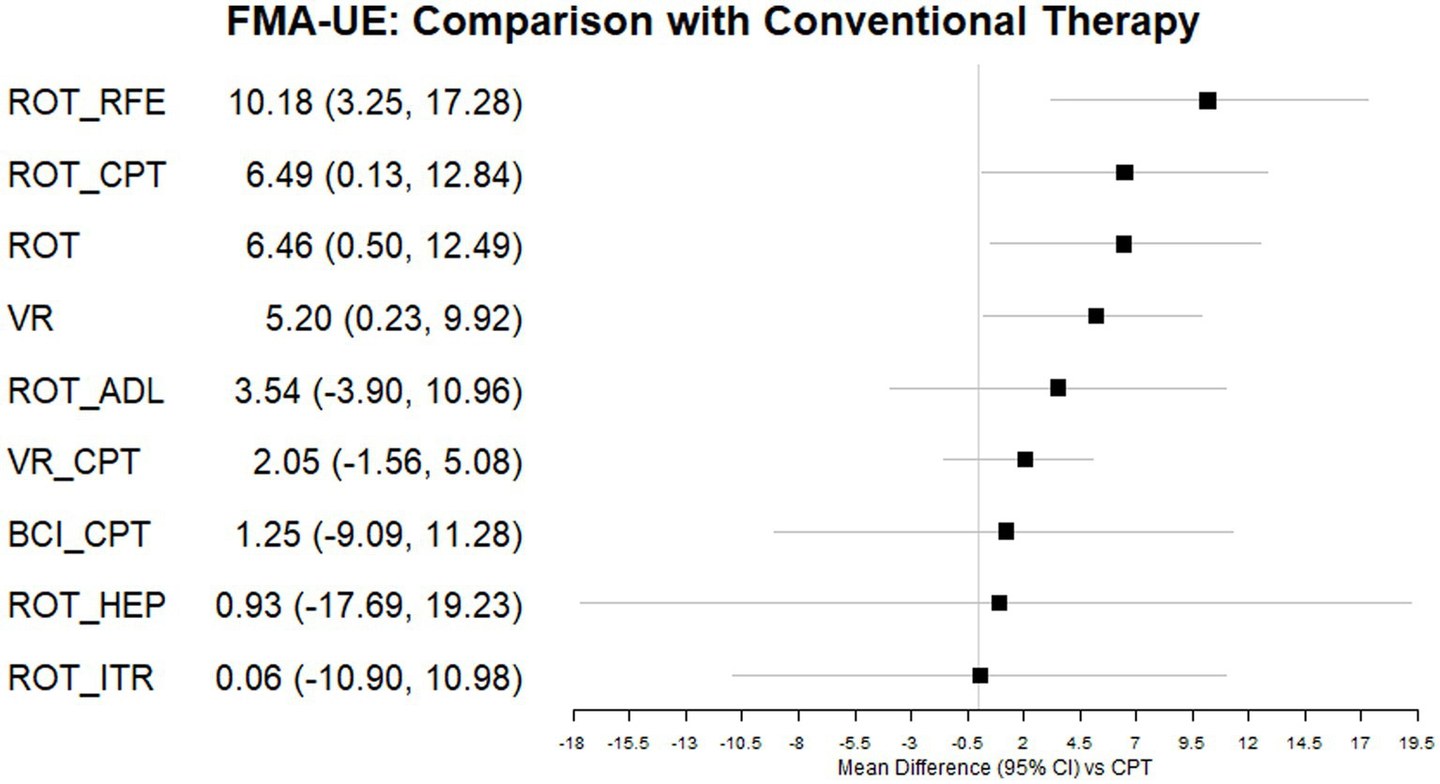
On the FMA-UE scale, robotics combined with rehabilitation functional electrical stimulation (ROT-RFE) achieved the highest SUCRA ranking at 0.91, but that estimate came from a single study. Robotics plus conventional physical therapy (ROT-CPT) and robotics alone (ROT) were supported by 2 and 3 studies respectively, with SUCRA values of 0.70 and 0.71, providing more consistent evidence. For secondary outcomes, ROT-CPT ranked highest on the modified Barthel Index (SUCRA = 0.89), while VR plus conventional physical therapy (VR-CPT) ranked highest on the Wolf Motor Function Test (SUCRA = 0.59).
The authors cautioned that the numerically higher ranking for ROT-RFE rests on one trial and should not be read as definitive evidence of superiority. VR-based interventions showed modest benefits, and BCI-based interventions were supported by only one eligible study with extractable data, so no reliable conclusions can be drawn. Sensitivity analyses generally supported the robustness of the findings, and subgroup analyses suggested patient characteristics may influence treatment effects. The review is registered with PROSPERO under CRD420251180631.
The research team is affiliated with the College of Physical Education and Health at Guangxi Normal University and the School of Exercise and Health at Shanghai University of Sport.