/ EN

United States

112 entries
September 2026

Synchron Stent Electrode Beats Scalp EEG per Channel in One ALS Patient

A participant with severe upper-limb paralysis caused by amyotrophic lateral sclerosis (ALS) wore an endovascular stent-electrode array and a scalp EEG cap at the same time, in the same session, while attempting ankle flexion and extension. Both recordings changed markedly during attempted movement, but the stent array showed stronger per-channel motor modulation and was unaffected by skull attenuation. Scalp EEG was more susceptible to eye blinks and jaw-muscle activity, while the stent array picked up prominent cardiac signals. Neither method reliably distinguished left from right ankle movement, leaving spatial localization an open problem.
AI Should Read Intent in BCI Exoskeletons While Controllers Enforce Limits, Review Says

A brain-computer interface can read neural activity tied to movement, while a powered exoskeleton supplies the force needed to carry it out. But EEG is noisy, muscle signals shift with fatigue and recovery, and the right level of assistance depends heavily on the user and the task, so AI's main value lies in handling several changing signals at once rather than relying on a single fixed input. The review surveys how EEG, EMG and mechanical sensing are combined for exoskeleton control and contrasts two applications with very different goals: stroke rehabilitation and healthy users. The author argues that higher classification accuracy alone is not enough, since latency, calibration, fatigue, uncertainty and physical safety also determine whether a system is truly usable.

4,096-Channel μECoG Array Maps Brain Function During Surgery With 91.3% Channel Yield

During removal of a right parafalcine meningioma, surgeons placed four Layer 7 μECoG arrays, 4,096 electrodes in total, on either side of the central sulcus and recorded somatosensory evoked potentials under 5 contralateral stimulation conditions. Using a 2 MΩ impedance cutoff, 3,739 channels were usable, a 91.3% yield; phase-reversal latencies were 19, 21, 25, 26 and 25 ms, consistent with the standard intraoperative mapping performed in the same operation. The researchers caution that the setup provides dense spatial sampling rather than submillimeter physiological resolution: measured responses were correlated across roughly 3–4 mm of cortex.

Adding fNIRS to EEG Fails to Improve Brain-Controlled Stimulation in 16-Person Trial

Combining EEG with functional near-infrared spectroscopy (fNIRS) did not make brain-controlled electrical stimulation more accurate in a blinded randomized trial of 16 healthy volunteers. The hybrid and EEG-only groups showed no statistically significant differences in real-time three-class recall, sense of agency, attention or physical comfort; median recall was 53.5% in the hybrid group and 57.3% with EEG alone. The researchers also released the full EEG-fNIRS dataset.

Paradromics Implant Lets First Participant Speak Her Own Words in Real Time

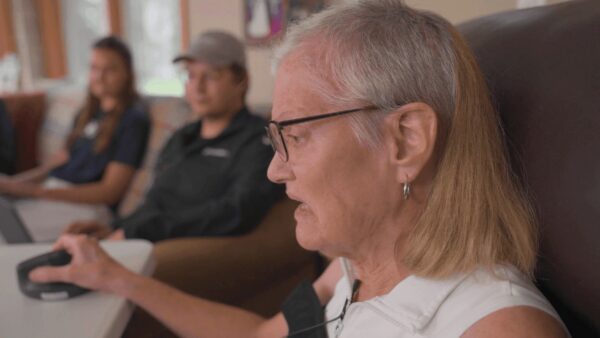
A Michigan woman who had nearly lost the ability to speak to motor neuron disease used Paradromics' Connexus device, implanted on the surface of her brain, to turn brain signals into words of her own choosing in real time and to talk with her family. The 421 platinum-iridium microwires at the edge of the device record signals from individual neurons, and software decodes them into text and synthesized speech. The work is part of the FDA-approved Connect-One early feasibility study; Connexus remains an investigational device, and the company plans six years of follow-up to assess safety and durability.

Parkinson's Patients Learn to Control Deep Brain Stimulation Through a BCI Game

Researchers at the University of California, San Francisco (UCSF), a public research university known for its neuroscience work, had two Parkinson's disease patients train at home with a brain-computer interface (BCI) airplane-simulator game, learning to down-regulate cortical beta activity and thereby control the intensity of their own deep brain stimulation (DBS). The work, posted as a preprint on medRxiv on August 17, 2026, points to BCI applications in neuromodulation and to more personalized treatment for Parkinson's and other conditions; its conclusions have not yet been peer reviewed.

FDA Clears Pascall Systems' EEG Software Under 510(k)

Pascall Systems, Inc. received U.S. Food and Drug Administration (FDA) 510(k) clearance for its Pascall Sensor Unit (PSU1) on August 19, 2026, with the agency finding the device substantially equivalent. The device is a Class II medical device under regulation number 882.1400, classification name Non-Normalizing Quantitative Electroencephalograph Software.

At-Home BCI Therapy Beats Home Exercise for Chronic Stroke Arm Deficits in Randomized Trial

Chronic stroke patients who used an at-home brain-computer interface (BCI) therapy system gained a mean 6.0 points on the Upper Extremity Fugl-Meyer Assessment after 12 weeks, versus 1.5 points for those on a home exercise program. Response rates were 55.5% and 9.6%, for a number needed to treat of 2.2. The trial also exposed the dropout problem in home-based studies: 17 of 42 control participants withdrew because they were dissatisfied with their group assignment.

Apple to Acquire Certain Sonera Assets and Hire Staff, EU Filing Shows

On May 8, 2026, Apple notified the European Commission under Article 14 of the Digital Markets Act that it would, through a subsidiary, acquire certain assets of Sonera and offer jobs to and hire certain Sonera employees. The deal value was not disclosed and neither party has announced it; May 8 is the filing date, and no closing date has been made public. The Commission describes Sonera as a company developing chip-scale magnetic sensors. Founded in 2018 in Berkeley, California, as a University of California, Berkeley spinout, Sonera builds acoustically driven ferromagnetic resonance magnetic sensors that operate at room temperature and has raised about $20 million.

Carnegie Mellon Team Strips ECG Noise From Stentrode, Keeps Motor Signals

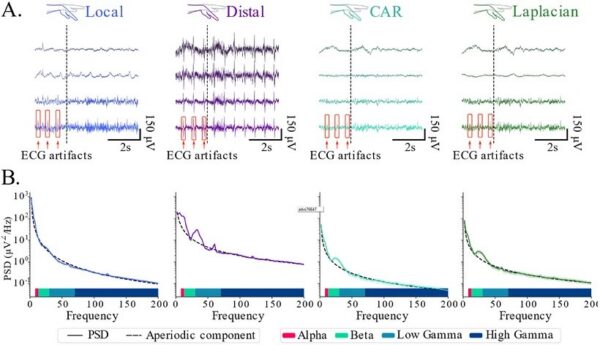
Stentrode, an endovascular brain-computer interface, often picks up electrocardiogram (ECG) artifacts. Researchers at Carnegie Mellon University and colleagues found that conventional re-referencing schemes reduce ECG artifacts but also diminish beta-band activity linked to movement. They applied band-limited independent component analysis (BL-ICA) as a spatial filter to remove ECG artifacts while preserving motor features. The study appeared in Advanced Science.

Implant-Grade BCI Preserves Epilepsy HFO Biomarkers, Maps Onset Zone at 84% Sensitivity

A wireless implantable neural interface, the Brain Interchange (BIC), paired with artifact-removal algorithms captured about 82% of the high-frequency oscillations (HFOs) that a clinical-grade amplifier detected across 24-hour intracranial EEG recordings in 10 patients with drug-resistant epilepsy, according to a preprint. Using those HFOs, the system localized the seizure onset zone with 84% sensitivity and 90% specificity, comparable to clinical equipment. The authors present the work as a translational framework for chronic tracking of epileptogenic networks and for future biomarker-guided adaptive neuromodulation.

NETBCI Dataset Pairs MEG and EEG from 19 Users across Four BCI Training Sessions

A team in France and the United States has released NETBCI, a longitudinal multimodal dataset pairing magnetoencephalography (MEG) and electroencephalography (EEG) from 19 healthy subjects across 4 sessions performed on 4 different days, built to study how brain networks reorganize during brain-computer interface training. Controlling a BCI remains a learned skill that a non-negligible proportion of users never acquire even after several sessions, the authors write, and the causes of that inter-individual variability remain an open question. Each session comprises 2 eyes-open resting-state recordings of 3 minutes each plus 6 runs in which participants either sustained right-hand motor imagery or stayed at rest to control the position of a virtual cursor, and the release also includes anonymized MRI scans and behavioral scores; the authors say they hope the sample size and range of modalities will support analyses beyond brain network reorganization.
August 2026

Liquid Gallium in 3D Microneedles Cuts Impedance 1,000-Fold, Records Spikes

A team from the University of Utah, Kangwon National University and the University of Georgia describes a silicon-free route to neural microelectrode arrays: soft polymeric 3D microneedles are printed by two-photon polymerization, then turned into electrodes by injecting liquid gallium into the hollow channels. A newly defined retention number predicts whether the gallium stays put under physiological conditions. Coating the surface with gold nanoparticles and PEDOT doped with tetrafluoroborate cut impedance by roughly 3 orders of magnitude, and in vivo recordings in an invertebrate model captured neural spikes with no gallium leakage. The study was published in ACS Sensors on August 31, 2026.

UT Dallas Team Quantifies How Overlapping ICMS Activation Volumes Erode Discrimination

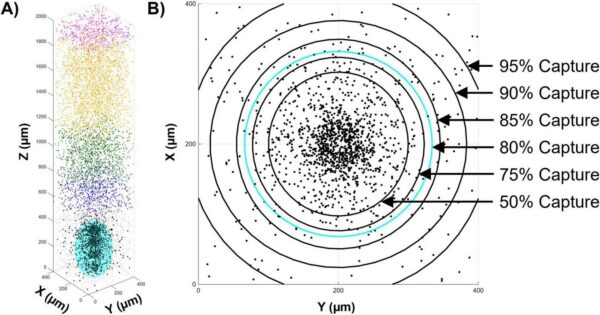
Researchers at the University of Texas at Dallas paired a biophysically realistic computational model with rat behavioral data and found that discrimination accuracy falls off exponentially as the neuronal activation volumes evoked by intracortical microstimulation (ICMS) overlap (R² = 0.88). With minimal overlap, an intersection-over-union below 1%, rats averaged 85% accuracy, while IoU above 20% left them near chance. The work, published in Frontiers in Computational Neuroscience, gives a mechanistic basis for setting electrode spacing in sensory neuroprosthetics.

ERP-XTTN: Calibration-Free ERP Decoder Comes within 0.025 AUROC of the Best Baseline

Researchers at the University of Colorado Boulder have built ERP-XTTN, a cross-attention model that classifies event-related potentials (ERPs) in users it has never seen, with no per-user calibration. Across three public datasets and eight ERP components, it trailed the best baseline by 0.025 AUROC on average using only three channels. The work appeared in the Journal of Neural Engineering.

UC Berkeley Team Proposes DustNet, a Wireless Network of Ultrasonic Neural Implants

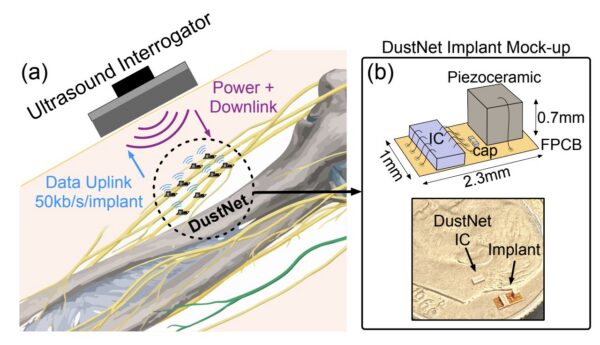
Engineers in the Muller Lab at the University of California, Berkeley have described DustNet, a wireless network of miniaturized ultrasonic implants that acquire and transmit neural signals without wires, in a paper in IEEE Transactions on Biomedical Circuits and Systems. The lab announced the work on its website on August 27, 2026. DustNet follows the lab's earlier MRDust ultrasonic neural interface.

BCI Society Workshop Tackles Outcome Measures for Pivotal Trials

A workshop at the BCI Society Meeting 2025, run with the Implantable BCI Collaborative Community (iBCI-CC), took up how clinical outcome assessments (COAs) for pivotal BCI trials should be selected, developed and validated. Participants pointed to patient heterogeneity, the absence of widely validated COAs, and the difficulty of capturing outcomes that matter in home and daily-life settings. The discussion lays groundwork for the iBCI-CC Clinical Study Endpoints Workgroup to build a transparent process for identifying meaningful aspects of health and concepts of interest, in support of regulatory approval and reimbursement.

Children Designing Their Own P300 BCI Interface Choose Animation, Color and Sound

Thirty-eight typically developing children aged 8 to 12 used a design application to build their own picture-based interface for a P300 brain-computer interface augmentative and alternative communication (P300-BCI-AAC) system, in a study of what children themselves want from such interfaces. They consistently chose preferred colors, animation — zooming most of all — and sound cues: animation aided visual accessibility and target location, background color changes carried preferred colors into the display, and video GIFs and picture overlays added personal relevance. The authors call motion, color, personalization and visual clarity preliminary priorities for pediatric BCI-AAC design, and point to follow-up work with children who use AAC daily and with people who have motor difficulties.

Brain-Spine Interfaces Remain Supported by Limited Clinical Evidence

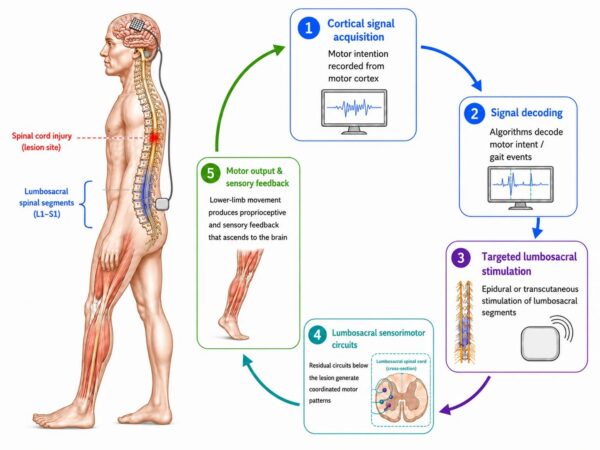
A review in *Neurosurgical Review* finds encouraging motor outcomes from early preclinical work and highly selected clinical studies of brain-spine interfaces, but concludes that the evidence remains preliminary. Safety, durability, patient selection, access, long-term functional benefit, technical complexity, ethics and specialist training all remain barriers to routine care.

Review Proposes 'Brain-Inspired BCIs' for Low-Power, Closed-Loop Neurotech

A review published on August 20, 2026 in npj Biomedical Innovations proposes brain-inspired brain-computer interfaces (BI-BCIs), a framework that unifies neuromorphic computing with BCI design to make neurotechnology lower-power, smaller and capable of closed-loop operation. The authors, from Aarhus University, Stanford University, the University of Southern Denmark, the University of Genoa, Forschungszentrum Jülich and RWTH Aachen University, say the approach could advance neuroprosthetics and neuromodulation for neurological disorders.

Stanford Team Records Psychiatric Brain Circuits at Millisecond Precision

A Stanford program is recording brain activity in psychiatric inpatients at millisecond precision, combining noninvasive electrode arrays with deep brain recording electrodes to trace the circuits behind schizoaffective disorder, borderline personality disorder, autism and cancer-induced depression. The Human Neural Circuitry program, led by neuroscientist Karl Deisseroth at the Wu Tsai Neurosciences Institute, has run for three years and moves data over fiber-optic and copper links fast enough for round trips of under half a millisecond, allowing the system to sense and respond in a closed loop. Deisseroth said the key innovation is getting results at millisecond precision, which he called a crucial step toward understanding complex psychiatric symptoms.

Vivani Merges Cortigent Into Nasdaq-Listed ClearOne, Giving Orion Implant a New Parent

The Orion visual neuroprosthetic system, originally developed by Second Sight Medical Products, is changing parent companies again, Neurotech Reports said. Vivani Medical has agreed a reverse merger with Nasdaq-listed ClearOne under which its Cortigent unit becomes a wholly owned ClearOne subsidiary; ClearOne will be renamed Cortigent Holdings Inc. and is expected to trade as CRGT. ClearOne agreed as part of the transaction to file a Form S-1 registration statement to raise $10 million to $15 million, and Cortigent plans a pivotal trial of Orion in about 60 patients, though funding remains a challenge.

Stanford's Palanker Wins Defense Health Agency Award for PRIMA Retinal Implant

Daniel Palanker, a Stanford professor and affiliate of the university's Wu Tsai Neurosciences Institute, has won the U.S. Defense Health Agency's Outstanding Research Accomplishment award for the PRIMA retinal implant, designed to restore central vision after photoreceptor loss. A 2-mm chip sits beneath the retina and is driven by infrared light from augmented-reality glasses, converting that light into current that stimulates the next layer of neurons. A 2025 paper in the New England Journal of Medicine reported that the device let legally blind patients with advanced dry age-related macular degeneration read letters and words, and the award recognizes its potential for military personnel with laser-damaged retinas.

Implantable Motor BCIs Need a Unified Clinical Outcomes Framework

A paper in *Neurorehabilitation and Neural Repair* examines the outcome measures needed as implantable motor BCIs move from safety and feasibility studies toward regulatory approval, reimbursement and sustained clinical use. It calls for valid and reliable assessments that satisfy regulators and payers while reflecting activities that matter to people with severe motor impairment.

FDA Clears FIND Neuro CN-Suite Localization Tool

The US Food and Drug Administration cleared CN-Suite, source localization software from FIND Surgical Sciences Inc., doing business as FIND Neuro, on August 16, 2026, finding it substantially equivalent under submission number K260563 via the Traditional 510(k) pathway. FDA lists the device as Source Localization Software for Electroencephalograph or Magnetoencephalograph, a Class II device under regulation number 882.1400, reviewed by the agency's neurology advisory committee. Such software works back from electrical or magnetic fields recorded at the scalp to the intracranial origin of the signal, supporting presurgical planning such as locating epileptic foci.

MIT Microscope Captures Whole-Brain Voltage in Zebrafish 200 Times a Second

MIT engineers have adapted a light-sheet microscope to image the electrical activity of neurons across a zebrafish's entire brain, scanning the whole brain 200 times a second — once every five milliseconds. Calcium imaging, the usual proxy for neural activity, resolves activity only on the order of seconds and cannot capture single spikes, while genetically encoded voltage indicators report membrane potential directly but had previously been limited to small, localized populations. Faster camera acquisition and remote refocusing pushed volumetric imaging to rates that resolve individual neuronal impulses, revealing brain-wide activity patterns evoked by ultraviolet light; the study appears in Nature Methods.

SpikeGadgets Hardware Closes the Loop on Rat Hippocampus in Milliseconds

SpikeGadgets says its hardware, using low-latency Ethernet and the TrodesNetwork API, lets researchers detect a neural activity pattern and trigger a perturbation within milliseconds. Two UCSF studies show it in use: one continuously decoded hippocampal population activity in rats to run a neurofeedback system, training the animals to volitionally generate specific memory representations for reward; the other triggered theta-phase-specific optogenetic stimulation in real time and showed that theta rhythm and replay are mechanistically separable.
© 2026 BCIwiki.com Digest Topics Tips Subscribe Revisions About