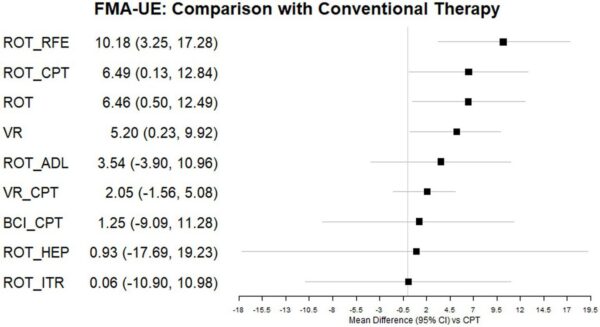
Which new technology does most for upper-limb recovery after stroke: virtual reality, robotics or a brain-computer interface (BCI)? A systematic review and network meta-analysis placed all three in a single evidence network, pooling 25 randomized controlled trials and 1,145 stroke survivors. The authors searched PubMed, Web of Science, the Cochrane Library and Embase from inception to October 2025, used conventional physical therapy as the common comparator in a star-shaped network, and applied a Bayesian random-effects model to estimate relative efficacy and calculate SUCRA rankings. Robot-assisted training produced the most robust findings, with two studies supporting robotics plus conventional physical therapy and three supporting robotics alone; only one BCI study yielded extractable data, too little to judge efficacy. The authors caution that the top-ranked intervention, robotics combined with rehabilitative functional electrical stimulation, rests on a single trial and should not be read as definitive evidence of superiority.
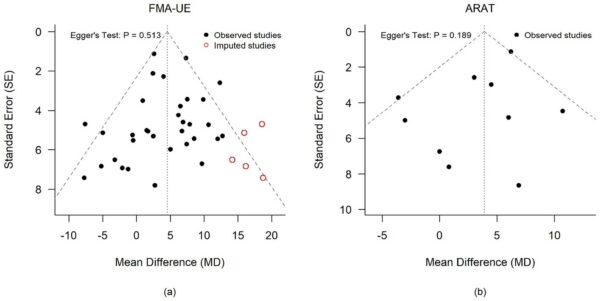
Brain-computer interface training significantly improves upper-limb motor function after stroke, according to a systematic review and meta-analysis of 35 randomized controlled trials involving 1,188 participants, published in Frontiers in Neurology on September 3, 2026. Pooled data showed mean improvements of 4.55 points on the Fugl-Meyer Assessment-Upper Extremity (FMA-UE), 3.90 points on the Action Research Arm Test (ARAT) and 8.53 points on the Wolf Motor Function Test (WMFT), but the effect depended heavily on the comparator: a mean difference of 6.70 against usual care versus only 1.97 against sham-contingent controls. Twenty-two trials reported multi-level neuroplastic changes, though the evidence was insufficient to explain the mechanisms of recovery.
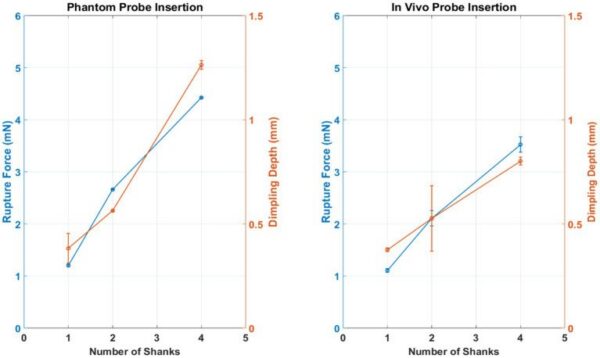
Researchers developed a reproducible multi-layer brain-mimicking phantom that replicates the dimpling and rupture forces of rodent pia mater and dura mater during neural interface implantation, built from a 0.5% agarose skin layer, a 1.01% agarose pia layer and a pre-stretched PVC dura layer assembled in a simple benchtop process. Tested with a cantilever force system on microwires of 12–100 µm diameter (tungsten and stainless steel, various tip geometries) and segmented silicon probes, the phantom produced results within the range of in vivo Sprague-Dawley rat data with significantly lower insertion variability than in vivo testing. The authors say its modular design — layer thickness and stiffness can be tuned for different species or devices — makes it a low-cost early screening platform that can accelerate neural implant development while reducing animal use.