
/ EN

Singapore

5 entries
September 2026

Singapore Trial Tests EEG-Headband Games for Rehab in Children With Brain Injury

KK Women's and Children's Hospital in Singapore has registered a clinical trial of brain-computer interface neurofeedback training (BCI-NFT) for children and adolescents aged 7 to 21 with acquired brain injury from causes including traumatic brain injury, stroke, encephalitis, brain tumors and epilepsy. The intervention group will complete 12 sessions of about 60 minutes each over 10 weeks, wearing a wireless EEG headband while interacting with neurofeedback computer games; the control group receives standard care first and then crosses over to training. A cohort of peers with no history of brain injury will provide normative EEG data. The trial plans to enroll 70 participants, with primary endpoint results expected in February 2028.
BCI Training Improves Post-Stroke Arm Function Across 35 Trials, 1,188 Patients

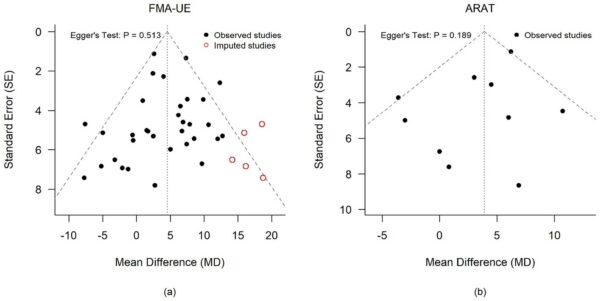
Brain-computer interface training significantly improves upper-limb motor function after stroke, according to a systematic review and meta-analysis of 35 randomized controlled trials involving 1,188 participants, published in Frontiers in Neurology on September 3, 2026. Pooled data showed mean improvements of 4.55 points on the Fugl-Meyer Assessment-Upper Extremity (FMA-UE), 3.90 points on the Action Research Arm Test (ARAT) and 8.53 points on the Wolf Motor Function Test (WMFT), but the effect depended heavily on the comparator: a mean difference of 6.70 against usual care versus only 1.97 against sham-contingent controls. Twenty-two trials reported multi-level neuroplastic changes, though the evidence was insufficient to explain the mechanisms of recovery.
August 2026

Singapore's NUH Tests Lifescapes BCI for Hand Recovery After Stroke

National University Hospital in Singapore has registered a clinical trial (NCT07784920) evaluating Lifescapes, an EEG-based brain-computer interface, for hand motor recovery after stroke. The 32-participant study, not yet recruiting, will compare Lifescapes therapy delivered with reduced therapist supervision against conventional rehabilitation and assess whether it is operationally feasible in the local clinical setting. Lifescapes combines motor imagery practice, biofeedback, neuromuscular electrical stimulation and robotic assistance for stroke patients with severe hand paralysis; an earlier trial in 40 patients showed improvement in motor function.

Graph Convolutional Network-Based Harmonization of EEG for Cross-Dataset Transfer in MI-BCI

The study presents a spatial harmonization framework built on a two-layer graph convolutional network (GCN) that maps heterogeneous EEG recordings onto a unified physical electrode layout while preserving motor imagery information, addressing electrode-configuration mismatches across MI-BCI datasets. Each trial is modeled as a graph so the GCN captures spatio-temporal relations, and harmonized EEG showed lower error than spherical spline interpolation while retaining the key temporal-spectral-spatial features. Combining real and harmonized EEG lifted EEGNet accuracy from 56.57% to 66.20% and FBCNet from 61.96% to 72.54% in within-session classification on Dataset A, and supported source-only cross-dataset transfer and target-domain fine-tuning.
July 2026

NIRx and Artinis Form fNIRS Partnership Backed by Gilde Healthcare

NIRx Medical Technologies and Artinis Medical Systems, the Dutch fNIRS pioneer, have formed a strategic partnership backed by healthcare investor Gilde Healthcare to speed innovation and broader adoption of functional near-infrared spectroscopy (fNIRS) brain imaging. Both companies keep their own brands and operating locations while combining R&D and commercial scale, and leadership is unchanged, with Dr. Patrick Britz remaining chief executive of NIRx and Dr. Willy Colier chief executive of Artinis.
© 2026 BCIwiki.com Digest Topics Tips Subscribe Revisions About