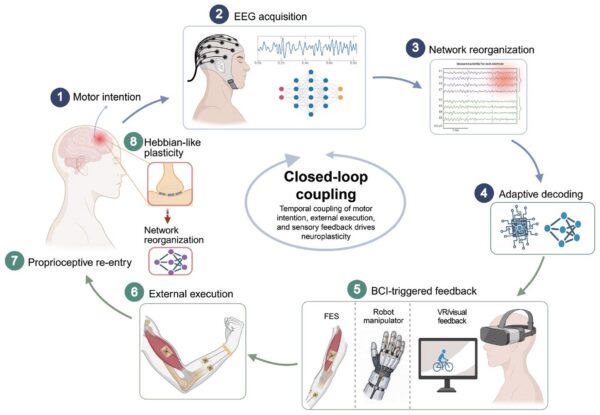
A review in *Frontiers in Neuroscience* describes closed-loop BCIs as systems that detect motor imagery, motor attempts or sensorimotor rhythms and trigger contingent electrical stimulation, robotic assistance, virtual reality, multisensory feedback or neuromodulation. The authors argue that restoring the timing between intent, assisted movement and sensory feedback may promote activity-dependent plasticity, while stressing that outcomes vary with patient selection, signal quality, dose, feedback modality and trial design.
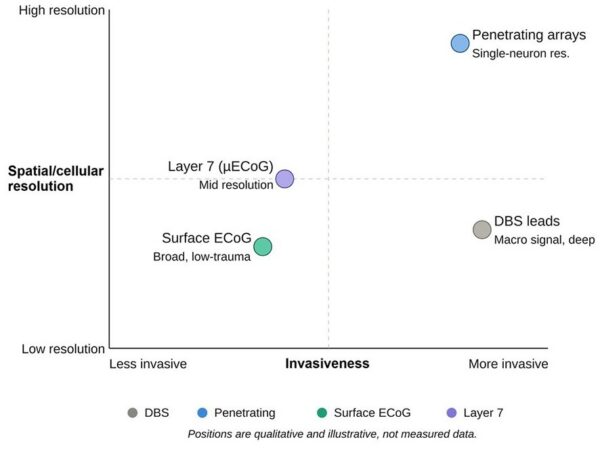
A mini-review places deep-brain stimulation, brain-computer interfaces and speech neuroprostheses within a shared closed-loop architecture of sensing, decoding, stimulation or output, power, telemetry and chronic validation. It identifies long-term stability, neural coding and equitable access as recurring constraints across all three fields and argues that governance must advance alongside engineering.
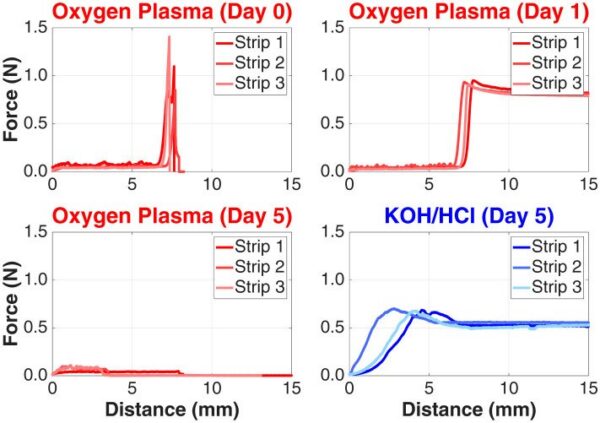
Researchers used accelerated aging at 87°C to compare oxygen-plasma and KOH/HCl treatments for bonding polyimide thin films. Plasma-treated samples began with higher adhesion but failed within three to six days, while chemically treated samples showed little degradation, corresponding to an estimated minimum 40-fold increase in bond life.
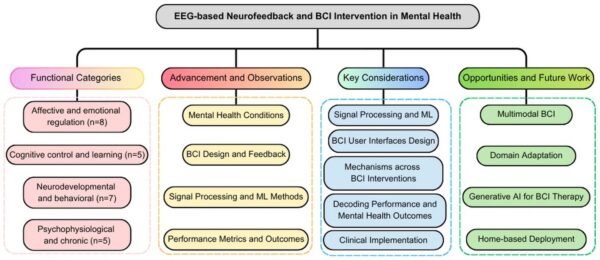
A PRISMA-guided review evaluates closed-loop EEG-based BCI and neurofeedback interventions for mental health, screening 1,101 records and including 25 studies.