
/ EN

Motor Cortex

6 entries

The motor cortex plans and executes voluntary movement and is the primary electrode implant target for invasive BCIs. This topic collects research on motor cortex neural encoding, surgical electrode targeting, and functional mapping techniques.

September 2026

4,096-Channel μECoG Array Maps Brain Function During Surgery With 91.3% Channel Yield

During removal of a right parafalcine meningioma, surgeons placed four Layer 7 μECoG arrays, 4,096 electrodes in total, on either side of the central sulcus and recorded somatosensory evoked potentials under 5 contralateral stimulation conditions. Using a 2 MΩ impedance cutoff, 3,739 channels were usable, a 91.3% yield; phase-reversal latencies were 19, 21, 25, 26 and 25 ms, consistent with the standard intraoperative mapping performed in the same operation. The researchers caution that the setup provides dense spatial sampling rather than submillimeter physiological resolution: measured responses were correlated across roughly 3–4 mm of cortex.
Paradromics Implant Lets First Participant Speak Her Own Words in Real Time

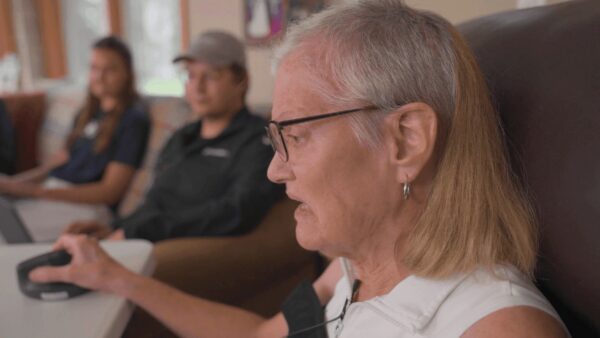
A Michigan woman who had nearly lost the ability to speak to motor neuron disease used Paradromics' Connexus device, implanted on the surface of her brain, to turn brain signals into words of her own choosing in real time and to talk with her family. The 421 platinum-iridium microwires at the edge of the device record signals from individual neurons, and software decodes them into text and synthesized speech. The work is part of the FDA-approved Connect-One early feasibility study; Connexus remains an investigational device, and the company plans six years of follow-up to assess safety and durability.
August 2026

Motor Cortex Excitability Rises Then Falls in the Hour after Finger-Tapping Fatigue

Researchers at Sapienza University of Rome had 20 healthy young adults complete 10 consecutive blocks of finger tapping, then used transcranial magnetic stimulation (TMS) to track motor cortex excitability over the following 60 minutes. Excitability rose after the fatiguing task and drifted back to baseline, and participants whose tapping slowed most showed the largest increases. The findings were published in Clinical Neurophysiology on August 25, 2026, and the authors say they offer a framework for studying altered compensatory responses in neurological disorders.
July 2026

Paradromics Implants Connexus BCI in Patient With Motor Neuron Disease

Surgeons in Michigan have implanted Paradromics' Connexus brain-computer interface in a patient with motor neuron disease who had lost most of her ability to speak. Connexus records from individual neurons through 421 microelectrodes seated 1.5 millimeters into the motor cortex; the signals pass to a transceiver in the patient's chest, where AI converts them into text on a screen. Austin, Texas-based Paradromics received FDA approval in the fall of 2025 to begin the clinical trial.

UW Team Maps Uneven Reach Coding in Monkey Motor Cortex to Guide BCI Implant Placement

Researchers at the Center for Neurotechnology at the University of Washington recorded from two male monkeys with high-density laminar microelectrode arrays and found that reaching-related activity in frontal motor cortex is unevenly distributed both across the cortical surface and with depth. Target-direction information varied sharply between neural populations, but the amount of task information a population carried predicted which populations shared similar temporal dynamics. The authors say the pattern should inform where electrodes are placed in future brain-computer interface implants.
© 2026 BCIwiki.com Digest Topics Tips Subscribe Revisions About