
/ EN

BCIwiki — Brain-computer interface news, research and industry database

Latest

July 2026

Preprint: Differentiable Logic Gate Networks for Low-Latency EEG Classification on Edge Devices

A preprint evaluates differentiable logic gate networks (Diff-Logic), compiled into pure boolean circuits, as a low-latency EEG classification option for resource-constrained BCIs. Across four EEG datasets and two task types — binary dementia screening and three-class emotion recognition — Diff-Logic reached 80.2% Macro F1 on dementia screening, 6.8 points above the multilayer perceptron baseline, and on power-constrained devices the MLP ran 2.3× slower and occupied 14× more memory, while Diff-Logic's inference time stayed nearly flat as model size grew 10×. The study has not been peer reviewed.
Why it matters The edge angle is what matters: compiling the model into boolean circuits keeps latency and footprint nearly flat as it scales, which is precisely the constraint that keeps standard neural decoders off power-limited wearable and implantable hardware.
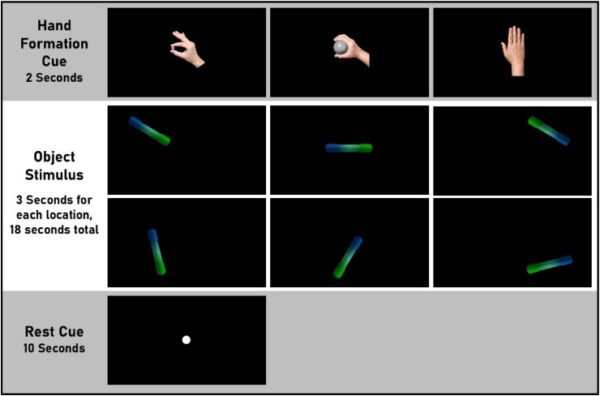
Targeting Grasp-Related Cortical Areas for Intracortical Brain-Machine Interfaces

For a C5 tetraplegic participant, the study integrated anatomical, functional and vascular imaging with preoperative 3D modeling to optimize placement of intracortical microelectrode arrays for grasp-related motor decoding. Anatomical MRI, diffusion-weighted imaging and task-based fMRI identified grasp-related cortex while avoiding vasculature and speech-critical regions; Quicktome software refined target selection using structural connectivity and functional activation data, and 3D-printed skull and cortex models supported surgical planning. Functional imaging highlighted the anterior intraparietal sulcus (AIP), ventral premotor cortex (PMv) and inferior frontal gyrus (IFG); arrays placed in AIP and PMv subregions 6v and 6r reached a combined classification accuracy of 96%.
Why it matters Multimodal imaging plus 3D modeling turns electrode placement into a pre-planned, image-guided step — the difference between hitting and missing the grasp-related cortex.

Ghost-LENet Tops 80% on Motor Imagery EEG Using a Few Thousand Parameters

Researchers have built Ghost-LENet, a lightweight convolutional network that classifies motor imagery EEG at 82.18% on the BCI Competition IV-2a dataset and 83.05% on IV-2b using only a few thousand trainable parameters. The design combines dilated temporal convolutions, a stationary wavelet transform, dynamic residual fusion and Ghost modules, holding accuracy while cutting model complexity for BCI hardware with little compute to spare.
Why it matters The number to watch is the parameter count, not the accuracy: a motor-imagery decoder this small can run on the headset itself, which changes the latency and privacy calculus of streaming raw EEG to a phone or a server.

Brain-Computer Interface for Smart Home Design Based on Machine Learning and Deep Learning Techniques

Researchers built an EEG-based brain-computer interface for smart-home control using a motor imagery dataset from 25 subjects collected with a 64-channel BCI2000 system. Features extracted from a CNN's convolutional layers trained SVM, CNN and LDA classifiers that remove the noise and overlap behind misclassifications and map selected features onto categories an Arduino UNO can act on; the three models reached overall accuracies of 99%, 96% and 99%. The authors say the scheme could let users control smart-home devices with brainwaves, potentially helping older adults and people with limited mobility.
Why it matters For consumer BCI, the study is a concrete demonstration of brain-controlled home automation aimed at older adults and people with limited mobility, an application where a simple, reliable command set matters more than decoding sophistication.

Miniscope Enables Real-Time Neural Decoding

Beijing Normal University researchers developed a low-cost structured-illumination miniscope weighing less than 3 g. The system uses a Ronchi grating and time-multiplexed excitation for HiLo imaging, providing optical sectioning in freely behaving mice. It suppresses out-of-focus background fluorescence while retaining the speed, field of view, and accessibility of widefield miniscopes, and it supports optically sectioned multiplane imaging to increase neuronal yield. In hippocampal recordings, the researchers observed better region-of-interest signal quality and spatial-information readout. They also demonstrated a proof-of-principle closed-loop brain-machine interface supported by rapid online signal extraction and real-time neural decoding. The work is a bioRxiv preprint and has not been peer reviewed.
Why it matters The study integrates affordable optical sectioning, online signal extraction, and closed-loop decoding in a lightweight device, making high-contrast neural feedback experiments more accessible.

Preprint: Cross-Subject Learning Cuts BCI Calibration for Children With Cerebral Palsy

A preprint reports that cross-subject cumulative learning and transfer learning can sharply cut the calibration burden of brain-computer interfaces based on movement-related cortical potentials (MRCP) in children with cerebral palsy. Testing a bidirectional long short-term memory network across 27 training sessions in four children, the authors found cross-subject cumulative learning reached 91% accuracy with no within-session calibration, rising to 93% when transfer learning was added — both better than conventional calibration strategies.
Why it matters Calibration time, not decoding accuracy, is what keeps BCIs out of routine pediatric therapy, so removing within-session calibration while holding accuracy is the result that matters here — with the caveat that four participants is a thin base for a cross-subject claim.

Inner Mongolia Opens First BCI Hospital Ward

The first brain-computer interface hospital ward in China's Inner Mongolia autonomous region was unveiled in Hohhot, CCTV.com reported on July 17, 2026. At the unveiling ceremony, Hurile, head of the rehabilitation medicine department at Inner Mongolia Medical University, delivered a briefing introducing the ward's construction, technical strengths and development plans, framing the ward as a starting point for building a new clinical rehabilitation ecosystem in the autonomous region. The report did not disclose the ward's bed capacity, equipment, patient scope or opening date, nor the full name of the hospital housing the ward.
Why it matters The region's first BCI ward extends the clinical rehabilitation footprint of BCI into Inner Mongolia, and running it as a dedicated ward signals BCI equipment moving from one-off hospital use toward departmental operation.

N400 Window Shapes Semantic Decoding

Aalto University researchers connected the classic N400 evoked response with semantic-vector decoding in a controlled MEG word-priming experiment. The study involved 25 native Finnish speakers who read word groups with different levels of semantic relatedness. Unrelated primes produced larger N400 responses and supplied the most useful training examples for a decoder mapping distributed MEG activity to semantic vectors. The researchers report that semantic information could be decoded from about 100 to 500 ms after stimulus onset. After the N400 peak, however, neural responses no longer mapped reliably to context-invariant semantic vectors. The result suggests that the end of the N400 window may mark a transition from word-specific representation toward broader contextual meaning. This bioRxiv preprint has not been peer reviewed.
Why it matters The work ties an established language-evoked response to semantic-vector decoding and identifies a concrete decoding window, offering a testable timing target for non-invasive language BCIs.

Preprint: Dendrite, a Real-Time Python Application for Online BCI Research and Development

A preprint introduces Dendrite, an open-source (GPL-3.0) Python application that bundles multimodal physiological signal acquisition, decoder training and real-time inference into a single modifiable application. It records multiple signal streams concurrently at their native sample rates, fits decoders either from a trained model or live during the pipeline, and tracks every recording, decoder and training run in a database so deployed decoders can be traced to their configuration and training source. The system was validated end-to-end on in-house and public BCI datasets, training and updating decoders in real time; the study has not been peer reviewed.
Why it matters By making acquisition, decoder training and inference reproducible and traceable in one open-source tool, Dendrite addresses a reproducibility gap in online BCI research, where ad-hoc pipelines make results hard to audit or re-run.

Surprisal Adds Little to ECoG Language Encoding

A bioRxiv preprint finds that adding a surprisal predictor on top of GPT-2 contextual embeddings contributes almost nothing extra to predicting high-gamma ECoG responses during speech comprehension.
Why it matters for speech/language BCI decoding pipelines, the finding suggests contextual embeddings may already implicitly capture what surprisal contributes, offering a methodological cue to simplify feature engineering in future neural decoding models rather than stacking redundant predictors.

© 2026 BCIwiki.com Digest Topics Tips Subscribe Revisions About