
中 / EN

BCIwiki — Brain-computer interface news, research and industry database

Latest

July 2026

Surprisal Adds Little to ECoG Language Encoding

A bioRxiv preprint finds that adding a surprisal predictor on top of GPT-2 contextual embeddings contributes almost nothing extra to predicting high-gamma ECoG responses during speech comprehension.
Why it matters for speech/language BCI decoding pipelines, the finding suggests contextual embeddings may already implicitly capture what surprisal contributes, offering a methodological cue to simplify feature engineering in future neural decoding models rather than stacking redundant predictors.
UW Team Maps Uneven Reach Coding in Monkey Motor Cortex to Guide BCI Implant Placement

Researchers at the Center for Neurotechnology at the University of Washington recorded from two male monkeys with high-density laminar microelectrode arrays and found that reaching-related activity in frontal motor cortex is unevenly distributed both across the cortical surface and with depth. Target-direction information varied sharply between neural populations, but the amount of task information a population carried predicted which populations shared similar temporal dynamics. The authors say the pattern should inform where electrodes are placed in future brain-computer interface implants.
Why it matters Electrode siting in motor BCIs is usually decided anatomically; this offers a functional criterion instead, since populations carrying more task information share dynamics, arguing that implants should target information-rich patches rather than tile the cortex evenly. The evidence is two monkeys, so it sets a hypothesis rather than a design rule.

CMU Trains User and Decoder Together, Letting BCI Novices Reach 86% Cursor Accuracy

People with no brain-computer interface experience learned to move an on-screen cursor by imagined movement alone when the user and the algorithm were trained together. Carnegie Mellon University researchers led by Bin He used vibrations under the wrists to guide participants' mental strategies while an adaptive decoder reweighted the most informative brain signals. Across 31 untrained, able-bodied participants, average discrete accuracy reached 86% for one-dimensional and 77.5% for two-dimensional cursor control. Such non-surgical BCIs are cheaper and lower-risk than implants, but this one has so far been tested only in healthy volunteers on lab tasks.
Why it matters Noninvasive BCIs usually demand long training because the brain and the decoder adapt separately and can drift apart. Using touch cues to align them is one route to faster onboarding. All 31 participants were healthy volunteers performing cursor tasks, so patient use remains untested.

Successful Single-Session Neural Self-Regulation Through Neurofeedback Varies Between Features

A study of 20 healthy participants who trained self-regulation of four cortical rhythms — frontal midline theta, occipital alpha, unilateral central-temporal sensorimotor rhythm, and central beta — across four neurofeedback sessions found that all could regulate at least two features, but none could regulate frontal midline theta. The authors argue this shows 'non-learners' is not a personal trait that generalizes across features, informing future neurofeedback and BCI training protocol design.
Why it matters As the first intra-subject crossover comparison of neurofeedback learning across cortical rhythms, the study reframes the 'non-learner' as feature-specific rather than a fixed personal trait, a finding that bears directly on how BCI and neurofeedback protocols are designed.

Blackrock NeuroPort Arrays Deliver Touch Feedback for Up to 10 Years

An early feasibility study followed five people with spinal cord injury, each implanted with two Blackrock NeuroPort arrays in somatosensory cortex. Across two to 10 years of implantation, more than 168 million intracortical stimulation pulses were delivered over 27 combined implant-years without a serious adverse event or direct harm to electrode health. An average of 64% ± 13% of electrodes still evoked touch, including 60% after 10 years in one participant.
Why it matters Decade-long human stimulation data are rare, and the study supplies both durability evidence and a practical limit in the roughly one-fifth loss of functional electrodes.

Sun Yat-sen U. Proposes Minimally Invasive Hybrid BCI via Skull Micro-holes

Sun Yat-sen University researchers propose a minimally invasive hybrid BCI using 300-800 um skull micro-holes for distributed microelectrodes; rat experiments show improved SNR over scalp EEG. Preprint; not yet peer-reviewed.
Why it matters Existing invasive BCIs rely on traumatic surgery or brain-penetrating electrodes with limited scalability and patient acceptance. This work proposes a novel minimally invasive hybrid BCI paradigm that uses the skull as a distributed interface layer, with animal experiments demonstrating initial signal improvements.

UAB Decodes Semantic Categories from sEEG High-Gamma Activity

Researchers decoded 15 semantic categories from sEEG high-gamma activity in epilepsy patients at 29.8% accuracy (chance 6.7%), supporting semantic decoding feasibility for language BCIs. Preprint; not yet peer-reviewed.
Why it matters Current language BCIs primarily decode motor and articulatory signals, with little known about higher-level semantic decoding. This work demonstrates for the first time that semantic information is accessible from intracranial recordings, opening a new direction for concept-based language BCIs.

Carnegie Mellon's Sensory-Guided Training Speeds Motor Imagery BCI Learning

Carnegie Mellon University researchers report a sensory-guided joint learning framework that pairs human motor learning with adaptive machine learning to train motor imagery BCI users. Across 31 BCI-naive participants, average online discrete accuracy was 86.0% in one dimension and 77.5% in two, with continuous control accuracy at 77.5% and 66.9% respectively; tactile guidance reduced how much users had to explore and accelerated neural adaptation, while sample reweighting kept decoder updates aligned with the learner's own trajectory. The authors frame the approach as a shift from passive calibration to active human-machine joint learning; the study appears in Nature Communications.
Why it matters Non-invasive BCI performance is usually chased on the algorithm side; this puts the burden back on training the user, and running it with 31 BCI-naive participants rather than a handful of practiced ones is what makes the accuracy figures worth quoting.

MOJO Framework Boosts Neural Decoder Accuracy When Labels Are Scarce

Researchers have proposed MOJO, a training scheme that pairs masked autoencoding with a supervised objective for decoders that tokenize spiking activity. Tested on monkey motor cortex, multi-region mouse recordings and human electrocorticography during speech, MOJO beat purely supervised models, with the widest margins in few-shot finetuning where labels were limited, and produced more interpretable neuronal representations. The paper, posted to arXiv on July 15, 2026, has not been peer reviewed.
Why it matters Clinical BCI lives in the low-label regime, because every labelled trial costs patient session time, so a joint self-supervised and supervised objective that wins specifically there, across three species, is more useful than another gain on a fully labelled benchmark.

BCI Feedback Sharpens Detection of Subtle Errors

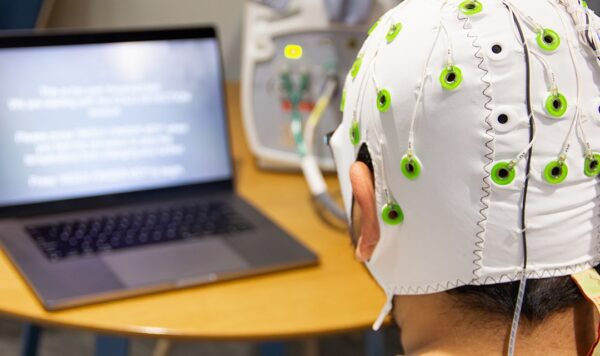
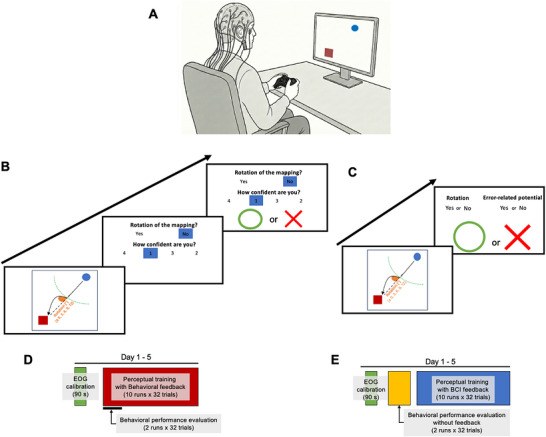
Spotting a deviation of a few degrees can matter in precision tasks, yet conventional training that only reports whether an answer was right does little to sharpen sensitivity to small errors. Researchers at The University of Texas at Austin and the National Institute of Neurological Disorders and Stroke instead read the brain's own error signal, the error-related potential, from EEG and fed its presence or absence back to participants in real time. Over a five-day longitudinal study, this BCI training accelerated perceptual learning for 3° errors and improved performance for 6° errors compared with behavioral training alone, alongside a larger error positivity (Pe) amplitude.
Why it matters Most perceptual-training work targets sensory brain regions; this study instead targets a decision-related error signal and reports behavioral gains that track a change in the EEG component. The abstract gives no participant count and does not address whether gains persist after the five days or transfer to real tasks.

© 2026 BCIwiki.com Digest Topics Tips Subscribe Revisions About