

August 2026
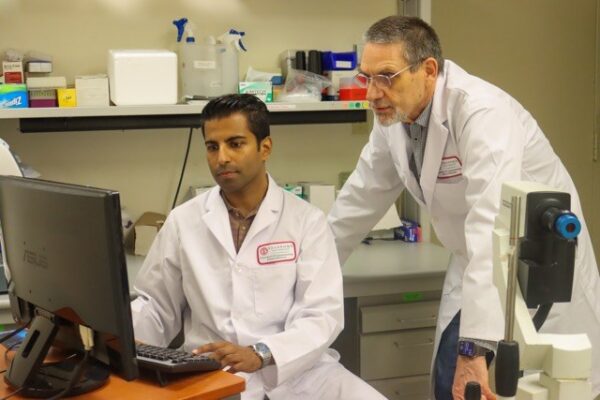
Stanford's Palanker Wins Defense Health Agency Award for PRIMA Retinal Implant
July 2026
Motor Cortex Patterns Decode Grasp Control
US researchers using intracortical microelectrode arrays identified distinct neural patterns in the motor and somatosensory cortex of patients with spinal cord injury that separately encode the timing and force of grasping, offering new ideas for developing more precise brain-computer interface (BCI) systems.
fMRI2Face Reconstructs Dynamic Faces From Brain Activity
An arXiv preprint introduces fMRI-Face, a Full-HD fMRI-video dataset, and fMRI2Face, a geometry-guided framework for reconstructing dynamic faces from brain activity. The method combines brain-derived appearance context with morphable 3D facial control in a neural-controlled video-diffusion pipeline. The work has not been peer reviewed.
Real-Time fMRI Pipeline Decodes Single-Trial Visual Perception Within Seconds
An arXiv preprint adapts the computationally intensive MindEye2 pipeline for real-time reconstruction of perceived natural images from fMRI. Using the open-source RT-Cloud platform, the researchers decoded single-trial visual perception within seconds of image presentation and analyzed the factors behind performance changes from offline to real-time processing. The work has not been peer reviewed.
Blackrock NeuroPort Arrays Deliver Touch Feedback for Up to 10 Years
An early feasibility study followed five people with spinal cord injury, each implanted with two Blackrock NeuroPort arrays in somatosensory cortex. Across two to 10 years of implantation, more than 168 million intracortical stimulation pulses were delivered over 27 combined implant-years without a serious adverse event or direct harm to electrode health. An average of 64% ± 13% of electrodes still evoked touch, including 60% after 10 years in one participant.