/ EN

Electrode Materials

15 entries

Electrode materials determine the signal quality, biocompatibility, and lifespan of neural interfaces. This topic covers carbon nanotube coatings, conductive hydrogels, drug-loaded nanotube layers, and other materials that lower impedance and suppress inflammation.

September 2026

Anti-Fouling Coating Shields Neural Electrode, Signal Stays Clear for Six Months

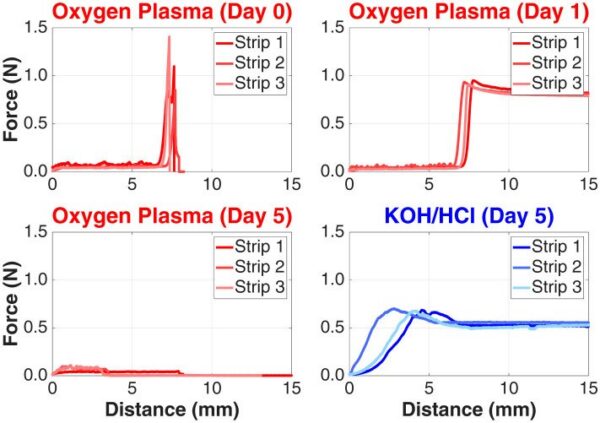
Researchers at the Technical Institute of Physics and Chemistry of the Chinese Academy of Sciences and collaborating institutions have developed a neural electrode interface that, they report, significantly extended electrode operational lifetime and improved signal fidelity over six months of in vivo implantation. The material, a benzyloxycarbonyl-substituted poly(ornithine-alt-glycine) coating abbreviated OGCbz, resists biofouling and immunogenic rejection without degrading electrical performance, targeting what the authors call the critical obstacle to electrodes that combine long-term recording with tunable biofunctional control: an immune-mediated foreign body response in which glial scar encapsulates implants like cement. Substituting the Cbz group with other functional moieties preserves those antifouling and biocompatibility properties while adding new ones, and as a proof of concept the peptide sequence IKVAV and the antibody cetuximab gave the interface neuron affinity and tumor cell proliferation inhibition respectively; the six-month result came from the IKVAV-functionalized version.
August 2026

Review Charts the Shift From Rigid Silicon to Soft Brain Implant Electrodes

Implantable brain-computer interfaces are shifting from rigid silicon architectures to soft, structurally adaptive systems built for seamless, long-term integration with neural tissue, according to a review of flexible electrode materials and structural design published in SmartMat on August 31, 2026. Breakthroughs in materials science and micro/nanofabrication have given this generation of devices mechanical compliance, robust interfacial adhesion and high-fidelity signal acquisition that earlier designs could not reach, the review says. Long-term stability at the electrode-tissue interface remains one of the core bottlenecks for invasive BCI.

Liquid Gallium in 3D Microneedles Cuts Impedance 1,000-Fold, Records Spikes

A team from the University of Utah, Kangwon National University and the University of Georgia describes a silicon-free route to neural microelectrode arrays: soft polymeric 3D microneedles are printed by two-photon polymerization, then turned into electrodes by injecting liquid gallium into the hollow channels. A newly defined retention number predicts whether the gallium stays put under physiological conditions. Coating the surface with gold nanoparticles and PEDOT doped with tetrafluoroborate cut impedance by roughly 3 orders of magnitude, and in vivo recordings in an invertebrate model captured neural spikes with no gallium leakage. The study was published in ACS Sensors on August 31, 2026.

Memory Prosthetics Near First-in-Human Trials

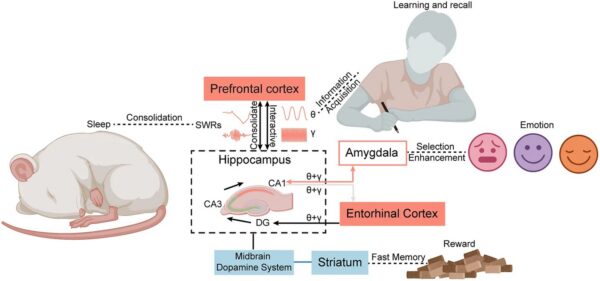
Memory prosthetics — closed-loop brain-computer interfaces that decode hippocampal activity and deliver adaptive stimulation — are moving from animal proof-of-concept toward first-in-human trials, according to a review in iScience. The authors argue that chronically implantable systems require co-design of three subsystems that have been treated in isolation: biocompatible electrode interfaces, on-chip neuromorphic computation, and closed-loop control hardware. The review maps neuroscientific findings such as theta-phase tracking, theta-gamma coupling and sharp-wave ripple detection onto engineering specifications for latency, sampling and charge injection, and onto materials requirements for impedance, switching endurance and chronic stability. It also flags where small-cohort clinical results have been over-generalized.

Xi'an Jiaotong Team Uses Inkjet-Printed Conductive Patterns to Align Neural Cells

Researchers at the Second Affiliated Hospital of Xi'an Jiaotong University in northwestern China and the Key Laboratory of Biomedical Information Engineering of the Ministry of Education have built an in vitro screening platform combining electrospun PLCL with inkjet-printed reduced graphene oxide (rGO) and growth-factor micropatterns. Because it varies conductive, biochemical and topographical cues together, the platform can evaluate printing parameters and electric-field strength in a single system. Under 150 mV/cm direct-current stimulation, PC-12 cells showed more neurite-like outgrowth and better alignment than with no stimulation or at 300 mV/cm.

SpikeGadgets Hardware Closes the Loop on Rat Hippocampus in Milliseconds

SpikeGadgets says its hardware, using low-latency Ethernet and the TrodesNetwork API, lets researchers detect a neural activity pattern and trigger a perturbation within milliseconds. Two UCSF studies show it in use: one continuously decoded hippocampal population activity in rats to run a neurofeedback system, training the animals to volitionally generate specific memory representations for reward; the other triggered theta-phase-specific optogenetic stimulation in real time and showed that theta rhythm and replay are mechanistically separable.

Preprint: Dendrite-Inspired Organic Interface Narrows Electrode-Neuron Shape Gap

Researchers at the Institute of Biological Information Processing at Forschungszentrum Jülich posted a preprint to bioRxiv on August 4, 2026, proposing hierarchical, dendrite-inspired organic bioelectronic interfaces built to integrate with neurons. Brain-computer interfaces depend on intimate electrical communication between living neurons and artificial materials, the authors write, yet conventional electrode architectures remain structurally unlike neural tissue, limiting stable cell-electrode coupling and long-term recording. The work is a preprint and has not been peer reviewed.
July 2026

Soft Porous Brain Implants Reduce Glial Scarring and Guide Regeneration

Researchers at the University of Washington have built mechanically compliant, precision-porous brain implants and tested them in rat brains. At 4 weeks, the porous scaffolds drew less astrocyte encapsulation than solid hydrogel rods, softer hydrogels reduced pro-inflammatory macrophage polarization, and new blood vessels, neuronal markers and neurogenesis appeared inside the pores. The authors present the design as a route to limiting glial scarring and improving regeneration in implant-based central nervous system therapies.

Spatial Proteomic Analysis of Antimicrobial Therapeutic-Releasing Intracortical Probes

The study uses spatial proteomics to assess tissue around non-functional intracortical microelectrodes implanted for four weeks in mice, measuring neuronal integrity, immune-cell activation and local cytokine expression around probes coated with drug-loaded, controlled-release titanium dioxide nanotube array (TNA) coatings. The authors note that blood-brain barrier disruption can translocate gut-derived bacteria to the implant site and sustain chronic inflammation, and that the TNA coating's therapeutic loading and controlled release further damp residual neuroinflammation. They conclude that TNA offers a multifunctional, tunable interface for locally regulating the neuroimmune microenvironment, a step toward long-term reliable intracortical recordings.

Ruthenium Oxide Electrode Coating Supports 25 Weeks of Intracortical Stimulation

Researchers evaluated ruthenium-oxide-coated amorphous silicon-carbide microelectrode arrays during 25 weeks of intracortical microstimulation in rodents. Perception thresholds stabilized at about 0.4 nC per phase per electrode by week nine, behavioral performance remained around 91%, and reliable sensation persisted through week 25.

Implanted Neural Interfaces Track Glioma Progression in Mice

Researchers at Coherence Neuro Global, Inc. and other institutions have used implanted neural interfaces to track glioma growth in freely behaving mice over time. Across several mouse strains and glioma models, tumor progression went with elevated gamma-band activity in the tumor microenvironment, and machine learning models read tumor burden off the chronic recordings, with gamma trajectories predicting individual growth rates. The work was posted to bioRxiv on July 9, 2026, and has not been peer reviewed.

INBRAIN and Microsoft Partner on AI for Real-Time BCI Adaptation

INBRAIN Neuroelectronics has announced a partnership with Microsoft to apply the software company's large language models and data analytics tools to make its brain-computer interfaces adapt in real time. INBRAIN builds graphene-electrode BCIs for neurological disorders, spanning invasive and non-invasive applications, and recently partnered with the Mayo Clinic to speed clinical development and commercialization of its BCI therapies, with investigator-led clinical research under way.
June 2026

Injectable Antifouling Adhesive Hydrogel Enables Robust Neural Interfaces for Stable ECoG Recording

Researchers propose an injectable, in-situ-gelling multifunctional hydrogel to address the failure modes of micro-ECoG cortical recording — dural barrier disruption, cortical micromotion that weakens device-tissue coupling, and biofouling that triggers a foreign-body response. Combining dopamine-grafted sodium alginate with branched polyethyleneimine, the hydrogel forms a quasi-zwitterionic network that resists nonspecific protein adsorption and provides catechol-mediated wet adhesion, gelling rapidly under surgical-compatible conditions through dual macromolecular crosslinking without diffusible small-molecule monomers. Integrated with a 128-channel flexible micro-ECoG mesh array, the platform reduced glial activation and fibrotic encapsulation and preserved stable, high-fidelity cortical recording over the 3-week early chronic period. The authors say co-designing barrier repair, interface adhesion and antifouling in a single material can improve long-term function.

Nanostructured Coatings on Soft-Polymer Neural Probes for Addressing Neuroinflammation

Researchers transferred dexamethasone-loaded titania nanotube arrays (TNA) onto a mechanically adaptive polymer nanocomposite (NC) substrate and, in a mouse model, compared four implants — silicon, NC, TNA-NC Empty and TNA-NC DEX (10 mice per group) — for neuroinflammation around intracortical microelectrodes at 2 and 4 weeks. At 2 weeks the gene-expression profiles were broadly similar, reflecting an early acute injury response; by 4 weeks the patterns diverged, with NC-based implants showing fewer differentially expressed neuroinflammatory genes than rigid silicon, led by TNA-NC Empty, while the dexamethasone group showed no additional benefit, suggesting drug delivery still needs optimization. The authors conclude that adding a TNA layer to flexible materials promotes resolution of the neuroinflammatory response at 4 weeks.
© 2026 BCIwiki.com Digest Topics Tips Subscribe Revisions About