/ EN

Germany

13 entries
September 2026

New Filtering Pipeline Keeps BCI Decoding at 76% During Brain Stimulation

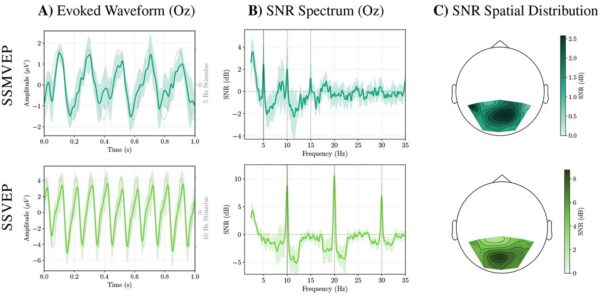
Running a motor-imagery BCI while transcranial alternating current stimulation (tACS) is switched on has been difficult, because stimulation artifacts swamp the brain rhythms the decoder relies on and push accuracy close to chance. In a controlled test with 14 healthy participants, a real-time spatial filtering pipeline combining spatio-spectral decomposition with beamforming held accuracy at 76 ± 9% during stimulation, while a standard Laplacian filter managed only 58 ± 9%. That makes closed-loop "stimulate while reading" operation feasible at the signal level; whether it actually improves BCI performance or produces neuroplastic changes, the paper explicitly leaves to future research.
ANT Neuro, optohive to Build Hybrid EEG-fNIRS Cap

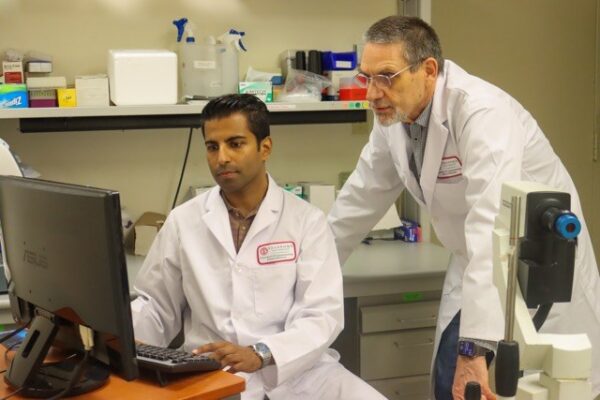
ANT Neuro, the Dutch EEG equipment maker headquartered in Hengelo, announced a strategic collaboration on September 1, 2026 with optohive AG, the Swiss developer of the HiveOne functional near-infrared spectroscopy system. Under the agreement, HiveOne will be sold and supported through ANT Neuro's regional sales and technical teams, reaching the research customers the company says it has served for nearly 30 years. The two will also co-develop a hybrid cap that holds ANT Neuro's eego EEG technology and HiveOne together and synchronizes both data streams through Lab Streaming Layer; optohive was founded in 2025 as an ETH Zurich spin-off, the announcement said.
August 2026

Review Proposes 'Brain-Inspired BCIs' for Low-Power, Closed-Loop Neurotech

A review published on August 20, 2026 in npj Biomedical Innovations proposes brain-inspired brain-computer interfaces (BI-BCIs), a framework that unifies neuromorphic computing with BCI design to make neurotechnology lower-power, smaller and capable of closed-loop operation. The authors, from Aarhus University, Stanford University, the University of Southern Denmark, the University of Genoa, Forschungszentrum Jülich and RWTH Aachen University, say the approach could advance neuroprosthetics and neuromodulation for neurological disorders.

Stanford's Palanker Wins Defense Health Agency Award for PRIMA Retinal Implant

Daniel Palanker, a Stanford professor and affiliate of the university's Wu Tsai Neurosciences Institute, has won the U.S. Defense Health Agency's Outstanding Research Accomplishment award for the PRIMA retinal implant, designed to restore central vision after photoreceptor loss. A 2-mm chip sits beneath the retina and is driven by infrared light from augmented-reality glasses, converting that light into current that stimulates the next layer of neurons. A 2025 paper in the New England Journal of Medicine reported that the device let legally blind patients with advanced dry age-related macular degeneration read letters and words, and the award recognizes its potential for military personnel with laser-damaged retinas.

P300 BCI Reads Silently Chosen Digits in a Granada Classroom

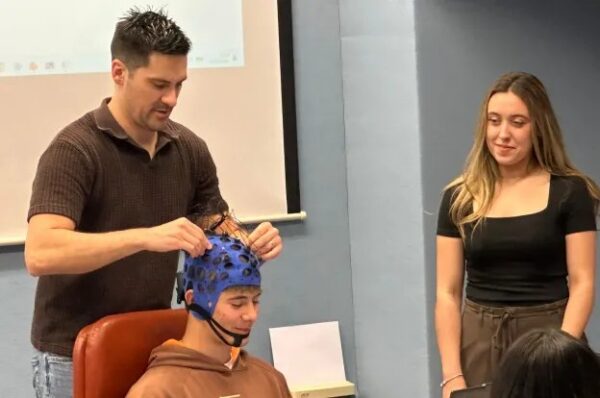
A team from the University of Granada in Spain took a P300 brain-computer interface into a secondary school classroom, using a Bitbrain Versatile EEG system to identify a digit a volunteer had silently chosen, in front of nearly a hundred students. The demonstration grew out of a thesis by industrial electronic engineering student Marta Rodríguez Comino, supervised by Dr. Joaquín T. Valderrama and Dr. Iván López Espejo. The water-based portable EEG system decoded the attention signals using principal component analysis and a support vector machine.

Preprint: Dendrite-Inspired Organic Interface Narrows Electrode-Neuron Shape Gap

Researchers at the Institute of Biological Information Processing at Forschungszentrum Jülich posted a preprint to bioRxiv on August 4, 2026, proposing hierarchical, dendrite-inspired organic bioelectronic interfaces built to integrate with neurons. Brain-computer interfaces depend on intimate electrical communication between living neurons and artificial materials, the authors write, yet conventional electrode architectures remain structurally unlike neural tissue, limiting stable cell-electrode coupling and long-term recording. The work is a preprint and has not been peer reviewed.
July 2026

Preprint: Event-Based Neural Decoding for Neuroprosthetic Motor Control

A preprint proposes an event-based neural decoding method for neuroprosthetic motor control, arguing that deep-network-driven prostheses are limited by high latency, energy use and space — wired links restrict mobility and wireless links restrict information throughput, while spiking networks trade off task performance for low-power inference. The authors' event-based gated recurrent unit generates a sparse communication pattern with graded spikes, outperforming classical spiking neural networks on task performance, and pairs with efficient training and sparse inference to enable on-device neural decoding under latency, energy and space constraints. The study has not been peer reviewed.

Deep Learning Decodes Imagined Sounds and Images From MEG, Topping 70% for Visual Imagery

Researchers recorded magnetoencephalography (MEG) from 18 right-handed participants as they imagined sounds and pictures, then compared two decoders: a convolutional neural network (CNN) and a linear logistic regression model. The CNN decoded both tasks above chance and exceeded 70% accuracy for visual imagery. It still decoded significantly when trained only on cortical regions unrelated to the task, suggesting imagined content is spread across partially overlapping networks rather than confined to a single sensory area, an experimental basis for feeding auditory and visual information into BCI decoders together.
June 2026

Hybrid micro-ECoG for multi-scale neural recording

Published in Cell Reports Methods on June 12, 2026, the study presents high-density micro-electrocorticography arrays that integrate silicone elastomers (optical transparency, repeated penetration with intracortical arrays) and polyimide films (fine photolithographic feature definition) for multi-scale studies of brain activity. The combination facilitates high-throughput functional mapping to identify targets and insertion of intracortical arrays for dense local sampling. The authors demonstrated functional mapping in rats, cats and marmosets, guiding multi-area laminar recordings, and demonstrated local and feedforward optogenetic stimulation to investigate cortico-cortical interactions.
January 2026

Researchers Say BCIs Should Decode User Goals, Not Motor Cortex Signals

Researchers in Germany, the Netherlands and Japan argue in an opinion piece that brain-computer interface design should be rebuilt around ideomotor theory, which treats voluntary action as driven by internally represented sensory outcomes. BCI research has made remarkable technical progress but remains limited in scope, the authors write, typically relying on motor and visual cortex signals in a narrow range of patient populations, and they describe this underused framework as a principled basis for next-generation interfaces that align more closely with the brain's own intentional and action-planning architecture. Reorganizing BCIs around the purpose of an action, meaning the user's goals and anticipated effects, would be a more intuitive, generalizable and scalable path, they suggest, and advances in neural recording and artificial intelligence-based decoding of sensory representations make the shift feasible and timely, potentially easing persistent usability and generalizability problems in BCI design.
September 2025

Neuropixels Ultra Doubles Neuron Yield With 6-Micrometer Site Spacing

A Neuron paper describes Neuropixels Ultra, which packs 6,144 switchable recording sites at 6-micrometer center-to-center spacing while reading 384 channels simultaneously. In mouse visual cortex recordings, neuronal yield increased by more than twofold. The study also improved subcellular signal detection and cell-type classification, but it did not report simultaneous recording from 10,000 neurons.
© 2026 BCIwiki.com Digest Topics Tips Subscribe Revisions About