/ EN

BCIwiki — Brain-computer interface news, research and industry database

Latest

August 2026

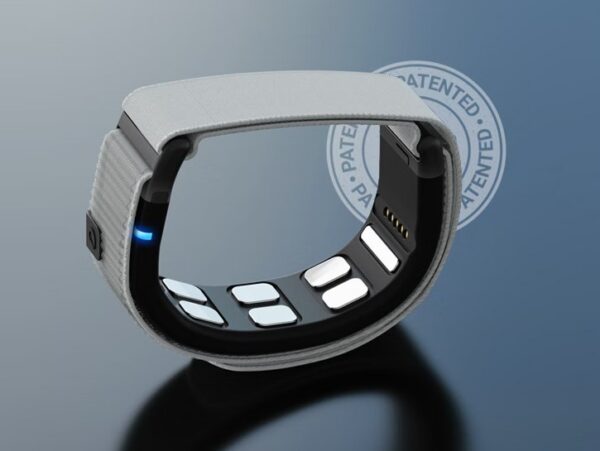
Wearable Devices Patents User Authentication From Gesture and Neural Signals

Israel's Wearable Devices said the U.S. Patent and Trademark Office has granted it a continuation patent covering user authentication that combines gesture input with biopotential sensors recording neural signals. The technology could be applied to secure payments, user detection and authorization of sensitive actions, adding a biometric layer to gesture-controlled devices.
Why it matters Identity verification is a far shorter commercial path than any clinical use of neural signals, and locking it up in a granted patent marks where consumer neurotech expects to earn money first.

CLMT-Net Decodes Fine-Grained Within-Limb Motor Imagery EEG

Researchers propose CLMT-Net, a contrastive learning network based on a multi-scale Transformer, for fine-grained within-limb MI decoding, achieving 76.13% accuracy on the MI-2 dataset.
Why it matters Fine-grained MI decoding within the same limb is highly challenging due to similar neural patterns. CLMT-Net integrates multi-scale temporal convolution, frequency fusion, spatial convolution, and dual-path Transformer, achieving competitive performance on this challenging task.

Review: BCI in Ophthalmology for Diagnosis and Visual Restoration

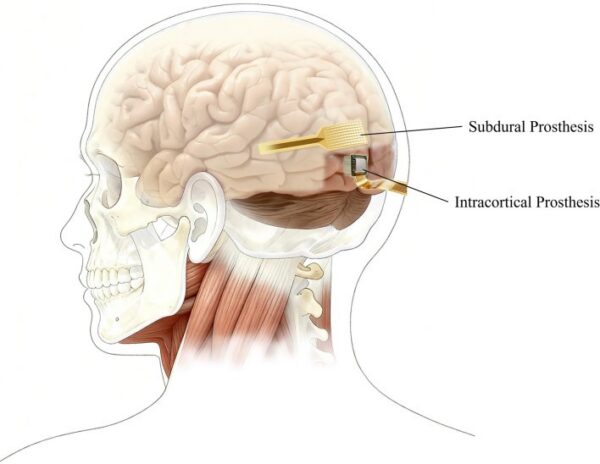
A review summarises BCI advances in ophthalmology, including diagnostic assessment using SSVEP, fNIRS, and fMRI, and progress in retinal and cortical prostheses for partial visual reconstruction.
Why it matters Visual impairment is a major global health issue, and irreversible blindness from end-stage retinal diseases and optic nerve injuries is refractory to conventional therapies. This comprehensive review examines BCI applications in ophthalmic diagnosis and visual restoration.

Game Theory-Based Joint Learning Boosts Online MI-BCI Decoding

A game theory-based adaptive human-machine joint learning method for online MI-BCI decoding improves accuracy by 9.7% and 5.6% in 14-subject online experiments (both p < 0.01).
Why it matters Poor online MI-BCI decoding performance limits clinical applications. This method innovatively models subject training as a game-theoretic minimax game, combined with knowledge distillation and prototype-guided domain adaptation for online decoder updating, significantly improving accuracy.

Crossmodal Congruency Test Tells Sensory Feedback Types Apart at the Knee but Not the Foot

A University of Pittsburgh team (Bose et al.) tested the crossmodal congruency effect (CCE) task in 15 able-bodied volunteers to see whether it can quantify how intuitive lower-limb sensory feedback feels. At the knee, the task distinguished more natural pneumatic stimulation from less natural electrical stimulation; at the foot, it could not tell the same stimuli apart. The study was posted to bioRxiv on August 10, 2026. Lower-limb amputees often have balance and gait problems because their prostheses give no somatosensory feedback; electrical-stimulation neuroprostheses can partly restore sensation, but there has been no way to quantify how intuitive that sensation is. The authors stress that external factors affecting the CCE must be identified before it can be used with amputees.
Why it matters The first extension of the CCE task, commonly used for the upper limb, to lower-limb sensory feedback shows its discriminating power depends on body site, working at the knee but not the foot, so neuroprosthetics will need site-specific assessment methods to measure how intuitive restored sensation is for amputees.

BLCU Team's Falsifiable Substitution Test Keeps 0.968 AUC After Target Events Are Removed

Brain-computer interface decoders can guess the right label using information unrelated to the target mental state. A team at the School of Psychology, Beijing Language and Culture University (BLCU), proposes a falsifiable substitution-test standard: candidate evidence must persist in disjoint data, survive capacity-matched substitutions of physical organization or listener templates, and remain testable after target events are excluded. Across six EEG datasets (41 participants), averaging four neural-speech margin metrics brought 5-second decoding to what the authors call a leading level; in two hierarchical interfaces, parent-stream error scores kept AUCs of 0.968 and 0.965 after all target-command events were excluded. The framework offers a test for attributing evidence in neuroscience and BCI.
Why it matters Rather than judging EEG decoders by accuracy, this preprint asks whether the neural evidence genuinely reflects auditory attention, requiring it to hold across disjoint data, capacity-matched substitutions and event exclusion, and so offers a transferable standard for checking what BCI decoding results are really based on.

Shanghai's Neuro Space Hits One-Year Mark: 52 Firms, World's First Invasive BCI Approved

One year after its June 2025 launch, Neuro Space (脑智天地) — Shanghai's BCI industry cluster at the Hongqiao International Medical Center and China's first dedicated BCI industrial zone — has entered full operation across its 25,000 m² pilot area. As of July 2026, the cluster hosts 52 registered BCI companies and 22 startup incubators spanning flexible electrodes, BCI chips, ultrasound-based interfaces, and vision restoration. On the commercialization front, the world's first approved invasive BCI medical device, developed in Shanghai, received regulatory clearance in 2026, with its first clinical prescription issued in July. Five additional Class III devices are currently in clinical trials or under regulatory review. Shanghai accounts for nearly 60% of China's BCI financing events, totaling approximately RMB 2.117 billion. Products showcased at a recent open-day event include a non-invasive brain-controlled consumer device driven by EEG-based attention metrics, an integrated transcranial magnetic stimulation navigation system for depression treatment, and LingXi Cloud, a clinical data platform housing over 2.1 million cases of multimodal brain-disorder data at petabyte scale.
Why it matters The world's first approved invasive BCI medical device has reached clinical prescription within a year of Neuro Space's launch — a rapid leap from lab to bedside that sets the pace for China's BCI industrialization.

Researchers Say BCIs for Locked-In Patients Must Preserve Dignity, Not Just Speed

A phenomenological analysis argues that brain-computer interfaces for people with locked-in syndrome should be judged not only on communication speed and accuracy but on whether they preserve the user's dignity and relational personhood. The authors offer the argument as an ethical frame for clinical BCI design.
Why it matters Communication BCIs are still benchmarked almost entirely on words per minute and accuracy; this paper supplies the argument, and the vocabulary, for a second axis that trial designers and ethics review boards can actually apply.

© 2026 BCIwiki.com Digest Topics Tips Subscribe Revisions About