/ EN

EEG

99 entries

Electroencephalography is the most widely used signal acquisition technique in BCI, offering low cost, portability, and non-invasiveness for applications from lab research to consumer products. This topic covers EEG hardware, signal processing methods, and novel electrode materials.

July 2026

DSTF-Net Decodes SSVEP from Frontal EEG, Dropping the Occipital Electrode

Researchers writing in npj Biomedical Innovations have proposed DSTF-Net, a framework that decodes steady-state visual evoked potentials (SSVEP) from frontal EEG alone, removing the need for electrodes over the occipital cortex. In cross-subject transfer to 20 new users, including eight brain-injured patients lying supine, it improved decoding accuracy by as much as 33.47% over baseline methods.

Hospices Civils de Lyon trial decodes motor imagery for stroke rehab

Hospices Civils de Lyon has registered a clinical study in France to decode motor imagery from non-invasive brain recordings as a prerequisite for innovative motor rehabilitation therapies. Combining MRI, MEG, and EEG, the study will design a subject-specific neurophysiological model, noting that standard BCI approaches neglect transient features such as beta bursts. The approach will first be validated in healthy subjects, then assessed for feasibility in stroke patients.

Random Forest Model Hits 92.49% Accuracy in EEG Eye-State Detection

Researchers paired interquartile-range clipping for outlier removal with a random forest classifier on the UCI machine learning repository's EEG-Eye-State dataset, classifying eyes-open versus eyes-closed at 92.49% accuracy with a ROC-AUC of 0.9791. Cross-validation put mean accuracy at 92.86%. The authors present the pipeline as a stable, interpretable option for BCI uses such as drowsiness monitoring and assistive technology.

Can a BCI boost attention in older adults? UT Austin launches trial

The University of Texas at Austin has registered a study on ClinicalTrials.gov to explore whether an EEG-based brain-computer interface (BCI) decoding the P300 event-related potential in real time, combined with non-invasive interventions such as mindfulness relaxation or transcranial electrical stimulation, can enhance attention and memory neural markers—proxies for cognitive reserve—in healthy older adults and those with mild cognitive impairment (MCI). The trial is recruiting and aims to test whether targeted modulation of attention-related brain activity can support cognitive reserve.

BrainAccess Releases MATLAB API for Direct EEG Data Acquisition

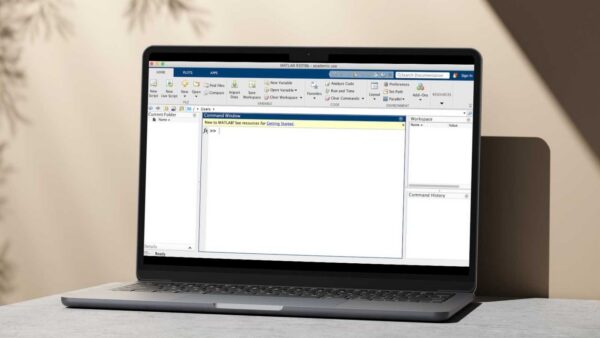
BrainAccess, the EEG system line from Neurotechnology, has released a MATLAB API that lets users connect its wireless dry-electrode headsets over Bluetooth, configure channels and sampling rate, start and stop data streams and pull data straight into MATLAB arrays, work that previously required Python, C or the LSL MATLAB toolbox. The toolbox installs as a single .mltbx package for desktop MATLAB R2025b or newer, mirrors the structure of the existing Python API and supports session annotations and saving directly to .mat files, so recordings can go straight into tools such as Signal Processing Toolbox and EEGLAB. BrainAccess devices, sold in MINI, MIDI, MAXI and HALO models, are widely used in neuroscience research and engineering.

SpikeGadgets Headstage Records 1,024 Channels Across 10 Brain Regions

A post from SpikeGadgets surveys how far multichannel electrophysiology has scaled: its Modular Stacking Headstage supports chronic recording of 1,024 channels across 10 brain regions; the University of Pittsburgh's MePhys platform uses 992 electrode contacts to cover an entire macaque hemisphere; and a Rice University preprint describes a custom ASIC that supports 5,376 simultaneous recording channels.

Ghost-LENet Tops 80% on Motor Imagery EEG Using a Few Thousand Parameters

Researchers have built Ghost-LENet, a lightweight convolutional network that classifies motor imagery EEG at 82.18% on the BCI Competition IV-2a dataset and 83.05% on IV-2b using only a few thousand trainable parameters. The design combines dilated temporal convolutions, a stationary wavelet transform, dynamic residual fusion and Ghost modules, holding accuracy while cutting model complexity for BCI hardware with little compute to spare.

UCL Workshop Syncs EEG, Eye Tracking, ECG and GSR in a Flight Simulator

Researchers demonstrated synchronized EEG, ECG, GSR and eye tracking during a flight-simulation experiment at a workshop held with Professor Tom Carlson at University College London. A g.Nautilus 28-channel wireless EEG headset, ECG and GSR sensors and Tobii Pro Glasses 3 captured the signals in real time, tracking mental workload, engagement and heart rate variability (HRV) across two complete flight cycles of take-off, free flight and landing. The rig can be set up in 30 minutes and leaves participants free to move throughout.

Federated Graph Framework Fuses EEG and EMG to Decode Motor Intent

A team writing in Computing and Informatics has proposed FSDFGL, a federated graph learning framework that folds EMG into EEG when the graph is built and then shares only structural information between clients, avoiding the accuracy loss that comes with exchanging heterogeneous features. The design targets three problems in hybrid BCI work at once: the low spatial resolution of EEG, datasets that are small and privacy-sensitive, and the uneven data distributions federated learning has to cope with. Experiments on the TAN dataset show an advantage in identifying complex motor intentions.

Guangzhou Workshop to Demonstrate EEG-Driven Closed-Loop TMS in July

Clinicians and researchers in Guangzhou, southern China, will get hands-on time with closed-loop systems that trigger transcranial magnetic stimulation from real-time EEG analysis at a workshop on July 17, 2026. Shenzhen Yingchi Technology, one of the supporting companies, will bring EEG-driven closed-loop TMS devices and near-infrared brain function imaging equipment. The session is organized by the Professional Committee on Brain Function Detection and Regulation Rehabilitation of the Chinese Association of Rehabilitation Medicine, alongside the committee's 2026 annual conference and the 8th Brain Function Detection and Regulation Rehabilitation Forum.

BIOSerenity Trains EEG Models on Jean Zay, Finds Scaling Diverges From Language AI

French neurotech company BIOSerenity ran three months of large-scale EEG AI training experiments on Jean Zay, France's most powerful supercomputer for research, including a 300-million-parameter model trained on 110,000 hours of EEG data across 64 GPUs. It also fully trained two model families, Mercury and Neptune, in three sizes each, from about 13 million to 100 million parameters and on about 5,000 to 40,000 hours of data. Neptune improved as it scaled up while Mercury did the opposite, its smallest version performing best, a sign that brain-signal AI does not scale the way language models do; the results have not been peer-reviewed.

Neurosom Wins US Patent for Bayesian EEG Source Mapping and Stimulation Targeting

Neurosom announced it has been granted a patent for a method that combines Bayesian statistical modeling with personalized EEG data and brain atlas models to achieve "super-resolution" in locating the origins of brain electrical activity, potentially improving the guidance of transcranial electrical stimulation (TES). The patent, titled "Method for Bayesian Super-Resolution of Electroencephalographic Source Analysis and Transcranial Electrical Stimulation" (US Pat. No. 12,663,866), was announced on July 9, 2026.

NIRx and Artinis Form fNIRS Partnership Backed by Gilde Healthcare

NIRx Medical Technologies and Artinis Medical Systems, the Dutch fNIRS pioneer, have formed a strategic partnership backed by healthcare investor Gilde Healthcare to speed innovation and broader adoption of functional near-infrared spectroscopy (fNIRS) brain imaging. Both companies keep their own brands and operating locations while combining R&D and commercial scale, and leadership is unchanged, with Dr. Patrick Britz remaining chief executive of NIRx and Dr. Willy Colier chief executive of Artinis.

Deep Learning Decodes Imagined Sounds and Images From MEG, Topping 70% for Visual Imagery

Researchers recorded magnetoencephalography (MEG) from 18 right-handed participants as they imagined sounds and pictures, then compared two decoders: a convolutional neural network (CNN) and a linear logistic regression model. The CNN decoded both tasks above chance and exceeded 70% accuracy for visual imagery. It still decoded significantly when trained only on cortical regions unrelated to the task, suggesting imagined content is spread across partially overlapping networks rather than confined to a single sensory area, an experimental basis for feeding auditory and visual information into BCI decoders together.

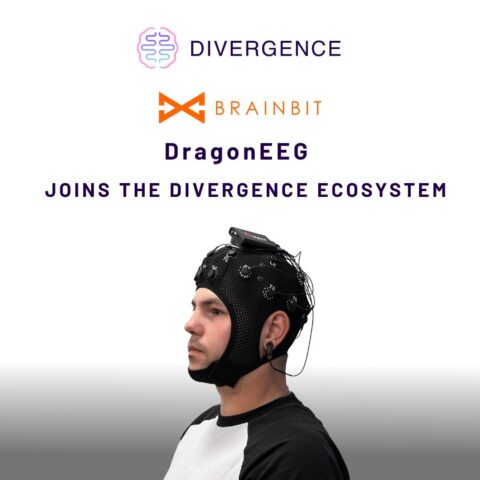
Divergence Neuro Adds BrainBit's 19-Channel DragonEEG to Its Platform

Divergence Neuro has added support for BrainBit's DragonEEG to its platform, bringing in a system with 19 EEG channels laid out on the international 10-20 system plus dedicated EMG, ECG and EOG poly channels. The integration gives clinicians, researchers, educators and developers research-grade EEG acquisition inside the Divergence ecosystem for qEEG brain mapping, neuroscience research and professional neurotechnology development, as qEEG use spreads through neurofeedback, mental health and cognitive performance work.

Chinese Rehabilitation Association Sets July Workshop on Closed-Loop EEG-TMS

The Chinese Association of Rehabilitation Medicine will hold a workshop on EEG-driven closed-loop TMS in Guangzhou, southern China, on July 17, 2026, staged under its Naoke China (脑客中国) series and run by its committee on brain function monitoring and modulation in rehabilitation. The technique reads EEG in real time and triggers a TMS pulse when a target brain state appears, a 'brain-state-dependent stimulation' approach that pairs the spatial precision of TMS with the temporal resolution of EEG, and the program is built around moving BCI work out of the laboratory into neurorehabilitation and the precision diagnosis of brain disorders. Shenzhen Yingchi Technology, a subsidiary of Hanix United, is among the supporting organizations, and registration closes on July 17.

Beihang and Tsinghua Team Fuses EEG, Video and Motion to Flag VR Cybersickness

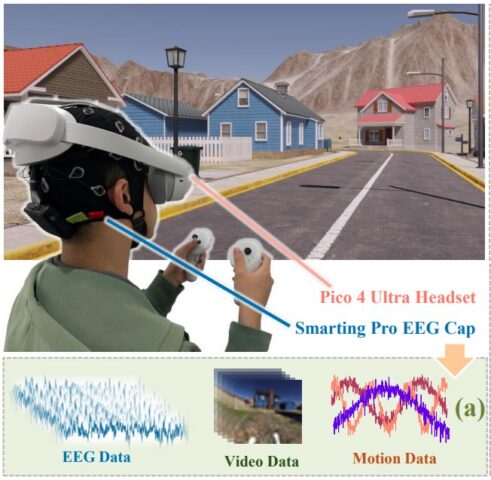
Researchers at Beihang University and Tsinghua University in Beijing built a multimodal contrastive learning framework that pairs EEG with synchronized video and motion data to detect cybersickness in virtual reality, representing the EEG as a connectivity graph and using an attention-based encoder to map the video and motion streams onto the same structure. Fusing all three signals separated cybersick from non-cybersick states more cleanly than any single modality or pair, and the model automatically pruned prefrontal connections unrelated to cybersickness. The setup used mBrainTrain's Smarting PRO 32-channel wireless EEG system and a Pico 4 Ultra headset, with 29 healthy adults navigating a VR scene under their own control.

BIOSerenity's E1 Foundation Model Posts Strong Results on Four Clinical EEG Tasks

French medtech company BIOSerenity has built an EEG foundation model, BIOSerenity-E1, pre-trained self-supervised on more than 4,000 hours of recordings, and reports strong results on four clinical tasks: normal/abnormal classification, Alzheimer's disease detection, pediatric sleep staging and seizure detection. The normal/abnormal algorithm is already built into a CE-marked medical device, and the seizure-detection algorithm is in clinical evaluation. The work will be shown as a poster at the 8th Journées de Neurophysiologie Clinique in Grenoble, France.
June 2026

FDA Clears Ceribell Monitor for Bedside EEG Recording

The FDA cleared the Ceribell Monitor on June 30, 2026, finding it substantially equivalent under submission number K261101 through the traditional 510(k) pathway. The agency classifies it as a Reduced-Montage Standard Electroencephalograph, a Class II device under regulation 882.1400, with neurology as the assigned review panel. It is one of several Ceribell clearances in the same period; the product line is built around rapid reduced-montage setup for bedside recording in emergency and critical care.

FDA Clears Universal Brain UB ERP System

The FDA cleared Universal Brain's UB ERP System on June 30, 2026, finding it substantially equivalent under submission number K253767 through the traditional 510(k) pathway. The agency classifies it as Non-Normalizing Quantitative Electroencephalograph Software, a Class II device under regulation 882.1400, with neurology as the assigned review panel. Event-related potentials are obtained by averaging EEG time-locked to stimuli; components such as P300 serve both clinical assessment and the classic paradigms behind noninvasive BCI spellers.

Multi-View Contrastive Learning Improves Cross-Subject ERP Classification

MVCLDG combines raw EEG and Hilbert-derived phase information with domain-alignment and contrastive-learning constraints to improve classification across unseen users. It outperformed baseline and representative domain-generalization methods on a public error-related-negativity dataset and a semantic-syntactic-violation dataset without target-domain adaptation; ablation and activation-map analyses supported the contribution and neurophysiological plausibility of its components.

FDA Clears Ceribell Neurology Review Software

The FDA cleared the Ceribell Neurology Review Software on June 24, 2026, finding it substantially equivalent under submission number K260998 through the traditional 510(k) pathway. The agency classifies it as Automatic Event Detection Software for Full-Montage Electroencephalograph, a Class II device under regulation 882.1400, with neurology as the assigned review panel. The category covers software that automatically flags events within full-montage EEG recordings, surfacing candidate segments from long records for clinician review.

FDA Clears Neuroelectrics Enobio Dx EEG Systems

The FDA cleared Neuroelectrics Barcelona's Enobio Dx line, in 8-, 20- and 32-channel models, on June 13, 2026, finding it substantially equivalent under submission number K261604 through the special 510(k) pathway. The agency classifies it as a Full-Montage Standard Electroencephalograph, a Class II device under regulation 882.1400, with neurology as the assigned review panel. Neuroelectrics is known in neuromodulation and BCI research for noninvasive EEG acquisition and transcranial electrical stimulation hardware.

FDA Clears VoxNeuro Cognitive EEG Software

The FDA cleared VoxNeuro's Cognitive Function Neuroimaging (cfNI) Software, version 1.0.0, on June 12, 2026, finding it substantially equivalent under submission number K253015 through the traditional 510(k) pathway. The agency classifies it as Normalizing Quantitative Electroencephalograph Software, a Class II device under regulation 882.1400, with neurology as the assigned review panel. Normalizing quantitative EEG software compares an individual's EEG metrics against a reference population database before reporting, supporting objective assessment of cognitive function.
May 2026

Shanghai Ninth People's Hospital Registers BCI Trial in Burning Mouth Syndrome, Plans 38 Participants

Burning mouth syndrome produces months or years of burning oral pain with no visible lesion on examination, and treatment options are limited, leaving patients shuttling between oral medicine and psychiatry. A randomized, sham-controlled interventional trial registered by Shanghai Ninth People's Hospital, Shanghai JiaoTong University School of Medicine, will apply transcranial direct current stimulation over the left dorsolateral prefrontal cortex while collecting resting-state brain function and structural imaging, tracking pain, anxiety, depression, sleep and salivary flow. The trial is funded by the hospital's Brain-Computer Interface Special Research Program and registered as ChiCTR2600124987 on May 20, 2026. It plans to enroll 38 participants, 19 in the active group and 19 in the sham group, with first enrollment set for June 1, 2026; recruitment has not yet started.
April 2026

ChiCTR Registers Multicenter Trial of BCI Mindfulness Meditation in Chronic Tinnitus

The Chinese Clinical Trial Registry (ChiCTR) has logged a multicenter randomized controlled trial testing whether brain-computer interface-based mindfulness meditation relieves the symptoms of chronic tinnitus. Registered on April 23, 2026 as ChiCTR2600123258, the trial has not begun enrolling patients, and its design, sample size and sponsor must be read from the original registration record. It is the first multicenter registration to combine BCI with mindfulness meditation for chronic tinnitus, moving the approach from single-center exploration toward multicenter validation.

Chinese Registry Logs EEG-fNIRS BCI Trial for Arm Recovery After Hemorrhagic Stroke

A brain-computer interface (BCI) trial for upper-limb motor rehabilitation after hemorrhagic stroke was registered with the Chinese Clinical Trial Registry under the number ChiCTR2600122859 on April 20, 2026, and has not yet begun recruiting. The study combines electroencephalography (EEG) with functional near-infrared spectroscopy (fNIRS). The registration record does not disclose the study design, sample size or sponsor.

Xidian Team Drops Transformer Encoder, MLP Decoder Holds 0.94–0.98 AUC

Researchers at Xidian University built DisCo-Former, a Transformer framework for single-trial rapid serial visual presentation (RSVP) EEG decoding with three components guided by neurophysiological priors, then found its attention consistently collapsed: attention maps went nearly uniform and value-projection weights shrank toward 0. Stripping out the Transformer encoder left DisCo-MLP, a pure multilayer perceptron that matched or beat the Transformer version across two datasets and three evaluation regimes, with within-subject mean AUCs of about 0.94 to 0.98. For RSVP-EEG, the authors argue, modeling the signal's structure matters more than architectural complexity. The study was published in the International Journal of Neural Systems on April 10, 2026.
March 2026

FDA Clears Zeto New Wave EEG System

The FDA cleared Zeto's New Wave System on March 13, 2026, finding it substantially equivalent under submission number K260455 through the special 510(k) pathway. The agency classifies it as a Full-Montage Standard Electroencephalograph, a Class II device under regulation 882.1400, with neurology as the assigned review panel. That category covers standard electroencephalograph hardware acquiring a complete montage of scalp channels.
© 2026 BCIwiki.com Digest Topics Tips Subscribe Revisions About