/ EN

EEG

99 entries

Electroencephalography is the most widely used signal acquisition technique in BCI, offering low cost, portability, and non-invasiveness for applications from lab research to consumer products. This topic covers EEG hardware, signal processing methods, and novel electrode materials.

September 2026

48-Subject Study Shows 3-Channel P300 Matches 8-Channel Performance

Researchers at Guangzhou Maritime University, Guangdong University of Technology and Guangzhou University in southern China combined a genetic algorithm with Bayesian linear discriminant analysis to pick a fixed, strongly generalizable three-channel subset from a conventional eight-channel P300 BCI, avoiding per-user recalibration. In offline and online virtual reality experiments with 48 healthy subjects, the three-channel system matched the eight-channel system on accuracy and information transfer rate, while equipment preparation fell from 30 minutes to 3, a 90% cut. NASA-TLX scores showed significantly lower mental and physical workload. The study was published in Biomimetics on September 1, 2026.
Hybrid BCI Replaces Exoskeleton Crutch Controls at 95.06% SSVEP Accuracy

A hybrid brain-computer interface replaced crutch control for 10 participants walking with a custom lower-limb exoskeleton, classifying steady-state visual evoked potentials with 95.06% accuracy and reaching F1 scores of 99.80% and 99.22% for its wink- and clench-triggered asynchronous switches, researchers reported in IEEE TNSRE. Measured against crutch control, the system scored 78.25 versus 53.50 on the System Usability Scale and 3.15 versus 7.85 on NASA-TLX physical demand.

Researcher Proposes Slow-Fast Framework to Keep BCIs from Overfitting Short-Term Goals

A researcher warns that AI-assisted brain-computer interfaces may over-optimize short-term proxies of success and drift from users' durable goals, a closed-loop failure mode she names neuroadaptive overfitting. Artificial intelligence is turning BCIs from task-specific neural decoders into adaptive systems that complete language, smooth movement, regulate rehabilitation support and adjust stimulation. Her Slow-Fast framework paces AI assistance according to decoder evidence, uncertainty, clinical stakes, fatigue and user-defined goals, distinguishing fast, guarded and slow assistance across communication, motor control, neurorehabilitation and closed-loop neuromodulation.

SEDAT: Hybrid Tokenizer Lifts EEG Foundation Model Accuracy by up to 15.3%

Researchers at Northwestern Polytechnical University propose SEDAT, a hybrid tokenizer for large EEG foundation models that folds squeeze-and-excitation spatial aggregation, data-adaptive Gaussian average filtering, instantaneous-frequency-guided segmentation and Fourier-domain resampling into a single efficient pipeline. Evaluated on 10 heterogeneous EEG datasets with four foundation models, LaBraM, EEGFormer, EEGPT and NeuroGPT, SEDAT improved classification by up to 15.3% over fixed-length windowing and by 1.2-4.6% over the next-best tokenizer, the authors report. The study was published in the Journal of Neural Engineering on September 1, 2026.

Preprint: EEG-AS Picks One of 7 EEG Foundation Models per Recording

A research team has posted a preprint on arXiv proposing EEG-AS, an instance-level algorithm selection framework that moves the choice of an EEG foundation model down to the level of a single recording. Recent EEG foundation models perform strongly across neural decoding tasks, but none is consistently best across datasets or individual instances, and instance-level model selection has been largely unexplored. EEG-AS characterizes each instance using inference-available latent EEG embeddings, handcrafted neurophysiological features and an anchor foundation model. In training it learns to reconstruct the behaviors of models it cannot observe from privileged prediction tokens; at inference it estimates those behaviors directly, so it can choose among 7 EEG foundation models without executing the whole portfolio. In experiments on seven public EEG benchmarks the framework narrows the gap between the single best solver and the per-instance oracle upper bound, the authors say. The work is a preprint and has not been peer reviewed.

NETBCI Dataset Pairs MEG and EEG from 19 Users across Four BCI Training Sessions

A team in France and the United States has released NETBCI, a longitudinal multimodal dataset pairing magnetoencephalography (MEG) and electroencephalography (EEG) from 19 healthy subjects across 4 sessions performed on 4 different days, built to study how brain networks reorganize during brain-computer interface training. Controlling a BCI remains a learned skill that a non-negligible proportion of users never acquire even after several sessions, the authors write, and the causes of that inter-individual variability remain an open question. Each session comprises 2 eyes-open resting-state recordings of 3 minutes each plus 6 runs in which participants either sustained right-hand motor imagery or stayed at rest to control the position of a virtual cursor, and the release also includes anonymized MRI scans and behavioral scores; the authors say they hope the sample size and range of modalities will support analyses beyond brain network reorganization.
August 2026

Same Classifier Swings From 37.50% to 60.23% Across Three Public EEG Datasets

Researchers put five machine-learning classifiers through a single preprocessing and common spatial pattern pipeline on three public EEG datasets and found the same algorithm's accuracy swinging from 37.50% to 60.23% depending on the dataset. Linear discriminant analysis reached 60.23% on the PhysioNet EEG Motor Movement/Imagery set, while random forest managed 55.36% on BCI Competition IV Dataset 2a under five-fold cross-validation. The authors attribute the spread to dataset characteristics, subject differences and evaluation parameters, and say it exposes a persistent comparability gap in BCI decoding research; the study appeared in the Journal of Computers, Mechanical and Management on August 31, 2026.

EEG Classifier Flags Hypoglycemia in Type 1 Diabetes at 96.2% Accuracy

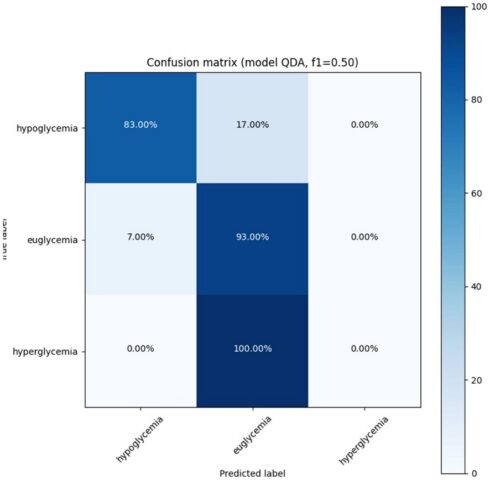
A proof-of-concept study reports that a non-invasive EEG-based approach can separate hypoglycemic from non-hypoglycemic states in people with type 1 diabetes, with a quadratic discriminant analysis classifier reaching 96.2% accuracy on a limited dataset. Hypoglycemia was accompanied by characteristic changes in the delta and beta bands, which the authors say points to a non-invasive, real-time route to early warning.

ERP-XTTN: Calibration-Free ERP Decoder Comes within 0.025 AUROC of the Best Baseline

Researchers at the University of Colorado Boulder have built ERP-XTTN, a cross-attention model that classifies event-related potentials (ERPs) in users it has never seen, with no per-user calibration. Across three public datasets and eight ERP components, it trailed the best baseline by 0.025 AUROC on average using only three channels. The work appeared in the Journal of Neural Engineering.

Kunming Team Maps Why BCI Performance Has a Ceiling, and How to Push It

A team at Kunming University of Science and Technology, in southwestern China's Yunnan province, has published a paper in the Journal of Biomedical Engineering analyzing how inherent limitations set the capability boundaries of brain-computer interfaces (BCIs). Dynamic neural coding, inter-individual variability, low signal-to-noise ratio, partial observability and paradigm dependence jointly impose upper limits on decoding accuracy, information transfer rate, complex intention decoding, user experience and system stability. The authors propose information enhancement, adaptive decoding, human-machine collaboration and system optimization, arguing that gains will come from extracting more from the neural signal rather than from overcoming the underlying limits.

Diffusion Inverse Filtering Lifts BCI Emotion Recognition With Fewer Electrodes

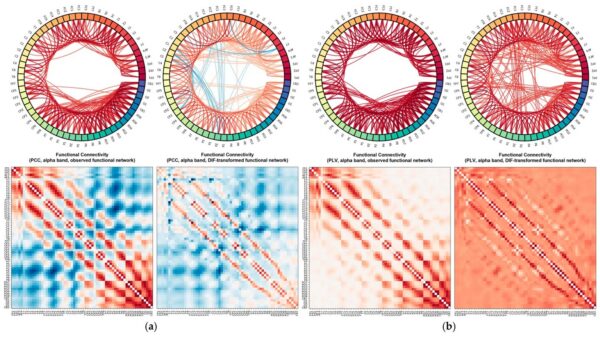
A team at Chiba University in Japan has proposed Diffusion Inverse Filtering (DIF), a signal-processing method that undoes the spatial smearing volume conduction introduces into EEG, sharpening the functional-connectivity features that brain-computer interfaces (BCIs) rely on. Tested on an emotion-recognition task, DIF generally improved performance as electrodes were thinned out, and it is compatible with existing BCI pipelines. The work appeared in Brain Sciences on August 27, 2026.

Embodiment and Simulator Sickness Map to Distinct EEG Patterns in XR-BCI

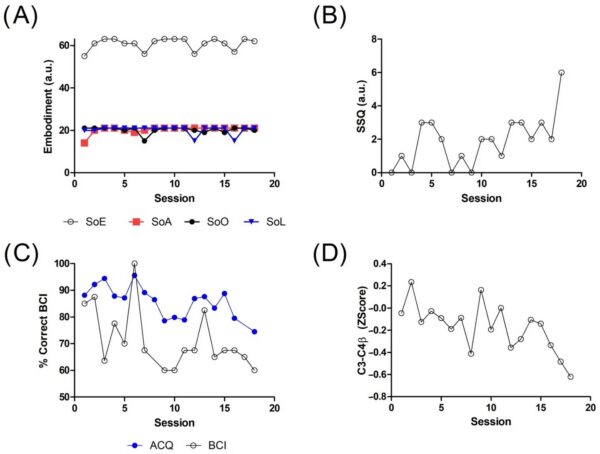
A single-case study of a participant with chronic spinal cord injury found that sense of embodiment was positively associated with frontal theta activity, while simulator sickness was negatively associated with sensorimotor beta activity, during extended reality brain-computer interface (XR-BCI) use. Analyzing 17 XR-BCI sessions with Bayesian correlation and multiple linear regression, researchers at Escola Superior de Saúde do Alcoitão, Universidade de Aveiro and Universidade Católica Portuguesa found simulator sickness to be the only variable independently associated with sensorimotor beta activity, a result they report as robust; the study appeared in Life on August 27, 2026. Different dimensions of subjective experience during XR-BCI operation therefore appear to have partly distinct neurophysiological correlates, a basis for reading user experience from EEG in real time and tuning BCI training and interaction design.

Tianjin University's MTGNet Denoises EEG, Lifting Fatigue Detection by Over 6 Points

EEG signals are only microvolts strong, so blinks, jaw clenching and muscle activity easily contaminate them. Researchers at Tianjin University and Tiangong University in northern China proposed MTGNet, a framework that suppresses these artifacts while preserving the information downstream tasks need. On the public EEGDenoiseNet dataset, it cut spectral relative root-mean-square error by 18.9%, 31.5% and 14.0% for EMG, EOG and mixed artifacts respectively; on a real-world fatigue EEG dataset, it raised classification accuracy by 6.20 to 6.69 percentage points over unprocessed input. Adapting the framework to a new task takes only 0.33 million low-rank adaptation (LoRA) parameters and no paired clean EEG reference.

DMG-GCN Decodes Air Traffic Controller Workload From EEG at 80.30% Accuracy

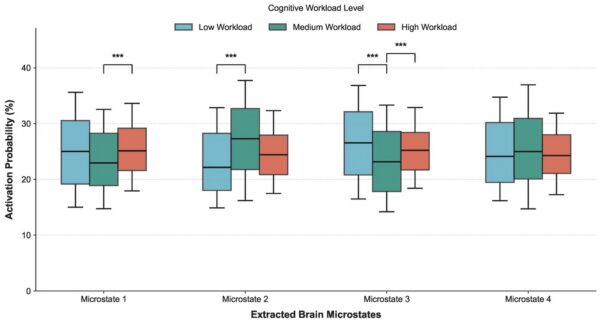
In cross-subject decoding across simulated multi-level air traffic control tasks, the DMG-GCN model reached 80.30% average accuracy and a 78.63% average F1-score, outperforming state-of-the-art baselines. Built by researchers at Nanjing University of Aeronautics and Astronautics and other institutions, the dynamic microstate-guided graph convolutional network targets the inter-subject variability in controllers' EEG that has held back passive brain-computer interfaces for adaptive automation.

Post-Quantum Encryption Adds Just 0.45 ms of Latency to a BCI Link

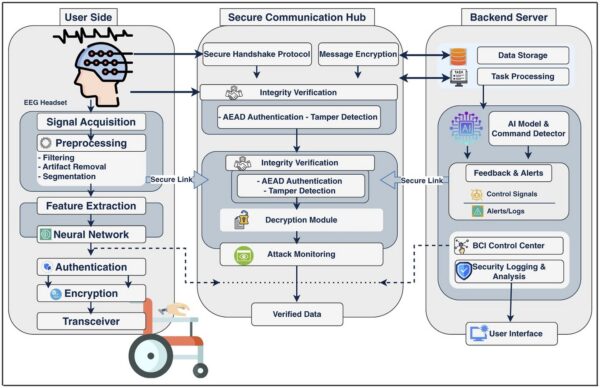
A framework called PQ-NeuroLink adds just 0.45 ms of p95 latency over an unsecured baseline in the most constrained Bluetooth Low Energy single-hop condition, while holding packet delivery at 99.0%. Wireless links between brain-computer interface devices have to be both secure and low-latency, and quantum computers threaten the cryptography they currently rely on. By separating authenticated session establishment from the symmetric streaming path, the framework offers a reproducible communication-layer foundation for secure next-generation BCI deployments.

BCIs Move into Orthopedic Rehab, Targeting Muscle Inhibition after Surgery

Brain-computer interfaces are moving out of neurology and into orthopedic rehabilitation, according to a review arguing that BCIs can raise corticospinal excitability and induce neuroplasticity by decoding movement-related neural signals and closing a feedback loop between central and peripheral systems. The target is postoperative muscle inhibition caused by insufficient central motor drive; available evidence suggests motor imagery-based BCI training improves quadriceps voluntary activation and limits strength loss after ACL reconstruction, though the authors cite thin mechanistic evidence, patient heterogeneity and a lack of standardized protocols as barriers to translation. The review, by researchers at the First Affiliated Hospital of Jinan University in southern China's Guangzhou and other institutions, was published on August 25, 2026, in the Chinese Journal of Reparative and Reconstructive Surgery.

Wireless EEG Use Climbs in Children With Developmental Disabilities, BCI at 28.1%

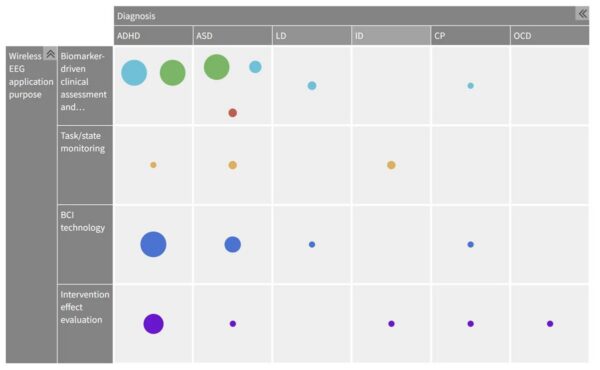
Researchers at Yonsei University in South Korea and the University of Toronto reviewed 64 studies covering 3,103 participants and found wireless EEG increasingly used in research on children with developmental disabilities, with brain-computer interfaces accounting for 28.1% of the included studies. BCI work favored low-channel, dry-electrode, consumer-grade devices, while biomarker-driven studies used higher channel counts and signal fidelity; reporting on data quality was thin, with 85.9% of studies giving no validation against wired EEG and 79.7% not specifying impedance thresholds. Published August 25, 2026 in the Journal of Medical Internet Research, it is the first scoping review to map wireless EEG use across a broad spectrum of developmental disabilities in children.

Tianjin University Team Cuts EEG Channels Without Losing Decoding Accuracy

A team at Tianjin University in northern China has built a graph neural network framework that jointly optimizes EEG channel selection and classification, picking a small subset of channels for motor imagery decoding while holding accuracy close to that of the full electrode set. Reported in the journal Chaos, the method was validated on three datasets — BCI Competition IV 2a, High Gamma and a newly collected set — and could cut system complexity for uses such as neurorehabilitation.

Interpretable BCI Framework Pairs Emotion Recognition With Thought-to-Speech Decoding

A new study proposes an interpretable brain-computer interface framework that combines affective state recognition with EEG decoding to enable emotion-aware thought-to-speech. Tested on public imagined-speech EEG datasets in subject-independent settings and scored on accuracy, precision, recall, F1-score, inference speed and interpretability, the framework improved decoding reliability over conventional opaque models and produced clinically meaningful explanations, the authors report. They present it as a practical basis for assistive communication tools for people with paralysis, amyotrophic lateral sclerosis, locked-in syndrome and other conditions that disrupt natural speech.

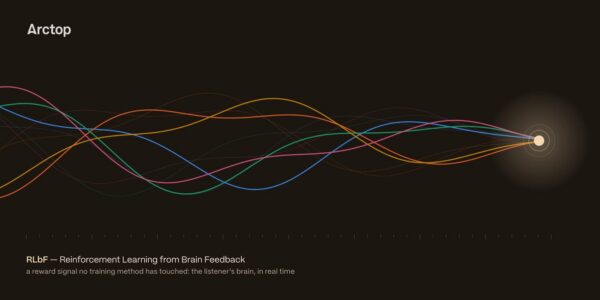
Arctop Unveils RLbF, Which Trains LLMs on Real-Time EEG Feedback

Arctop has published a companion article to its paper introducing Reinforcement Learning from Brain Feedback (RLbF), a framework that decodes real-time EEG into cognitive states such as workload and stress and uses them as reward signals to train large language models. Unlike RLHF, which depends on sparse, subjective feedback given after the fact, RLbF supplies continuous, involuntary signals that let a model sense in real time how its words land in a listener's brain, which the article says improves communication. It is the first use of brain signals to train a language model and is already running in Arctop's Isaac app, though it adapts on a single dimension, cognitive workload, and technical details are not fully public.

Phase-sliding oscillation lifts async BCI to 94.2%

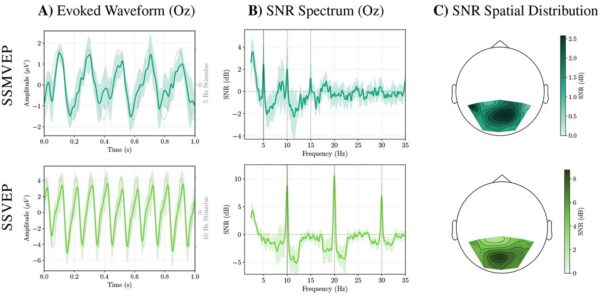
Phase mismatch between live EEG and fixed templates has long been the weak point of asynchronous steady-state visual evoked potential (SSVEP) brain-computer interfaces, which are seen as a promising route to real-world control. A new method, PSO-AC, exploits a phase-sliding oscillation phenomenon the authors observed and validated. Offline, 22 participants produced a mean control/non-control accuracy of 94.2% from just two seconds of EEG data, a result the authors say outperforms a state-of-the-art baseline; 9-class decoding also kept its edge across different time delays. Online, in robotic-arm experiments, the method delivered more stable command triggering and higher control efficiency, with the command cost per successful trial falling from 4.30 to 1.14. The paper was published in the International Journal of Neural Systems on August 21, 2026.

Dual-View Network Reaches 67.74% on Handwriting-Imagery EEG

DRDNet separates spatial EEG features into two temporal views, models them with a bidirectional Mamba encoder and a Transformer, and then combines them through dynamic fusion and LSTM aggregation. On a public dataset, it reached 67.74% accuracy for imagined Chinese-character strokes and 62.51% for imagined pinyin vowels, outperforming seven EEG-decoding baselines.

FDA Clears FIND Neuro CN-Suite Localization Tool

The US Food and Drug Administration cleared CN-Suite, source localization software from FIND Surgical Sciences Inc., doing business as FIND Neuro, on August 16, 2026, finding it substantially equivalent under submission number K260563 via the Traditional 510(k) pathway. FDA lists the device as Source Localization Software for Electroencephalograph or Magnetoencephalograph, a Class II device under regulation number 882.1400, reviewed by the agency's neurology advisory committee. Such software works back from electrical or magnetic fields recorded at the scalp to the intracranial origin of the signal, supporting presurgical planning such as locating epileptic foci.

WABO Appoints Speech-Cognition Researcher Jianwu Dang as Joint Scientist

WABO appointed Jianwu Dang to its Scientific Advisory Board and named him joint scientist. Dang, a researcher at the Shenzhen Institutes of Advanced Technology and a distinguished professor at Shenzhen University of Advanced Technology, will support task-conditioned intent models that combine EEG, EMG, speech, text and task context; WABO said the work is not aimed at context-free mind reading.

Few-Shot Calibration Raises EEG Emotion Decoding Accuracy to 0.77

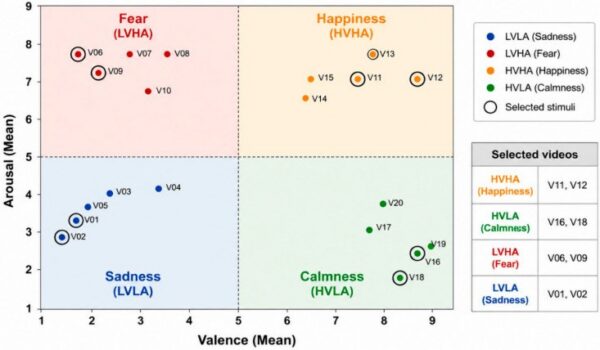
Researchers at Walailak University in Thailand tested EEG-based emotion recognition under auditory stimulation, scoring valence and arousal. Discrete wavelet transform features reached 0.88 accuracy when classifiers were trained and tested on the same subject, but leave-one-subject-out evaluation fell to near chance, exposing how far EEG emotion signatures differ between people. Few-shot adaptation closed part of that gap: with 75% of a new subject's calibration data, functional connectivity features reached 0.77.

BLCU Team's Falsifiable Substitution Test Keeps 0.968 AUC After Target Events Are Removed

Brain-computer interface decoders can guess the right label using information unrelated to the target mental state. A team at the School of Psychology, Beijing Language and Culture University (BLCU), proposes a falsifiable substitution-test standard: candidate evidence must persist in disjoint data, survive capacity-matched substitutions of physical organization or listener templates, and remain testable after target events are excluded. Across six EEG datasets (41 participants), averaging four neural-speech margin metrics brought 5-second decoding to what the authors call a leading level; in two hierarchical interfaces, parent-stream error scores kept AUCs of 0.968 and 0.965 after all target-command events were excluded. The framework offers a test for attributing evidence in neuroscience and BCI.

P300 BCI Reads Silently Chosen Digits in a Granada Classroom

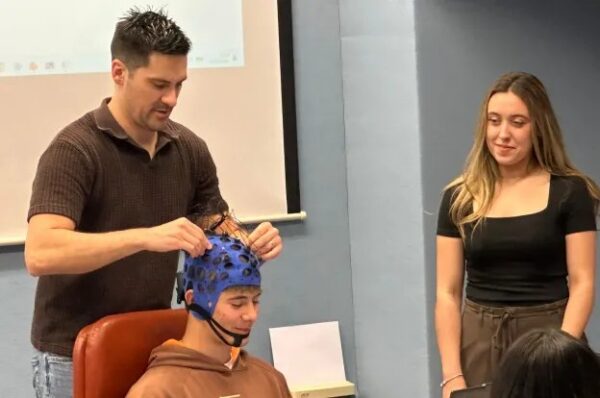
A team from the University of Granada in Spain took a P300 brain-computer interface into a secondary school classroom, using a Bitbrain Versatile EEG system to identify a digit a volunteer had silently chosen, in front of nearly a hundred students. The demonstration grew out of a thesis by industrial electronic engineering student Marta Rodríguez Comino, supervised by Dr. Joaquín T. Valderrama and Dr. Iván López Espejo. The water-based portable EEG system decoded the attention signals using principal component analysis and a support vector machine.

Air Force Medical University Releases Multi-Day fNIRS Stroop Dataset from 55 Adults

Researchers at Air Force Medical University have published a functional near-infrared spectroscopy (fNIRS) dataset in Scientific Data: frontal hemoglobin responses from 55 young adults, each recorded across three color-word Stroop sessions spread over about two weeks, with more than 30 trials per condition. The authors offer it for work on conflict inhibition, for building decoders for neurofeedback training, and for training large-scale cross-subject fNIRS models.
© 2026 BCIwiki.com Digest Topics Tips Subscribe Revisions About