/ EN

Industry Platforms

54 entries

The BCI industry is scaling from lab to market, with governments establishing dedicated industry zones and service platforms. This topic covers BCI industry clusters, incubators, government policies, and venture funding in China and worldwide.

September 2026

Anhui Pushes BCI Milestones to 2028, Hands Research Lead to USTC

Anhui issued a 2026-2030 BCI action plan on June 15, 2026 that sets its near-term milestones in 2028 rather than 2027 and frames every target as a minimum, including at least three approved invasive BCI clinical trials. Research leadership goes to the University of Science and Technology of China, with Hefei as the hub, Bengbu handling key components and Wuhu clinical translation.

Beijing's BCI Plan Sets No Output Targets, Bets on Companies Instead

Beijing issued China's first provincial-level brain-computer interface (BCI) action plan on January 7, 2025, setting every 2027 and 2030 target in terms of companies and platforms rather than output or revenue. The plan calls for three to five unicorns or would-be unicorns by 2027 and around 100 innovative small and medium-sized firms by 2030. On the payment side, Beijing prices invasive BCI implantation at RMB 7,980 per procedure and covers all three BCI service fees under Category A of basic medical insurance, limited to four hospitals.

Shanghai Aims to Partially Restore Sight With BCIs by 2030

Shanghai's science and technology commission issued a BCI action plan on January 10, 2025, pledging to help blind patients partially regain sight by 2030 and to have more than five invasive or semi-invasive products complete medical device type testing by 2027. The city's healthcare security bureau created three BCI service fee items in August 2025 but left prices to hospitals and explicitly excluded them from basic medical insurance payment.

Sichuan Targets 3,000 Invasive BCI Operations a Year by 2030

Sichuan's industry department and seven other agencies issued a BCI and human-machine interaction plan on May 12, 2025, targeting 3,000 invasive BCI operations a year by 2030 and the registration of three invasive and five non-invasive products by 2027. The province prices BCI services in five tiers by hospital grade, with implantation ranging from RMB 6,583 to RMB 4,389, all paid out of pocket.

Shandong Health Commission Leads 16-Agency Push on BCI Clinical Validation

Shandong's health commission and 15 other agencies issued a BCI clinical translation plan on July 7, 2026, following a 2025 industry plan led by the provincial science department. The 14-measure plan sets up a clinical research alliance and a provincial clinical database, cuts review time for Class II devices to 90 working days, and targets more than 30 multicenter validation projects and a RMB 2 billion industry by 2028.

Jiangxi Sets 10-Day Clock for Mutual Recognition of BCI Ethics Reviews

Jiangxi issued BCI support measures on November 26, 2025 that set no numeric targets but called for mutual recognition of clinical research ethics reviews, and its health commission followed on May 26, 2026 with guidance requiring participating sites to finish recognition reviews within 10 working days. Invasive projects for neurological or psychiatric treatment also need provincial expert review within 20 working days.

Jiangsu Opens BCI Trials to Nuclear, Mining and Power Industries

Jiangsu's industry department and eight other agencies issued a BCI action plan in March 2026 that invites companies in hazardous chemicals, nuclear power, mining and electric power to pilot the technology first. Nearly all its numeric targets, including at least 20 registered medical products, fall in 2030, and a widely cited RMB 6,600 implant price appears only in a 2025 draft, not in the province's final pricing notice.

Tianjin Stakes BCI Product Targets on Non-Invasive Devices

Tianjin's municipal government issued a 2026-2030 BCI action plan on May 26, 2026 that limits every numeric product target to non-invasive devices, aiming for more than ten in large-scale clinical use by 2030, while invasive products get a single unquantified approval goal. The plan also targets an industry fund cluster of more than RMB 10 billion by 2030.

Guangdong Plans 200 BCI Wards and Splits Roles Between Shenzhen and Guangzhou

Guangdong's provincial Party science and technology committee office issued a 2026-2030 BCI plan on June 5, 2026 that calls for 200 BCI hospital wards serving more than 500,000 patients cumulatively by 2030. The plan assigns invasive devices and signal decoding to Shenzhen and non-invasive systems to Guangzhou, and follows provincial BCI prices set nine months earlier, with implantation capped at RMB 6,600.

Zhejiang, First to Reimburse BCI Fees, Cuts Device Review to 40 Days

Zhejiang became the first Chinese province to reimburse a BCI service when it covered non-invasive fitting fees under Category B insurance from September 1, 2025, limited to smart bionic prosthesis fittings. Its 18 industry-academia-research measures, dated July 16, 2026, cut review of qualifying Class II BCI devices to 40 working days and offer research hospitals up to RMB 8 million per project.

Tsinghua Team Launches TrustBCI to Share BCI Data Without Moving It

Training accurate BCI models depends on large, diverse EEG datasets, but that data is usually locked inside individual hospitals and labs, stored in inconsistent formats and restricted by privacy rules, which makes it hard to share. TrustBCI brings three functions into one platform: turning raw BCI datasets into assets that can be exchanged, using incentives to keep institutions contributing data, and letting users run computations without access to the raw records. The platform demonstrates two workflows, controllable data synthesis, which generates new datasets, and privacy-preserving query, which returns only query results. That suggests BCI models could be trained jointly across institutions without first pooling the data in one place.

Neuracle Registers Cortical Electrode in China's NMPA Device Identifier Database

Neuracle Medical Technology (Shanghai) Co., Ltd. has registered a cortical electrode, model 1014-35, in the medical device unique identification (UDI) database of China's National Medical Products Administration (NMPA), under registration certificate Guoxiezhuzhun 20263120536. Neuracle's product line spans EEG acquisition equipment and implantable electrodes. The electrode belongs to an implantable EEG electrode kit (cortical electrode, blank electrode, electrode dilator, tunneler, torque wrench, lead fixation clip, fixation screws and electrode protective sleeve) that holds its own registration certificate and is also a component of an implantable BCI hand motor function compensation system. That system comprises a BCI implant, the electrode kit, an EEG signal transceiver, a pneumatic glove, a single-use surgical toolkit, and three software packages for EEG decoding, medical testing and clinical management.

August 2026

Shenzhen Drafts China's First BCI Industry Rules, Requiring Separate Brain Data Consent

The Shenzhen Municipal Bureau of Science, Technology and Innovation (深圳市科技创新局) in southern China and the city's Bureau of Justice have opened public consultation on draft regulations to promote the brain-computer interface industry in the Shenzhen Special Economic Zone, a status that carries authority to write binding local rules of the city's own. According to Jiemian News, a Chinese business news outlet, the draft defines a BCI as technology that opens an information channel between the brain and external devices for coordinated interaction between biological and machine intelligence, and states that the municipal government shall write BCI industry development into the city's economic and social development plan and its science and innovation plan. On data, the report says processing brain data and other sensitive personal information would require separate written consent from the individual, alongside strict compliance with national rules on cross-border data transfer; legislating specifically for the BCI industry in special economic zone regulation form is a first in China.

Seven Chinese Ministries Put Brain-Machine Tech in Elder Care Product Plan

Seven Chinese ministries, led by the Ministry of Commerce and including the National Development and Reform Commission and the Ministry of Industry and Information Technology, jointly issued implementing opinions on expanding and upgrading consumer goods (《关于推动商品消费扩容升级的实施意见》). In a section on products for older adults, the document calls for stronger R&D on key technologies and core components and for wider use of brain-machine integration and artificial intelligence in age-friendly products and rehabilitation aids. Brain-computer interfaces have until now figured mainly in China's science and industrial planning documents; framing them as consumption policy aimed at two named product categories is new, and the text was published in the State Council's policy document database, the central government's official repository for such documents.

Guangdong Drafts 2027 Rules for a Standalone BCI Research Track

The Guangdong Provincial Department of Science and Technology in southern China (广东省科学技术厅) has opened public consultation on the 2027 application guidelines for a brain-computer interface track within the province's key-fields R&D program, one of the main channels through which Guangdong allocates research money. A dedicated track gives the field its own entry point rather than making it compete inside a broader category. Because such guidelines normally set research directions, funding levels and eligibility, comments at this stage bear directly on where next year's money goes; the notice went up on the department's own website and does not carry the text of the guidelines.

Chinese Academy of Sciences Team Releases BCIJelly Toolchain Unifying 18 BCI Datasets

BCI research has long been slowed by inconsistent data formats, divergent decoder implementations and incompatible deployment toolchains. BCIJelly standardizes 18 BCI datasets into inputs ready for AI training and integrates 15 benchmark decoders and 80 reusable modules. Its automated architecture search generates task-specific decoders without manual design and can extend into a large language model-driven closed-loop mode that supports single-task, multitask and cross-species decoder design; the system also offers interactive visualization software that requires no coding. A single-command pipeline compiles trained decoders onto neuromorphic hardware, cutting power consumption 30- to 50-fold while maintaining decoding performance. The work has been validated in humans, macaques and mice across five paradigms: motor, visual, speech, emotion and auditory. It is a preprint that has not been peer reviewed.

Vivani Merges Cortigent Into Nasdaq-Listed ClearOne, Giving Orion Implant a New Parent

The Orion visual neuroprosthetic system, originally developed by Second Sight Medical Products, is changing parent companies again, Neurotech Reports said. Vivani Medical has agreed a reverse merger with Nasdaq-listed ClearOne under which its Cortigent unit becomes a wholly owned ClearOne subsidiary; ClearOne will be renamed Cortigent Holdings Inc. and is expected to trade as CRGT. ClearOne agreed as part of the transaction to file a Form S-1 registration statement to raise $10 million to $15 million, and Cortigent plans a pivotal trial of Orion in about 60 patients, though funding remains a challenge.

China bet $1B on BCI in 6 months. Who got the money?

China's brain-computer interface sector recorded 47 funding rounds in the first half of 2026, 38 of them disclosing terms for a combined RMB 5.38 billion (approx. $750 million). A broader tally used by Chinese financial media puts the total at 64 deals and roughly RMB 7.25 billion (approx. $1 billion). Either figure is more than double the whole of 2025 (49 deals, RMB 2.72 billion) at a comparable deal count. The record lists every deal by month — company, technical approach, round, amount, investors — and identifies three structural patterns: ultrasound and non-invasive approaches moving quickly into a field long defined by implants, Big Tech and municipal state funds entering at the same time, and nearly half of all transactions still sitting at angel or seed stage.

Zhejiang Cuts BCI Device Review to 40 Days

The General Office of China's Zhejiang Provincial People's Government issued Several Measures for Promoting Industry-University-Research Coordination in Brain-Computer Interfaces, document number Zhe Zheng Ban Fa [2026] No. 33, dated July 16, 2026 and released on August 12, comprising 18 measures in five areas. Class II BCI devices of clear clinical value may enter a special review procedure with the timeline cut to within 40 working days, while medical consumables are listed through a green channel within 10 working days. Funding comes in four tiers: up to 10 million yuan for a provincial major science and technology project, up to 8 million yuan for research hospitals deeply involved in preclinical work and product launch, up to 3 million yuan for applied basic research, and 1 million, 500,000 and 100,000 yuan for leading international, national and local standards. Beds used solely for clinical research are exempt from efficiency and DRG performance assessment.

Shanghai's Neuro Space Hits One-Year Mark: 52 Firms, World's First Invasive BCI Approved

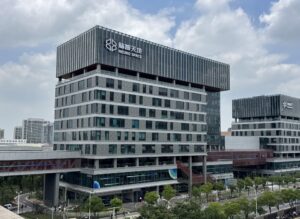
One year after its June 2025 launch, Neuro Space (脑智天地) — Shanghai's BCI industry cluster at the Hongqiao International Medical Center and China's first dedicated BCI industrial zone — has entered full operation across its 25,000 m² pilot area. As of July 2026, the cluster hosts 52 registered BCI companies and 22 startup incubators spanning flexible electrodes, BCI chips, ultrasound-based interfaces, and vision restoration. On the commercialization front, the world's first approved invasive BCI medical device, developed in Shanghai, received regulatory clearance in 2026, with its first clinical prescription issued in July. Five additional Class III devices are currently in clinical trials or under regulatory review. Shanghai accounts for nearly 60% of China's BCI financing events, totaling approximately RMB 2.117 billion. Products showcased at a recent open-day event include a non-invasive brain-controlled consumer device driven by EEG-based attention metrics, an integrated transcranial magnetic stimulation navigation system for depression treatment, and LingXi Cloud, a clinical data platform housing over 2.1 million cases of multimodal brain-disorder data at petabyte scale.

Haidian Hosts Nearly 60% of China's Key BCI Firms

Beijing's Haidian district is accelerating its push to become a hub for brain-computer interface development, with nearly 60% of China's key BCI companies based in the district, CCTV.com reported on August 6, 2026. According to the report, the Zhongguancun (Haidian) BCI Industry Cluster was formally unveiled at the 2026 Zhongguancun Forum annual meeting and now hosts more than 20 BCI projects, and an AI-plus-BCI standards testing and validation laboratory has been completed. The report did not disclose a list of the cluster's projects, the methodology behind the company figure, or further construction plans.
July 2026

Neurotech Leaders Forum Returns to imec With Europe at an Inflection Point

The second annual Neurotech Leaders Forum drew executives, investors, researchers and regulators from Europe and the United States to imec's campus in Leuven, Belgium, on June 23-24, 2026, for sessions on clinical translation, capital formation, regulatory strategy and emerging frontiers. Thomas Stieglitz of the University of Freiburg gave the Day 1 keynote, arguing for perseverance and functionalist design, and later sessions covered women's health, European BCI ventures and the region's capital and regulatory challenges. Companies showing new work included WISE SpA, with its Heron spinal cord stimulation lead, and Melora Medical, with a transcutaneous auricular vagus nerve stimulation (taVNS) device for dermatology.

Nanjing Builds Full BCI Industry Chain

Nanjing has built end-to-end competitiveness across the brain-computer interface industry chain, People's Daily Online reported on July 28, 2026. According to the report, the city earlier issued an action plan to become a national hub for BCI industry innovation and has set up a 3+3+3 BCI industry innovation system, drawing on universities including Southeast University and Nanjing University of Aeronautics and Astronautics to build 3 provincial- and ministerial-level key laboratories, and landing three core platforms covering neural signal coding and decoding, dedicated chips and brain imaging. The 2026 national BCI conference was also held in Nanjing. The report summed up the city's strengths as research, medical resources, application scenarios and capital ecosystem.

BrainAccess Rebuilds Its Board App Interface and Adds AI Assistant Jena

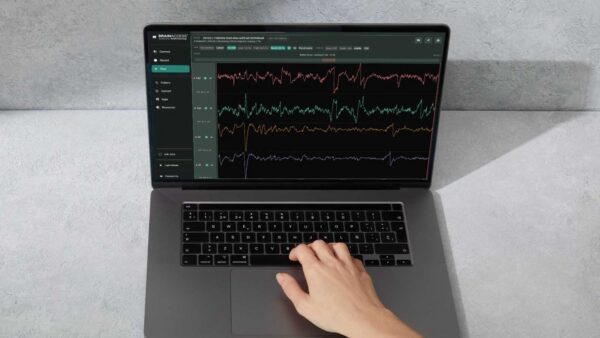
BrainAccess released a major update to its desktop application BrainAccess Board on July 27, 2026, featuring a rebuilt interface, improved functionality and a new AI assistant called Jena that monitors device and signal quality in real time. The company, which supplies EEG devices and software for neuroscience research and clinical use, said the update is aimed at ease of use and data management during EEG acquisition and analysis.

BrainAccess Releases MATLAB API for Direct EEG Data Acquisition

BrainAccess, the EEG system line from Neurotechnology, has released a MATLAB API that lets users connect its wireless dry-electrode headsets over Bluetooth, configure channels and sampling rate, start and stop data streams and pull data straight into MATLAB arrays, work that previously required Python, C or the LSL MATLAB toolbox. The toolbox installs as a single .mltbx package for desktop MATLAB R2025b or newer, mirrors the structure of the existing Python API and supports session annotations and saving directly to .mat files, so recordings can go straight into tools such as Signal Processing Toolbox and EEGLAB. BrainAccess devices, sold in MINI, MIDI, MAXI and HALO models, are widely used in neuroscience research and engineering.
© 2026 BCIwiki.com Digest Topics Tips Subscribe Revisions About