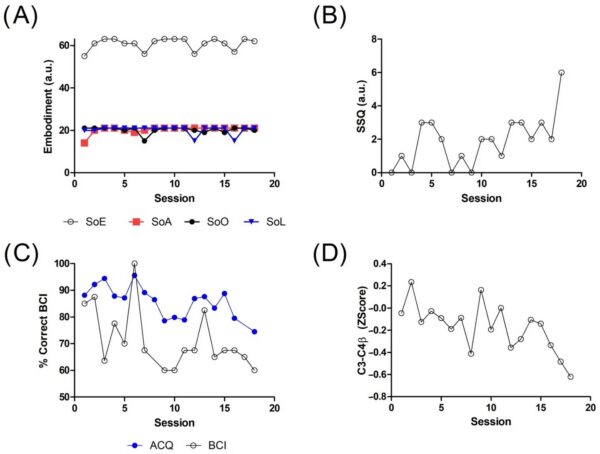
A team at Kunming University of Science and Technology, in southwestern China's Yunnan province, has published a paper in the Journal of Biomedical Engineering analyzing how inherent limitations set the capability boundaries of brain-computer interfaces (BCIs). Dynamic neural coding, inter-individual variability, low signal-to-noise ratio, partial observability and paradigm dependence jointly impose upper limits on decoding accuracy, information transfer rate, complex intention decoding, user experience and system stability. The authors propose information enhancement, adaptive decoding, human-machine collaboration and system optimization, arguing that gains will come from extracting more from the neural signal rather than from overcoming the underlying limits.
Why it matters
Most BCI coverage tracks record numbers, whereas this paper argues the records are bounded by properties of the signal itself and that gains come from using neural information better rather than removing those limits, which is a useful check for anyone deciding whether a reported decoding improvement is real headroom or benchmark noise.