
/ EN

BCIwiki — Brain-computer interface news, research and industry database

Latest

August 2026

BCI Society Workshop Tackles Outcome Measures for Pivotal Trials

A workshop at the BCI Society Meeting 2025, run with the Implantable BCI Collaborative Community (iBCI-CC), took up how clinical outcome assessments (COAs) for pivotal BCI trials should be selected, developed and validated. Participants pointed to patient heterogeneity, the absence of widely validated COAs, and the difficulty of capturing outcomes that matter in home and daily-life settings. The discussion lays groundwork for the iBCI-CC Clinical Study Endpoints Workgroup to build a transparent process for identifying meaningful aspects of health and concepts of interest, in support of regulatory approval and reimbursement.
Why it matters This is the first iBCI-CC-led push to standardize outcome assessment for pivotal trials, and endpoints rather than decoding accuracy are what regulators and payers will price, which makes a workgroup writing that definition down the least glamorous and most load-bearing step between today's feasibility studies and a reimbursed product.
DMG-GCN Decodes Air Traffic Controller Workload From EEG at 80.30% Accuracy

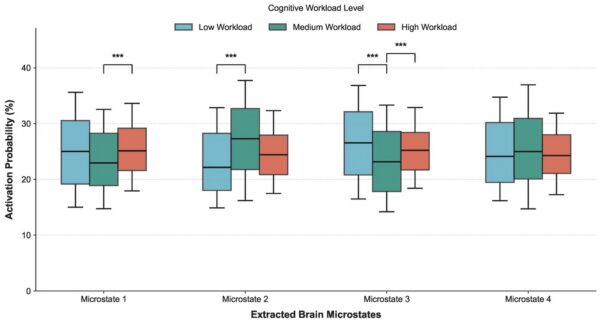
In cross-subject decoding across simulated multi-level air traffic control tasks, the DMG-GCN model reached 80.30% average accuracy and a 78.63% average F1-score, outperforming state-of-the-art baselines. Built by researchers at Nanjing University of Aeronautics and Astronautics and other institutions, the dynamic microstate-guided graph convolutional network targets the inter-subject variability in controllers' EEG that has held back passive brain-computer interfaces for adaptive automation.
Why it matters Passive BCIs in safety-critical work fail on person-to-person variance rather than on the average case, so an 80.30% cross-subject result that can also be traced to specific brain-network reconfigurations is the kind of evidence an aviation regulator would want before workload-adaptive automation goes anywhere near a live control room.

LibriBrain100 Releases Over 100 Hours of MEG Data, Some 80 From One Subject

LibriBrain100, a magnetoencephalography (MEG) dataset released on August 25, 2026, contains more than 100 hours of high-quality recordings, about 80 of them from a single subject, the deepest within-subject collection of its kind. It is meant as a standardized benchmark for neural speech decoding and ships with open-source tooling and an online competition; a further 32 subjects contribute roughly 40 minutes each to offset thin per-subject data. Using an existing decoding model, the team reported state-of-the-art results on a word-classification benchmark, which it takes as evidence of both data quality and the value of deep within-subject recording.
Why it matters Non-invasive speech decoding has been bottlenecked by how little data any one brain contributes, so 80 hours from a single subject makes it testable whether the ceiling is the sensor or the sample size, and the bundled tooling and competition make the answer comparable across labs.

Preprint: VN-SST Decodes Motor Cortex Signals With Less Training Data

A preprint introduces the von Neumann State-Space Transformer (VN-SST), a neural decoding model that is more data-efficient than a modern Transformer across three motor-cortex decoding benchmarks, with the largest gains where training data is scarce.
Why it matters Data efficiency, not peak accuracy, is what keeps intracortical decoders from working on day one of a new session, so a model that holds up on small samples is worth more to a clinical system than another point of offline accuracy, with the caveat that this is an unreviewed preprint on public benchmarks.

Motor Cortex Excitability Rises Then Falls in the Hour after Finger-Tapping Fatigue

Researchers at Sapienza University of Rome had 20 healthy young adults complete 10 consecutive blocks of finger tapping, then used transcranial magnetic stimulation (TMS) to track motor cortex excitability over the following 60 minutes. Excitability rose after the fatiguing task and drifted back to baseline, and participants whose tapping slowed most showed the largest increases. The findings were published in Clinical Neurophysiology on August 25, 2026, and the authors say they offer a framework for studying altered compensatory responses in neurological disorders.
Why it matters For closed-loop stimulation and neurorehabilitation timing this matters more than it looks: if excitability moves on a predictable arc for an hour after effort, the window in which a training session lands could change its effect. Twenty healthy young adults is not a patient cohort, so it is a timing hypothesis rather than a protocol.

BCIs Move into Orthopedic Rehab, Targeting Muscle Inhibition after Surgery

Brain-computer interfaces are moving out of neurology and into orthopedic rehabilitation, according to a review arguing that BCIs can raise corticospinal excitability and induce neuroplasticity by decoding movement-related neural signals and closing a feedback loop between central and peripheral systems. The target is postoperative muscle inhibition caused by insufficient central motor drive; available evidence suggests motor imagery-based BCI training improves quadriceps voluntary activation and limits strength loss after ACL reconstruction, though the authors cite thin mechanistic evidence, patient heterogeneity and a lack of standardized protocols as barriers to translation. The review, by researchers at the First Affiliated Hospital of Jinan University in southern China's Guangzhou and other institutions, was published on August 25, 2026, in the Chinese Journal of Reparative and Reconstructive Surgery.
Why it matters The shift worth noting is the population: post-surgical orthopedic patients are not neurologically injured, a different group from the stroke and spinal-cord cohorts BCI rehabilitation has served, and that changes both the evidence bar and the competition from conventional physiotherapy. The review is candid about the gap — thin mechanism, heterogeneous patients, no standard protocol — so read it as an agenda for trials, not a clinical indication.

Wireless EEG Use Climbs in Children With Developmental Disabilities, BCI at 28.1%

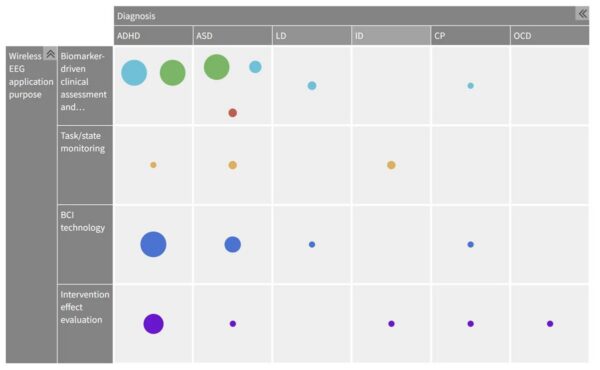
Researchers at Yonsei University in South Korea and the University of Toronto reviewed 64 studies covering 3,103 participants and found wireless EEG increasingly used in research on children with developmental disabilities, with brain-computer interfaces accounting for 28.1% of the included studies. BCI work favored low-channel, dry-electrode, consumer-grade devices, while biomarker-driven studies used higher channel counts and signal fidelity; reporting on data quality was thin, with 85.9% of studies giving no validation against wired EEG and 79.7% not specifying impedance thresholds. Published August 25, 2026 in the Journal of Medical Internet Research, it is the first scoping review to map wireless EEG use across a broad spectrum of developmental disabilities in children.
Why it matters The number that matters here is 85.9%, not 28.1%: most wireless EEG work in this population has never been checked against wired recording, so the pediatric BCI literature carries less weight than its volume suggests, and anyone building on it inherits an unquantified device-validation gap.

BCIFlex Begins China Trial of Implantable Wireless BCI in Tetraplegia

BCIFlex Medical Technology has begun a clinical trial in China evaluating the safety and efficacy of an implantable wireless brain-computer interface in patients left tetraplegic by spinal cord injury. The trial is registered on ClinicalTrials.gov as NCT07784088 and is recruiting. The sponsor is a Chinese device maker headquartered in the Haidian district of Beijing with an office in Shanghai, working on invasive ultra-thin flexible electrodes; its products include digital EEG systems and stereo-EEG depth electrodes.
Why it matters A supplier of conventional neuro-recording hardware is now sponsoring an implanted-interface study of its own, its first, which is a different order of regulatory and clinical commitment than selling EEG machines and depth electrodes.

Singapore's NUH Tests Lifescapes BCI for Hand Recovery After Stroke

National University Hospital in Singapore has registered a clinical trial (NCT07784920) evaluating Lifescapes, an EEG-based brain-computer interface, for hand motor recovery after stroke. The 32-participant study, not yet recruiting, will compare Lifescapes therapy delivered with reduced therapist supervision against conventional rehabilitation and assess whether it is operationally feasible in the local clinical setting. Lifescapes combines motor imagery practice, biofeedback, neuromuscular electrical stimulation and robotic assistance for stroke patients with severe hand paralysis; an earlier trial in 40 patients showed improvement in motor function.
Why it matters The variable under test here is therapist time, not decoding accuracy: BCI-based stroke rehabilitation only scales if a session can run with less supervision than it needs today, and this trial measures exactly that trade-off against standard care.

Chinese Hospitals Test Closed-Loop BCI Neuromodulation for Resistant Depression

A multicenter trial has begun in China to test closed-loop brain-computer interface neuromodulation for treatment-resistant depression, run jointly by the Shanghai Mental Health Center and two Beijing hospitals, Anding Hospital and Xuanwu Hospital. The study will compare closed-loop deep brain stimulation and transcutaneous auricular vagus nerve stimulation against sham stimulation, enrolling patients who have responded inadequately to standard antidepressant treatment. It uses a patient-preference design with randomized assignment within each intervention group.
Why it matters The sham arm is what makes this worth watching, since psychiatric neuromodulation results rarely survive placebo control, and running one invasive and one non-invasive route against the same sham comparator is a design whose findings could travel beyond China.

© 2026 BCIwiki.com Digest Topics Tips Subscribe Revisions About