
/ EN

Spinal Cord Injury

8 entries

Paralysis from spinal cord injury is one of the most important clinical use cases for brain-computer interfaces. This topic collects BCI clinical trials, rehabilitation programs, and assistive technologies for SCI patients, from high-level tetraplegia to incomplete injuries.

September 2026

Peking University Third Hospital Joins Chinese Invasive BCI Trial for Spinal Cord Injury

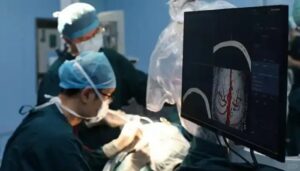
Peking University Third Hospital, a top-tier (Grade 3A) general hospital in Beijing whose neurosurgery department is one of its key specialties, is taking part in a clinical trial of a Chinese-developed invasive brain-computer interface (BCI), neurosurgeons Yang Jun and Yu Tao wrote in the 16th issue of China Hospital CEO magazine. The trial enrolls patients with spinal cord injury and relies on a multidisciplinary team (MDT) to restore hand function after implantation. Invasive BCIs read neural signals through electrodes placed inside the skull or on the cortical surface, so surgery and rehabilitation depend on close coordination among neurosurgery, rehabilitation and imaging departments. The disclosure marks one step in Chinese hospitals' clinical validation of domestic systems. Public information has not named the system or disclosed enrollment, follow-up milestones or primary endpoints, and no efficacy or safety data have been released.
August 2026

BCI-guided FES trial targets gait in spinal cord injury

A new clinical trial at Brazil's Santos Dumont Institute will test whether brain-computer interface (BCI)-guided functional electrical stimulation (FES) can improve muscle activation and gait in people with spinal cord injury. The institute is a well-known Brazilian center for neurorehabilitation research. Registered on ClinicalTrials.gov as NCT07768930 and first posted on August 17, 2026, the study is active but not yet recruiting. The intervention involves ankle dorsiflexion rehabilitation: patients wear an EEG cap, the system detects motor-imagery-related brain signals in real time, and when an intention is detected, it triggers FES to stimulate the tibialis anterior muscle to assist ankle dorsiflexion. Primary outcomes are improvements in muscle activation patterns and gait kinematics. The trial is at an early stage, with enrollment details not yet disclosed.

Tongji Hospital Performs Central China's First Fully Invasive BCI Implant

Surgeons at Tongji Hospital in Wuhan, central China, implanted a 256-channel brain-computer interface on 3 August using electrodes 2 to 3 micrometres thick, compared with semi-invasive arrays that are millimetres thick, sit outside the dura and carry eight contacts. Eastern China's Shandong performed its own first provincial case in late July. Hubei now covers all three BCI approaches clinically.
July 2026

Eastern China's Shandong Performs Its First Invasive Brain-Computer Interface Implant

Surgeons in eastern China have implanted a brain-computer interface in a man who has been unable to move his limbs for more than two years. Eight ultraflexible electrodes sit 4 mm into his cortex, wired to a chip mounted on the skull. It is the first invasive BCI operation performed in Shandong province, and the patient now begins up to six months of training to control devices by thought.

Portugal's University of Aveiro Registers VR-Based BMI Trial in Spinal Cord Injury

The University of Aveiro in Portugal has registered a study (NCT07732868) testing a brain-machine interface protocol that pairs virtual reality with sensory feedback, visual, auditory and tactile, and/or an exoskeleton in people with spinal cord injury. Participants attend 12 monitored sessions, one a week, each lasting roughly one to two hours, moving a virtual avatar through motor imagery while non-invasive EEG records brain activity. The study focuses on changes in brain activity that track clinical improvement and on how information moves between brain regions, and it collects age, sex, injury level and type, time since injury, functional grade and neuropathic pain; it is at the registration stage with no results yet.

EPFL launches clinical study of brain-controlled spinal cord stimulation for lower-limb recovery

Ecole Polytechnique Fédérale de Lausanne (EPFL) has launched a clinical study evaluating the preliminary safety and effectiveness of a cortical recording device (ECoG) combined with lumbar targeted epidural electrical stimulation (EES) to restore voluntary lower-limb motor function in participants with chronic spinal cord injury and mobility impairment. The study aims to establish a direct bridge between motor intention and the spinal cord below the lesion, potentially improving or restoring voluntary leg control and promoting neurological recovery when combined with neurorehabilitation.
August 2024

University of Miami Launches Trial Using BCI to Trigger Spinal Cord Stimulation

The University of Miami has opened a clinical trial testing whether a brain-computer interface can decode upper-limb motor intention from EEG or ECoG and use it both to trigger epidural spinal cord stimulation (ESCS) and to control assistive devices in people with spinal cord injury. The study was first posted on August 1, 2024, and is recruiting.
May 2024
© 2026 BCIwiki.com Digest Topics Tips Subscribe Revisions About