
/ EN

BCIwiki — Brain-computer interface news, research and industry database

Latest

August 2026

MRieHy Framework for Online MI-BCI Adaptation

Researchers propose MRieHy, a multi-feature Riemannian hypergraph framework for online test-time adaptation of motor imagery BCI decoding. It aligns multi-day distributions via Riemannian means of covariance matrices, builds one hypergraph with Riemannian distance and a second with cosine similarity, fuses them with adaptively learned weights, and decodes buffered online samples after Riemannian alignment. On a private four-class ECoG dataset and two public four-class EEG datasets, MRieHy shows notable gains over state-of-the-art baselines, targeting the cross-day transferability and online operation that clinical MI-BCI still lacks.
Why it matters Cross-day drift is a persistent barrier to clinical MI-BCI; MRieHy blends Riemannian geometry with hypergraph structure for a testable fix, and its public-dataset validation makes the claim easy to check.
Stanford's Palanker Wins Defense Health Agency Award for PRIMA Retinal Implant

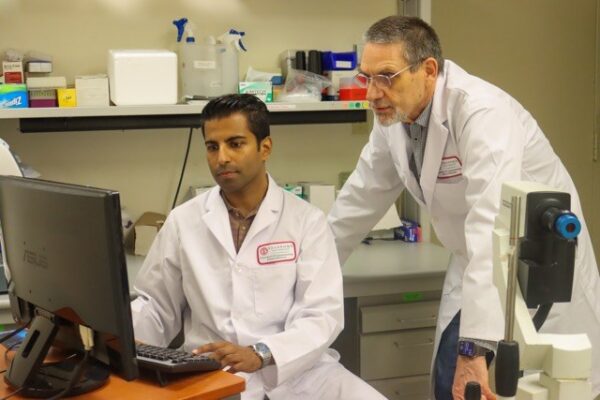
Daniel Palanker, a Stanford professor and affiliate of the university's Wu Tsai Neurosciences Institute, has won the U.S. Defense Health Agency's Outstanding Research Accomplishment award for the PRIMA retinal implant, designed to restore central vision after photoreceptor loss. A 2-mm chip sits beneath the retina and is driven by infrared light from augmented-reality glasses, converting that light into current that stimulates the next layer of neurons. A 2025 paper in the New England Journal of Medicine reported that the device let legally blind patients with advanced dry age-related macular degeneration read letters and words, and the award recognizes its potential for military personnel with laser-damaged retinas.
Why it matters Nominated by the Air Force Office of Scientific Research, this is the first retinal neuroprosthesis recognized by a U.S. defense health body — evidence that vision prostheses now have a military constituency alongside the macular degeneration market. The team's preclinical pixels, one-fifth the size of those in the clinical implant, are the variable to watch, since resolution is what bounds how much a patient can actually read.

BCI Pricing in Eleven Chinese Jurisdictions: Implantation RMB 4,389-7,980, Insurance Coverage in Two

Eleven Chinese provincial-level jurisdictions had published prices for brain-computer interface medical services. The invasive implantation fee runs from RMB 4,389 at the lowest hospital tier in Sichuan to RMB 7,980 in Beijing (approx. $650 to $1,180 at RMB 6.74 to the dollar, the mid-August 2026 rate), and the non-invasive fitting fee from RMB 643 to 990. Sichuan, Hainan, Qinghai and Xinjiang tier prices by hospital grade, Shanghai leaves the amount to each hospital, and Jiangsu's three figures appear only in a July 2025 draft. Beijing lists all three fees as Class A at four named hospitals; Zhejiang covers the fitting fee as Class B, limited to prosthetic fitting. Sichuan, Jiangxi, Hainan, Qinghai and Xinjiang assign Class C, Shanghai excludes the fees, and Hubei and Guangdong have prices without a coverage decision.
Why it matters Pricing, itemized billing and reimbursement from the insurance fund are three separate steps; pricing establishes only that a hospital may bill.

Implantable Motor BCIs Need a Unified Clinical Outcomes Framework

A paper in *Neurorehabilitation and Neural Repair* examines the outcome measures needed as implantable motor BCIs move from safety and feasibility studies toward regulatory approval, reimbursement and sustained clinical use. It calls for valid and reliable assessments that satisfy regulators and payers while reflecting activities that matter to people with severe motor impairment.
Why it matters Without shared functional outcomes, implantable BCIs risk stalling between impressive demonstrations and therapies that regulators, payers and patients can evaluate consistently.

FDA Clears FIND Neuro CN-Suite Localization Tool

The US Food and Drug Administration cleared CN-Suite, source localization software from FIND Surgical Sciences Inc., doing business as FIND Neuro, on August 16, 2026, finding it substantially equivalent under submission number K260563 via the Traditional 510(k) pathway. FDA lists the device as Source Localization Software for Electroencephalograph or Magnetoencephalograph, a Class II device under regulation number 882.1400, reviewed by the agency's neurology advisory committee. Such software works back from electrical or magnetic fields recorded at the scalp to the intracranial origin of the signal, supporting presurgical planning such as locating epileptic foci.
Why it matters A date-anchored regulatory record: the K number, decision date and device classification together fix how FDA currently treats source localization software, a baseline for comparing later clearances on the same pathway.

AI Model Fusing EEG and Gaze Hits 91.8% Accuracy in Attention Recognition

Researchers have built an AI model that combines EEG with visual gaze to score a learner's attention and cognitive load at the same time, reporting 91.8% accuracy on attention recognition and 89.4% on cognitive load, with generalization validated on public datasets. They present it as an answer to the noise sensitivity of single-signal monitoring in online learning.
Why it matters Accuracy numbers in education-EEG papers are cheap; the figure worth watching here is the cross-dataset generalization, which is what separates a lab result from something a classroom product could rely on.

Wearable BCI Hits 79.38% Online Decoding Accuracy

The study was published in ITM Web of Conferences on August 14, 2026, addressing the demand for portable, real-time brain-computer interface systems in stroke rehabilitation by completing the physical integration and online experimental validation of a wearable system. The system uses a specialized EEG headset with miniaturized acquisition circuits secured via pogo pins, featuring 10 core recording channels positioned over the sensorimotor cortex. During the evaluation phase, the research team recruited 6 healthy subjects and 2 stroke-affected hemiplegic patients for closed-loop experiments based on motor imagery and motor attempts. Common Spatial Pattern was used for spatial feature extraction and Linear Discriminant Analysis for intention classification, with personalized sub-band optimization applied to further improve recognition. The authors report an average offline recognition rate of 84.91% and a classification accuracy of 79.38% in the more challenging online real-time testing. Analysis of spatiotemporal spectra and R² value distributions validated activation patterns in the sensorimotor areas during motor intention triggering, which the authors present as support for advancing the technology from laboratory settings toward community rehabilitation.
Why it matters Offline accuracy is cheap to report; closed-loop online accuracy on actual hemiplegic patients is not. The number to watch is the gap between 84.91% offline and 79.38% online, because it puts a figure on what the lab-to-community transition actually costs a rehabilitation device.

EEG2MOTION: Full-Body Motion From Brain Signals

Researchers debut EEG2MOTION, billed as the first EEG-motion-text dataset for human motion synthesis, with nearly 20,000 paired samples across thousands of motions, plus a generative framework (EMMM) that couples an EEG encoder with a motion decoder to synthesize coherent full-body motions from non-invasive brain activity. Multimodal contrastive learning aligns non-invasive EEG embeddings with text, video and motion representations to decode high-level semantics. The team says it is the first work to generate diverse whole-body motions from non-invasive brain signals.
Why it matters Open-vocabulary full-body motion synthesis is a frontier beyond single-command BCI control; EEG2MOTION supplies the first dataset and generative baseline for it, so the preprint matters even before peer review.

WABO Appoints Speech-Cognition Researcher Jianwu Dang as Joint Scientist

WABO appointed Jianwu Dang to its Scientific Advisory Board and named him joint scientist. Dang, a researcher at the Shenzhen Institutes of Advanced Technology and a distinguished professor at Shenzhen University of Advanced Technology, will support task-conditioned intent models that combine EEG, EMG, speech, text and task context; WABO said the work is not aimed at context-free mind reading.
Why it matters The appointment points to a multimodal route for non-invasive intent decoding, with speech cognition used to ground models that must remain stable across users and tasks.

MIT Microscope Captures Whole-Brain Voltage in Zebrafish 200 Times a Second

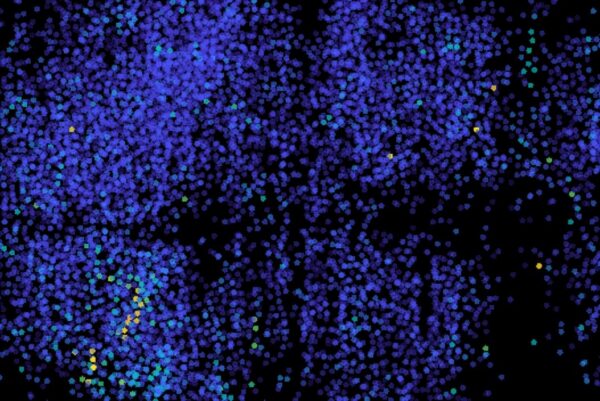
MIT engineers have adapted a light-sheet microscope to image the electrical activity of neurons across a zebrafish's entire brain, scanning the whole brain 200 times a second — once every five milliseconds. Calcium imaging, the usual proxy for neural activity, resolves activity only on the order of seconds and cannot capture single spikes, while genetically encoded voltage indicators report membrane potential directly but had previously been limited to small, localized populations. Faster camera acquisition and remote refocusing pushed volumetric imaging to rates that resolve individual neuronal impulses, revealing brain-wide activity patterns evoked by ultraviolet light; the study appears in Nature Methods.
Why it matters Neural recording has long forced a trade-off between temporal resolution and spatial coverage. Bringing whole-brain volumetric imaging to millisecond rates means neuronal populations distributed across regions, which coordinate on millisecond timescales, can be observed at once — a methodological step for studying network-level coding.

© 2026 BCIwiki.com Digest Topics Tips Subscribe Revisions About