
/ EN

BCIwiki — Brain-computer interface news, research and industry database

Latest

August 2026

Stanford Team Records Psychiatric Brain Circuits at Millisecond Precision

A Stanford program is recording brain activity in psychiatric inpatients at millisecond precision, combining noninvasive electrode arrays with deep brain recording electrodes to trace the circuits behind schizoaffective disorder, borderline personality disorder, autism and cancer-induced depression. The Human Neural Circuitry program, led by neuroscientist Karl Deisseroth at the Wu Tsai Neurosciences Institute, has run for three years and moves data over fiber-optic and copper links fast enough for round trips of under half a millisecond, allowing the system to sense and respond in a closed loop. Deisseroth said the key innovation is getting results at millisecond precision, which he called a crucial step toward understanding complex psychiatric symptoms.
Why it matters Psychiatry still works largely from symptom checklists and imaging that lags behavior by seconds, so a closed-loop rig that reads and answers deep brain circuits inside a millisecond is the kind of tooling that could turn diagnostic labels such as borderline personality disorder into measurable circuit signatures.
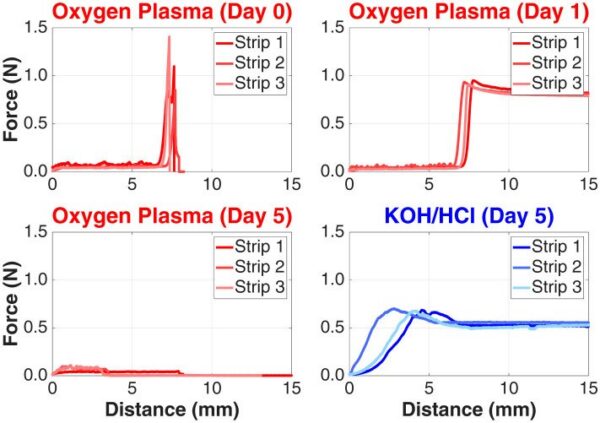

Chemical Treatment Extends Estimated Neural-Interface Bond Life at Least 40-Fold

Researchers used accelerated aging at 87°C to compare oxygen-plasma and KOH/HCl treatments for bonding polyimide thin films. Plasma-treated samples began with higher adhesion but failed within three to six days, while chemically treated samples showed little degradation, corresponding to an estimated minimum 40-fold increase in bond life.
Why it matters The work quantifies a packaging failure mode that matters for chronic neural implants and shows why high initial adhesion does not guarantee long-term stability in physiological conditions.

BCI emerges as hotspot in post-stroke motor rehab

Published in Neural Regeneration Research on August 18, 2026, the study conducted a bibliometric analysis of 3173 articles from the Web of Science Core Collection on post-stroke limb motor dysfunction and functional recovery from 2016 to 2025, by authors from Beijing Rehabilitation Hospital, Capital Medical University. The field is in a period of rapid expansion, with technology-assisted rehabilitation as the dominant trend and robot-assisted training and virtual reality as the two major technological keywords. Burst literature analysis revealed three hotspot phases, with the recent phase (2020 to present) covering neuromodulation (brain-computer interface and non-invasive brain stimulation), global disease burden and public health policy. Highly cited studies focus on comparative efficacy, robot-assisted training, brain-computer interfaces, vagus nerve stimulation and prediction of rehabilitation outcomes.
Why it matters A bibliometric study showing brain-computer interfaces as a neuromodulation research hotspot in post-stroke rehabilitation since 2020, a useful trend signal for the field.

Chinese Insurers Begin Covering BCI Procedures and Surgical Risk

Chinese insurers have begun introducing BCI-related coverage. Shanghai's 2026 Hu-huibao plan added up to 150,000 yuan for out-of-pocket materials used in inpatient BCI surgery, PICC Property and Casualty underwrote an invasive-BCI surgical accident policy for the Second Affiliated Hospital of Zhejiang University School of Medicine, and China Pacific Property Insurance covered patients receiving Neuracle's NEO implant at Huashan Hospital.
Why it matters The first policies indicate that insurers are beginning to price BCI surgical risk and incorporate the technology into real-world payment and protection systems.

Sixth-Finger BCI Neurofeedback Aids Stroke

Researchers report that a BCI-controlled sixth-finger neurofeedback intervention improved motor function in stroke: after 8 sessions (2 weeks) of motor-imagery BCI training, 14 patients gained an average of 7.9 points on FMA-UE and 7.1 on the Barthel Index, with 9 of 14 reaching the 6.6-point minimally clinically important difference. EEG tracking across the full intervention showed a two-phase ERD trend that strengthened in week one and narrowed to the contralateral sensorimotor area in week two, and resting-state functional connectivity rose afterward, correlating with motor gains. The authors say the work offers longitudinal evidence on neuroplasticity in stroke rehabilitation.
Why it matters Most BCI rehab studies sample neural function only before and after training; this one tracks ERD week by week and ties it to clinical endpoints, a methodological step forward for mechanism-oriented stroke BCI.

Fujian Targets a 3 Billion Yuan BCI Industry by 2030

Six Fujian government departments jointly issued a provincial BCI action plan for 2026–2030. It calls for key technical breakthroughs, more than five innovative small and medium-sized companies, one cross-strait joint laboratory and two provincial innovation platforms by 2027; by 2030, Fujian aims to have 30 companies, a complete industry chain and an industry worth more than 3 billion yuan.
Why it matters The plan adds measurable provincial targets to China's national BCI policy push, while its proposed cross-strait laboratory gives Fujian a distinctive regional strategy.

Kandu's At-Home IpsiHand BCI Improves Arm Function in Chronic Stroke Trial

Kandu said its IpsiHand at-home noninvasive brain-computer interface significantly improved upper-extremity motor function in patients with chronic stroke in an NIH-funded randomized controlled trial, with more than half achieving clinically meaningful recovery. The results were published in Stroke: Vascular and Interventional Neurology.
Why it matters Chronic stroke has long been treated as a plateau beyond which further motor gains are unlikely, so randomized, peer-reviewed evidence that an unsupervised home device moves that line, with no serious adverse events reported, changes what rehabilitation programs can offer once the acute window closes.

Vivani Merges Cortigent Into Nasdaq-Listed ClearOne, Giving Orion Implant a New Parent

The Orion visual neuroprosthetic system, originally developed by Second Sight Medical Products, is changing parent companies again, Neurotech Reports said. Vivani Medical has agreed a reverse merger with Nasdaq-listed ClearOne under which its Cortigent unit becomes a wholly owned ClearOne subsidiary; ClearOne will be renamed Cortigent Holdings Inc. and is expected to trade as CRGT. ClearOne agreed as part of the transaction to file a Form S-1 registration statement to raise $10 million to $15 million, and Cortigent plans a pivotal trial of Orion in about 60 patients, though funding remains a challenge.
Why it matters The ownership change matters less than the money attached to it: whether Orion reaches a pivotal trial in about 60 patients now rests on a $10 million to $15 million raise by a Nasdaq shell — a thin base for a cortical vision-restoration program that keeps changing hands.

BCI-guided FES trial targets gait in spinal cord injury

A new clinical trial at Brazil's Santos Dumont Institute will test whether brain-computer interface (BCI)-guided functional electrical stimulation (FES) can improve muscle activation and gait in people with spinal cord injury. The institute is a well-known Brazilian center for neurorehabilitation research. Registered on ClinicalTrials.gov as NCT07768930 and first posted on August 17, 2026, the study is active but not yet recruiting. The intervention involves ankle dorsiflexion rehabilitation: patients wear an EEG cap, the system detects motor-imagery-related brain signals in real time, and when an intention is detected, it triggers FES to stimulate the tibialis anterior muscle to assist ankle dorsiflexion. Primary outcomes are improvements in muscle activation patterns and gait kinematics. The trial is at an early stage, with enrollment details not yet disclosed.
Why it matters This newly registered trial on ClinicalTrials.gov combines BCI with functional electrical stimulation for gait training in spinal cord injury, a concrete step in BCI-based rehabilitation research.

Study reviews invasive and non-invasive BCI use

A systematic review of BCI medical applications published on August 17, 2026 in Theoretical and Natural Science covers literature review, comparative case analysis of invasive vs non-invasive techniques, and interdisciplinary assessment. It reports that invasive BCIs reach 80% to 100% task success rates in robotic arm control but are limited by surgical hazards, progressive signal deterioration and costs above $250,000, while non-invasive BCIs are safer and more widely deployed in community neurorehabilitation with about 70% effectiveness for post-stroke upper-limb recovery, yet suffer poor signal-to-noise ratios, a BCI illiteracy rate near 30% and low information transfer speeds. The review also addresses neural data privacy, autonomy paradoxes and inequitable access.
Why it matters A comparative review quantifying invasive and non-invasive BCI efficacy, cost and ethical burdens, with data useful as an overview entry for BCI clinical applications.

© 2026 BCIwiki.com Digest Topics Tips Subscribe Revisions About